Shivpreet Singh
Shivpreet Singh
  • Home
  • Music
    • Spotify
    • Apple Music
    • Amazon
    • Pandora
    • SoundCloud
    • Google
    • You Tube
      • Music on YouTube
      • Uplifting Shabads
      • Guru Nanak Shabads
      • Meditation & Chanting
      • Shabads for Kids
      • Shabads of Guru Arjan
      • Shabads of Guru Gobind Singh
  • Videos
    • Latest
    • Popular
    • Uplifting
    • Guru Nanak
    • Meditation
    • For Kids
    • Guru Arjan
    • Guru Gobind Singh
  • Projects
    • DhunAnand Foundation
    • Pandemic 2020
    • Guru Nanak 550
    • Namdev 750
    • Thoughts and Ruminations
    • What I Love to Read
  • News
  • Meet Me
    • Meet Me
    • Request
    • Send Email
    • Newsletter
    • FAQs
  • About
    • Biography
    • Photos
    • Music
    • FAQs

Note to Parents and Kids

Feb 24, 2023: We all learned the first line of Jo Mange Thakur Apne Te in kirtan class last week.  Please listen to this Shabad along with the family as much as you can before class on Sunday.  

This blog post has shabad lyrics (English and Gurbani), a harmonium video, Western score (for kids who know western instruments and want to play along), and also a couple of versions of me singing this Shabad. You can leave any questions/comments you may have about this Shabad or the class on the blogpost above.  I will address the questions on the same post or in class. 

There are many other versions of this Shabad. Our plan is to learn the second line this week and sing the full Shabad the following week. Let’s share this beautiful gift from Guru Arjan with ourselves and our kids.  May the guru be with all of us!

The key message of Jo Mange is to remove our vices: Avgun Sab Mete.  This is what the singer asks for. O oneness, come and hug me and remove my vices. 

Lyrics in English


Jo mange thakur apne te, Soi soi devai
Nanak das mukh te jo bole, Eehaa oohaa sach hovai
Jo mange ...
 
Chatur disa kino bal apna, Sir upar kar dhareyo
Kirpa katakh avalokan kino, Das ka dukh bidaryo
Jo mange ...

Har jan rakhe gur govind, Raakhe gur govind
Kanth lae avguna sab mete, Dyaal purakh bakshand
Jo mange ...

Jo Mange (Harmonium)


Jo Mange in C (for western instruments)

Click Here for Score in PDF

Translation in English by Sant Singh Khalsa


Whatever I ask for from my Lord and Master, he gives that to me.
Whatever the Lord's servant Nanak utters with his mouth, proves to be true, here and hereafter.

He has extended His power in all four directions, and placed His hand upon my head.
Gazing upon me with his Eye of Mercy, He has dispelled the pains of His servant. ||1||

The Guru, the Lord of the Universe, has saved the Lord's humble servant.
Hugging me close in His embrace, the merciful, forgiving Lord has erased all my sins. ||Pause||


Gurbani: ਧਨਾਸਰੀ ਮਹਲਾ ੫ ॥
ਚਤੁਰ ਦਿਸਾ ਕੀਨੋ ਬਲੁ ਅਪਨਾ ਸਿਰ ਊਪਰਿ ਕਰੁ ਧਾਰਿਓ ॥
ਕ੍ਰਿਪਾ ਕਟਾਖ੍ਯ੍ਯ ਅਵਲੋਕਨੁ ਕੀਨੋ ਦਾਸ ਕਾ ਦੂਖੁ ਬਿਦਾਰਿਓ ॥੧॥

ਹਰਿ ਜਨ ਰਾਖੇ ਗੁਰ ਗੋਵਿੰਦ ॥
ਕੰਠਿ ਲਾਇ ਅਵਗੁਣ ਸਭਿ ਮੇਟੇ ਦਇਆਲ ਪੁਰਖ ਬਖਸੰਦ ॥ ਰਹਾਉ ॥

ਜੋ ਮਾਗਹਿ ਠਾਕੁਰ ਅਪੁਨੇ ਤੇ ਸੋਈ ਸੋਈ ਦੇਵੈ ॥
ਨਾਨਕ ਦਾਸੁ ਮੁਖ ਤੇ ਜੋ ਬੋਲੈ ਈਹਾ ਊਹਾ ਸਚੁ ਹੋਵੈ ॥੨॥੧੪॥੪੫॥


The death that scares the world, gives me pleasure
It is only death that leads you to God
      - Kabir (Kabir Jis Marne Te Jag Darai, GGS 1365)

I stumbled upon this beautiful poem by Emily Dickinson. In this poem she writes about the desire of the heart and how it evolves as we go through life:

The Heart asks Pleasure – first –
And then – Excuse from Pain –
And then – those little Anodynes
That deaden suffering –

And then – to go to sleep –
And then – if it should be
The will of its Inquisitor
The liberty to die –
The first and foremost desire of the heart is pleasure, which is the ultimate goal of every human being. However, when pleasure is unattainable, the heart seeks to avoid pain and live a life free from suffering.

But what happens when pain is unavoidable? The heart then longs for "Anodynes," or painkillers, to ease its discomfort. The word "Anodyne" stems from the Greek for "without pain," and it represents the heart's desperate plea for relief. Yet, even when anodynes fail, the heart does not give up hope. It seeks the escape of sleep or unconsciousness to find some solace.

But what if sleep fails to soothe one's ills? What if the pain is too great to bear, and there seems to be no end in sight? At this point, the heart's only remaining desire is for death to bring it the ultimate release. It is a desperate plea for liberty, a way to end the suffering once and for all.

In the end, the heart turns to the Inquisitor, a religious figure who represents the ultimate Inquisitor, God (or Death), for help. The Inquisitor is the only one who can bring an end to the heart's pain and grant it the peace it seeks.

So the desires of the heart eventually find solace in death.  Death is the ultimate cure for all desires. 

In somewhat contrasting light, Mirza Ghalib relates desires to death:

Hazaron Khwahishen Aisi Ke Har, Ke Har Khwahish Pe Dam Nikle
I have thousands of desires, and each desire to die for
I have lost so many wishes, but I have still a lot more


Death is the ultimate cure for all desires

Death is the final cure for all desires, the ultimate end to all of our earthly struggles and desires.

One interpretation of this idea is that death is the ultimate release from suffering. All of our desires, whether they are for pleasure, love, success, or something else entirely, are ultimately driven by a desire to avoid suffering. We seek pleasure to avoid pain, we seek love to avoid loneliness, and we seek success to avoid failure. However, no matter how much we try to satisfy our desires, there will always be some degree of suffering in our lives. Death, therefore, is seen as the ultimate release from this suffering. It is the final cure for all our earthly desires and a way to achieve the ultimate peace.

Another interpretation of this idea is that death is the ultimate equalizer. No matter how rich, powerful, or successful we are in life, we all face the same fate in death. In this sense, death is seen as the ultimate leveler, the great equalizer that puts everyone on an even playing field. It is the one thing that we all have in common, regardless of our differences in life.

While the idea that death is the ultimate cure for all desires may seem bleak or pessimistic, it can also be seen as a reminder to appreciate the time we have on this earth and to make the most of it. Rather than chasing after unattainable desires, we can focus on living our lives in a way that brings us joy and fulfillment, knowing that in the end, death will come for us all. By accepting this reality, we can find peace and meaning in the present moment, rather than constantly striving for something more.

Death is the Ultimate Release 

We seek our initial desire is for happiness through various means, such as pleasure, love, and success. However, as we experience the ups and downs of life, we realize that happiness is fleeting and that sorrow is an inevitable part of the human experience. Therefore, our desires shift from seeking happiness to seeking freedom from sorrows. We seek to avoid pain, suffering, and loss, and strive to live a life that is free from these negative experiences.

Despite our best efforts, however, we cannot completely escape sorrow and suffering. At some point, we realize that death is the ultimate release from these experiences. It is the final cure for all our desires and the ultimate solution to our problems. While this may seem like a bleak or nihilistic view of life, it is actually a reminder of the impermanence of all things and the importance of living in the present moment.

By accepting that death is an inevitable part of life, we can learn to appreciate the time that we have and to focus on what truly matters. We can let go of our attachment to material possessions and external circumstances and focus on cultivating inner peace and contentment. Rather than constantly striving for happiness or freedom from sorrows, we can focus on living a life that is meaningful and fulfilling, knowing that in the end, death will come for us all.

Thus Guru Nanak says: Ponder about true life.  Dying while living is the true living. 

Jo Mange Thakur Apne Te

I am meditating upon Guru Arjan's Jo Mange Thakur Apne Te today. The soulful singer and the deep listener of the shabad is empowered: "Whatever I ask, I receive. Whatever I say, becomes true." 

This reminds me what Rilke says about the "power in me." (see poem below)  The power of the self refers to the strength and influence that an individual has over their own thoughts, emotions, actions, and decisions. It encompasses the ability to determine one's own identity, set and achieve personal goals, and make meaningful choices in life. The singer of the shabad can become a better version of himself just by meditating on the shabad.  Cultivating self-awareness, self-esteem, and self-discipline are key aspects of developing the power of the self.

This truth rings clear and sharp in his poem, and is adapted by Denise Levertov in another poem where the reader ends singing what he always knew: "I can." (see poem below) This reminds me of "I Think I Can," a children's story that conveys the message of determination and positive thinking. The story follows a small locomotive that is tasked with transporting a heavy load of toys and good over a mountain, despite its own doubts and the discouraging words of other engines. The little engine repeatedly says to itself "I think I can," and through its perseverance and determination, it successfully makes it over the mountain and delivers the goods.

The message of the story is that with enough willpower, effort, and a positive attitude, anyone can overcome obstacles and achieve their goals, no matter how difficult they may seem. The story teaches children that it's important to believe in themselves and to never give up, even in the face of challenges.

This is a song of oneness that once Emerson sang, "Trust thyself: every heart vibrates to that iron string.” This sage advice comes from Ralph Waldo Emerson's essay "Self-Reliance," and it refers to the idea that every person has an innermost core of truth and integrity that they are drawn to and guided by. Emerson believed that this "iron string" is a universal principle that connects all people, and that it is the source of an individual's personal sense of morality, ethics, and purpose. He saw it as a kind of inner compass that can help people navigate their lives and make decisions that are true to themselves.

In this context, the "iron string" represents the power of the self and the inner voice that speaks to each individual, guiding them towards their own personal truth and purpose. By heeding this inner voice and following their own unique path, Emerson believed that people could live fulfilling and authentic lives.

The hour is striking so close above me

- Rainer Maria Rilke

English version by Anita Barrows and Joanna Macy
Original Language German

The hour is striking so close above me,
so clear and sharp,
that all my senses ring with it.
I feel it now: there's a power in me
to grasp and give shape to my world.

I know that nothing has ever been real
without my beholding it.
All becoming has needed me.
My looking ripens things
and they come toward me, to meet and be met.

Variation on a Theme by Rilke

- Denise Levertov

A certain day became a presence to me;
there it was, confronting me—a sky, air, light:
a being. And before it started to descend
from the height of noon, it leaned over
and struck my shoulder as if with
the flat of a sword, granting me
honor and a task. The day's blow
rang out, metallic—or it was I, a bell awakened,
and what I heard was my whole self
saying and singing what it knew: I can.

I am co-hosting a very interesting live event this Saturday. I and my colleague Kate Taylor, founder of ArtistsSupportUkraine (instagram) will be talking to 5 artists from Ukraine about the war. Let me give you some background. 

On the first day of the invasion of Ukraine, I started the instagram and twitter campaign #Artists4Ukraine. Since then we have been trying to post art, music, poetry and other creative posts that support peace and freedom in Ukraine. One of the most fascinating people I met in the past month is curator extraordinaire Kate Taylor who has had an illustrious career as an art manager, curator, expert on contemporary art, and founder of the agency of cultural management Port.agency.  While she has been dealing with bombs and displacement, amazingly she has continued her work and organized several artists through her ArtistsSupportUkraine project.  

On Saturday we will have a live event featuring 5 artists from Ukraine hosted by Kate and myself. The online event can be viewed on Youtube and Facebook at 10 AM PST/ 7PM Ukraine/ 10:30PM IST (you can click on "Set Reminder" now for a reminder when the event begins).  I hope you will be able to join and see the event. I am looking forward to learning more about the artists, their art and their commentary on the war. 

We will be collecting donations for artists so they can continue their vital work.  You can make donations through DhunAnand Foundation or through ArtistsSupportUkraine.  

- Shivpreet Singh Kapoor, 
Founder DhunAnand Foundation


Video


Traditional Lyrics and Translation


ਰਾਮਾਨੰਦ ਜੀ ਘਰੁ ੧
रामानंद जी घरु १
Rāmānanḏ jī gẖar 1
Raamaanand Jee, First House:

ੴ ਸਤਿਗੁਰ ਪ੍ਰਸਾਦਿ ॥
ੴ सतिगुर प्रसादि ॥
Ikoaʼnkār saṯgur parsāḏ.
One Universal Creator God. By The Grace Of The True Guru:

ਕਤ ਜਾਈਐ ਰੇ ਘਰ ਲਾਗੋ ਰੰਗੁ ॥
कत जाईऐ रे घर लागो रंगु ॥
Kaṯ jāīai re gẖar lāgo rang.
Where should I go? My home is filled with bliss.

ਮੇਰਾ ਚਿਤੁ ਨ ਚਲੈ ਮਨੁ ਭਇਓ ਪੰਗੁ ॥੧॥ ਰਹਾਉ ॥
मेरा चितु न चलै मनु भइओ पंगु ॥१॥ रहाउ ॥
Merā cẖiṯ na cẖalai man bẖaio pang. ||1|| rahāo.
My consciousness does not go out wandering. My mind has become crippled. ||1||Pause||

ਏਕ ਦਿਵਸ ਮਨ ਭਈ ਉਮੰਗ ॥
एक दिवस मन भई उमंग ॥
Ėk ḏivas man bẖaī umang.
One day, a desire welled up in my mind.

ਘਸਿ ਚੰਦਨ ਚੋਆ ਬਹੁ ਸੁਗੰਧ ॥
घसि चंदन चोआ बहु सुगंध ॥
Gẖas cẖanḏan cẖoā baho suganḏẖ.
I ground up sandalwood, along with several fragrant oils.

ਪੂਜਨ ਚਾਲੀ ਬ੍ਰਹਮ ਠਾਇ ॥
पूजन चाली ब्रहम ठाइ ॥
Pūjan cẖālī barahm ṯẖāe.
I went to God's place, and worshipped Him there.

ਸੋ ਬ੍ਰਹਮੁ ਬਤਾਇਓ ਗੁਰ ਮਨ ਹੀ ਮਾਹਿ ॥੧॥
सो ब्रहमु बताइओ गुर मन ही माहि ॥१॥
So barahm baṯāio gur man hī māhi. ||1||
That God showed me the Guru, within my own mind. ||1||

ਜਹਾ ਜਾਈਐ ਤਹ ਜਲ ਪਖਾਨ ॥
जहा जाईऐ तह जल पखान ॥
Jahā jāīai ṯah jal pakẖān.
Wherever I go, I find water and stones.

ਤੂ ਪੂਰਿ ਰਹਿਓ ਹੈ ਸਭ ਸਮਾਨ ॥
तू पूरि रहिओ है सभ समान ॥
Ŧū pūr rahio hai sabẖ samān.
You are totally pervading and permeating in all.

ਬੇਦ ਪੁਰਾਨ ਸਭ ਦੇਖੇ ਜੋਇ ॥
बेद पुरान सभ देखे जोइ ॥
Beḏ purān sabẖ ḏekẖe joe.
I have searched through all the Vedas and the Puraanas.

ਊਹਾਂ ਤਉ ਜਾਈਐ ਜਉ ਈਹਾਂ ਨ ਹੋਇ ॥੨॥
ऊहां तउ जाईऐ जउ ईहां न होइ ॥२॥
Ūhāʼn ṯao jāīai jao īhāʼn na hoe. ||2||
I would go there, only if the Lord were not here. ||2||

ਸਤਿਗੁਰ ਮੈ ਬਲਿਹਾਰੀ ਤੋਰ ॥
सतिगुर मै बलिहारी तोर ॥
Saṯgur mai balihārī ṯor.
I am a sacrifice to You, O my True Guru.

ਜਿਨਿ ਸਕਲ ਬਿਕਲ ਭ੍ਰਮ ਕਾਟੇ ਮੋਰ ॥
जिनि सकल बिकल भ्रम काटे मोर ॥
Jin sakal bikal bẖaram kāte mor.
You have cut through all my confusion and doubt.

ਰਾਮਾਨੰਦ ਸੁਆਮੀ ਰਮਤ ਬ੍ਰਹਮ ॥
रामानंद सुआमी रमत ब्रहम ॥
Rāmānanḏ suāmī ramaṯ barahm.
Raamaanand's Lord and Master is the All-pervading Lord God.

ਗੁਰ ਕਾ ਸਬਦੁ ਕਾਟੈ ਕੋਟਿ ਕਰਮ ॥੩॥੧॥
गुर का सबदु काटै कोटि करम ॥३॥१॥
Gur kā sabaḏ kātai kot karam. ||3||1||
The Word of the Guru's Shabad eradicates the karma of millions of past actions. ||3||1||

Introduction

Why should I go anywhere else
When my own house is colorful
- Bhagat Ramanand

Today is Holi
the festival of colors
But there is a sadness
in the colors of Holi today

There is
an angst
Of a barbaric
Invasion that has uprooted 
millions of lives

UNICEF says 
more than 1.5 million children 
have been forced to become refugees. 

I have talked to some of their parents. 
They have left their homes,
They have lost everything they had. 
possessions. family members, friends, limbs. lives. 

But I have also seen some
Amazingly positive things. 
I have seen courage and fearlessness. 
I have seen kindness and compassion
I have seen an entire world choose
sunflowers over tanks

But most heartening
Is this girl I have seen from Ukraine

With pride she waves their colors

The colors of sunflowers 
That sing peace 
are within her
the colors of the sky
That sing freedom
Are within her

You can remove her from her home
But you can never her hope from within

May her holy dream of 
freedom and peace
Come true soon

Shabad in Punjabi - Kat Jaiyeh Re


ਕਤ ਜਾਈਐ ਰੇ ਘਰ ਲਾਗੋ ਰੰਗੁ ॥ ਮੇਰਾ ਚਿਤੁ ਨ ਚਲੈ ਮਨੁ ਭਇਓ ਪੰਗੁ ॥੧॥ ਰਹਾਉ ॥

ਏਕ ਦਿਵਸ ਮਨ ਭਈ ਉਮੰਗ ॥ ਘਸਿ ਚੰਦਨ ਚੋਆ ਬਹੁ ਸੁਗੰਧ ॥
ਪੂਜਨ ਚਾਲੀ ਬ੍ਰਹਮ ਠਾਇ ॥ ਸੋ ਬ੍ਰਹਮੁ ਬਤਾਇਓ ਗੁਰ ਮਨ ਹੀ ਮਾਹਿ ॥੧॥

ਜਹਾ ਜਾਈਐ ਤਹ ਜਲ ਪਖਾਨ ॥ ਤੂ ਪੂਰਿ ਰਹਿਓ ਹੈ ਸਭ ਸਮਾਨ ॥
ਬੇਦ ਪੁਰਾਨ ਸਭ ਦੇਖੇ ਜੋਇ ॥ ਊਹਾਂ ਤਉ ਜਾਈਐ ਜਉ ਈਹਾਂ ਨ ਹੋਇ ॥੨॥

ਸਤਿਗੁਰ ਮੈ ਬਲਿਹਾਰੀ ਤੋਰ ॥ ਜਿਨਿ ਸਕਲ ਬਿਕਲ ਭ੍ਰਮ ਕਾਟੇ ਮੋਰ ॥
ਰਾਮਾਨੰਦ ਸੁਆਮੀ ਰਮਤ ਬ੍ਰਹਮ ॥ ਗੁਰ ਕਾ ਸਬਦੁ ਕਾਟੈ ਕੋਟਿ ਕਰਮ ॥੩॥੧॥

Meditation - Kat Jaiyeh Re


One day I had a desire. I made myself beautiful by rubbing sandalwood
Then I took off to find Brahma. Guru told me that Brahma is my mind.

Where should I go, my home is colored.
My consciousness doesn't move, my mind is handicapped

Wherever I go there is water and stone. You are full equally in all.
I researched vedas and puranas. It would make sense to go there, if He wasn't here.

Oh Satguru I love you. You have broken all the myths.
My swami travels all over. The shabad of the guru has resolved all past issues.


Translation by Sahib Singh in Punjabi


ਰਾਮਾਨੰਦ ਜੀ ਘਰੁ ੧     ੴ ਸਤਿਗੁਰ ਪ੍ਰਸਾਦਿ ॥ ਕਤ ਜਾਈਐ ਰੇ ਘਰ ਲਾਗੋ ਰੰਗੁ ॥ ਮੇਰਾ ਚਿਤੁ ਨ ਚਲੈ ਮਨੁ ਭਇਓ ਪੰਗੁ ॥੧॥ ਰਹਾਉ ॥ ਏਕ ਦਿਵਸ ਮਨ ਭਈ ਉਮੰਗ ॥ ਘਸਿ ਚੰਦਨ ਚੋਆ ਬਹੁ ਸੁਗੰਧ ॥ ਪੂਜਨ ਚਾਲੀ ਬ੍ਰਹਮ ਠਾਇ ॥ ਸੋ ਬ੍ਰਹਮੁ ਬਤਾਇਓ ਗੁਰ ਮਨ ਹੀ ਮਾਹਿ ॥੧॥ ਜਹਾ ਜਾਈਐ ਤਹ ਜਲ ਪਖਾਨ ॥ ਤੂ ਪੂਰਿ ਰਹਿਓ ਹੈ ਸਭ ਸਮਾਨ ॥ ਬੇਦ ਪੁਰਾਨ ਸਭ ਦੇਖੇ ਜੋਇ ॥ ਊਹਾਂ ਤਉ ਜਾਈਐ ਜਉ ਈਹਾਂ ਨ ਹੋਇ ॥੨॥ ਸਤਿਗੁਰ ਮੈ ਬਲਿਹਾਰੀ ਤੋਰ ॥ ਜਿਨਿ ਸਕਲ ਬਿਕਲ ਭ੍ਰਮ ਕਾਟੇ ਮੋਰ ॥ ਰਾਮਾਨੰਦ ਸੁਆਮੀ ਰਮਤ ਬ੍ਰਹਮ ॥ ਗੁਰ ਕਾ ਸਬਦੁ ਕਾਟੈ ਕੋਟਿ ਕਰਮ ॥੩॥੧॥ {ਪੰਨਾ 1195}

ਪਦ ਅਰਥ: ਕਤ = ਹੋਰ ਕਿੱਥੇ? ਰੇ = ਹੇ ਭਾਈ! ਰੰਗੁ = ਮੌਜ। ਘਰ = ਹਿਰਦੇ-ਰੂਪ ਰ ਵਿਚ ਹੀ। ਨ ਚਲੈ-ਭਟਕਦਾ ਨਹੀਂ ਹੈ। ਪੰਗੁ = ਪਿੰਗਲਾ, ਜੋ ਹਿੱਲ ਜੁਲ ਨਹੀਂ ਸਕਦਾ, ਥਿਰ।1। ਰਹਾਉ।

ਦਿਵਸ = ਦਿਨ। ਉਮੰਗ = ਚਾਹ, ਤਾਂਘ, ਖ਼ਾਹਸ਼। ਘਸਿ = ਘਸਾ ਕੇ। ਚੋਆ = ਅਤਰ। ਬਹੁ = ਕਈ। ਸੁਗੰਧ = ਸੁਗੰਧੀਆਂ। ਬ੍ਰਹਮ ਠਾਇ = ਠਾਕੁਰ ਦੁਆਰੇ, ਮੰਦਰ ਵਿਚ।1।

ਜੋਇ = ਢੂੰਡ ਕੇ, ਖੋਜ ਕੇ। ਤਹ = ਉਥੇ। ਜਲ ਪਖਾਨ = (ਤੀਰਥਾਂ ਤੇ) ਪਾਣੀ, (ਮੰਦਰਾਂ ਵਿਚ) ਪੱਥਰ। ਸਮਾਨ = ਇੱਕੋ ਜਿਹਾ। ਊਹਾਂ = ਤੀਰਥਾਂ ਤੇ ਮੰਦਰਾਂ ਵਲ। ਤਉ = ਤਾਂ ਹੀ। ਜਉ = ਜੇ। ਈਹਾਂ = ਇਥੇ ਹਿਰਦੇ ਵਿਚ।2।

ਬਲਿਹਾਰੀ ਤੋਰ = ਤੈਥੋਂ ਸਦਕੇ। ਜਿਨਿ = ਜਿਸ ਨੇ। ਬਿਕਲ = ਕਠਨ। ਭ੍ਰਮ = ਵਹਿਮ, ਭੁਲੇਖੇ। ਮੋਰ = ਮੇਰੇ। ਰਾਮਾਨੰਦ ਸੁਆਮੀ = ਰਾਮਾਨੰਦ ਦਾ ਪ੍ਰਭੂ। ਰਮਤ = ਸਭ ਥਾਂ ਮੌਜੂਦ ਹੈ। ਕੋਟਿ = ਕ੍ਰੋੜਾਂ। ਕਰਮ = (ਕੀਤੇ ਹੋਏ ਮੰਦੇ) ਕੰਮ।3।1।

ਅਰਥ: ਹੇ ਭਾਈ! ਹੋਰ ਕਿਥੇ ਜਾਈਏ? (ਹੁਣ) ਹਿਰਦੇ-ਘਰ ਵਿਚ ਹੀ ਮੌਜ ਬਣ ਗਈ ਹੈ; ਮੇਰਾ ਮਨ ਹੁਣ ਡੋਲਦਾ ਨਹੀਂ, ਥਿਰ ਹੋ ਗਿਆ ਹੈ।1। ਰਹਾਉ।

ਇੱਕ ਦਿਨ ਮੇਰੇ ਮਨ ਵਿਚ ਭੀ ਤਾਂਘ ਪੈਦਾ ਹੋਈ ਸੀ, ਮੈਂ ਚੰਦਨ ਘਸਾ ਕੇ ਅਤਰ ਤੇ ਹੋਰ ਕਈ ਸੁਗੰਧੀਆਂ ਲੈ ਲਈਆਂ, ਤੇ ਮੈਂ ਮੰਦਰ ਵਿਚ ਪੂਜਾ ਕਰਨ ਲਈ ਤੁਰ ਪਈ। ਪਰ ਹੁਣ ਤਾਂ ਮੈਨੂੰ ਉਹ ਪਰਮਾਤਮਾ (ਜਿਸ ਨੂੰ ਮੈਂ ਮੰਦਰ ਵਿਚ ਰਹਿੰਦਾ ਸਮਝਦੀ ਸਾਂ) ਮੇਰੇ ਗੁਰੂ ਨੇ ਮੇਰੇ ਮਨ ਵਿਚ ਵੱਸਦਾ ਹੀ ਵਿਖਾ ਦਿੱਤਾ ਹੈ।1।

(ਤੀਰਥਾਂ ਉਤੇ ਜਾਈਏ ਚਾਹੇ ਮੰਦਰਾਂ ਵਿਚ ਜਾਈਏ) ਜਿਥੇ ਭੀ ਜਾਈਏ ਉਥੇ ਪਾਣੀ ਹੈ ਜਾਂ ਪੱਥਰ ਹਨ। ਹੇ ਪ੍ਰਭੂ! ਤੂੰ ਹਰ ਥਾਂ ਇੱਕੋ ਜਿਹਾ ਭਰਪੂਰ ਹੈਂ, ਵੇਦ ਪੁਰਾਨ ਆਦਿਕ ਧਰਮ-ਪੁਸਤਕਾਂ ਭੀ ਖੋਜ ਕੇ ਵੇਖ ਲਈਆਂ ਹਨ। ਸੋ ਤਰੀਥਾਂ ਤੇ ਮੰਦਰਾਂ ਵਿਚ ਤਦੋਂ ਹੀ ਜਾਣ ਦੀ ਲੋੜ ਪਏ ਜੇ ਪਰਮਾਤਮਾ ਇਥੇ ਮੇਰੇ ਮਨ ਵਿਚ ਨਾਹ ਵੱਸਦਾ ਹੋਵੇ।2।

ਹੇ ਸਤਿਗੁਰੂ! ਮੈਂ ਤੈਥੋਂ ਸਦਕੇ ਹਾਂ, ਜਿਸ ਨੇ ਮੇਰੇ ਸਾਰੇ ਔਖੇ ਭੁਲੇਖੇ ਦੂਰ ਕਰ ਦਿੱਤੇ ਹਨ। ਰਾਮਾਨੰਦ ਦਾ ਮਾਲਕ ਪ੍ਰਭੂ ਹਰ ਥਾਂ ਮੌਜੂਦ ਹੈ (ਤੇ, ਗੁਰੂ ਦੀ ਰਾਹੀਂ ਮਿਲਦਾ ਹੈ, ਕਿਉਂਕਿ) ਗੁਰੂ ਦਾ ਸ਼ਬਦ ਕ੍ਰੋੜਾਂ (ਕੀਤੇ ਮੰਦੇ) ਕਰਮਾਂ ਦਾ ਨਾਸ ਕਰ ਦੇਂਦਾ ਹੈ।3।1।

Sahib Singh's Translation's Translation in English: 


Meaning: O brother! Where else to go? (Now) merriment has become in the Hirda-ghar itself; My mind does not waver now, it has become still.1. Get rid of

One day a longing arose in my mind, I rubbed sandalwood and took perfume and many other perfumes, and I went to worship in the temple. But now that God (whom I thought lived in the temple) my Guru has shown me to dwell in my mind.1.

(Go to the shrines whether we go to the temples) Wherever we go there is water or stones. O Lord! You are equally abundant everywhere, you have searched and seen the ancient Vedic scriptures. So I had to go to the temples and shrines only if God did not dwell in my mind here.2.

O Satguru! I am a sacrifice to Thee, who has removed all my difficult delusions. The Lord, the Master of Ramananda, is present everywhere (and is found through the Guru, because) the Guru's word destroys crores (of evil deeds) done.3.1.
I remember something my cousin’s grandfather used to say. After a lifetime of reading the Guru Granth Sahib, he should have been reading faster; instead, each year, a single line took him longer. “The line keeps opening,” he’d smile, tracing a letter with his fingertip. “I arrive at one word, then I can't move.” He would close the book and let the room breathe in him. “A day well spent,” he’d add, “when one word refuses to be finished.”

I continue to grow into his pace. I like the slow reading now, the way a saying of the Guru settles, the way a small phrase can carry a whole afternoon. And where does this slowing end? Bulleh Shah answers with where this ends: “Ik alf paṛho chhuṭkārā e”—read one letter and be free. Not even one line, one word, but one letter! All joy gathers there, in a single stroke. I guess we can call it the master stroke. 

That master stroke letter is Bulleh Shah’s classroom. The alif is only a vertical line, yet he treats it like a whole syllabus: learn it inwardly and every other lesson finds its place. This reverence for the first letter—the axis on which all letters turn—reminds me of Guru Nanak’s love for ek oankar, the One that steadies the many.

Bulleh Shah also knows our ordinary drift: from one to two, three, four, and soon lakhs and crores until counting runs without end. The problem is not numbers; it is being numbered, split and scattered by ten thousand details. So he offers subtler arithmetic: “hik alif dā nukta niārā e,” the dot of the One-letter is unique. In the old calligraphers’ lore, every letter begins from the nuqta, the point. Miss the point and the forest of script tangles you; find the point and the forest becomes legible.

Are you getting Bulleh Shah’s point, O mind?

From here he turns and looks me in the face. Why haul cartloads of books if the heart stays unmoved? Why polish the tongue if the mind runs errands elsewhere? In his sharpest line he warns that piety without surrender can harden into the face of an executioner. He is not scolding study. He is reordering it: begin where all letters rise, and let every discipline serve that beginning. Otherwise knowledge inflates the self and the road grows heavy.

He closes with a parable tight as a seed. “Bullah planted a banyan.” It grew vast, as banyans do, then passed into dust. What remained was the letter, the seed-shape that started it all. Forms rise high, institutions spread shade; in time they fall. The seed endures. The lesson is not to despise the tree, but to keep faith with the seed.

Whitman’s Multitudes on a Single Spine

This is where Walt Whitman arrives like a neighbor at dusk. In Song of Myself (section 51) he writes, “Do I contradict myself? / Very well then I contradict myself, / (I am large, I contain multitudes.)” Notice how Walt is having this conversation with Bulleh Shah. The issue is not having many selves, voices, demands; the trouble is being had by them. Whitman’s largeness is not a swollen ego; it is a capacious self anchored enough to welcome contradictions without shattering. He even gives us a posture for practice: “I concentrate toward them that are nigh, I wait on the door-slab.” He listens before he speaks. The door-slab is a threshold image—precisely the place where Bulleh’s alif stands upright inside us.

Bulleh’s point, Whitman’s posture: stand the vertical line within, then let the multitudes arrive. Oneness does not erase the many; it steadies them. The “I” that contains multitudes is the same “I” aligned on the One—an alif running through the center so the crowd within becomes a choir rather than a quarrel.

The Seed and the Field: Krishna on Beeja


In the battlefield of Kurukshretra, Arjuna’s will trembled. He didn’t want to fight. In a chapter meant to steady Arjuna’s will, Krishna moves from metaphysics to sensation: “I am the taste of water, the light of sun and moon, the sound in space, the ability in humans.” Then he brings the alif kernel: bījaṁ māṁ sarva-bhūtānāṁ viddhi Pārtha sanātanam—“Know Me, O Arjun, as the eternal seed of all beings.” When Arjuna wants a map, Krishna gives him a seed. The seed is hidden and generative, tiny and total.

Later in the Bhagwad Gita, Krishna paints the cosmos as an upside-down aśvattha (banyan), root above and branches below. Know it, he says, and cut entanglement with a sharp insight; then seek the Root. Bulleh’s banyan echoes here: vastness can stun us; fidelity to origin frees us. The seed is not less than the tree—it is the cause held in living smallness. This upside down tree reminds me of the ultabhashi Kabir poems where the Arabian Sea is flowing into the Ganges, instead of the other way round. The ocean is flowing into the river. The multitudes feed the seed, and the seed feeds the multitudes.

A Single Twig, Saas-Saas: Sukhmani Sahib


One of my favorite line from Guru Arjan’s Sukhmani carries the same teaching into the house and garden:

ਕਿਨਕਾ ਏਕ ਜਿਸੁ ਜੀਅ ਬਸਾਵੈ / ਤਾ ਕੀ ਮਹਿਮਾ ਗਨੀ ਨ ਆਵੈ।
The one who settles even a single twig (kinkā ek) in the heart—his praise cannot be counted.

The Ashtapadi begins with a triple call—“Simrau, simar, simar”—remember, remember, remember, and find peace; it names the One Word behind scriptures (“Ram Naam ik ākhṛ”), then gives the smallest, kindest task: plant one living twig of remembrance and keep it. Bulleh would smile: the alif stood upright inside, the seed set in soil, the twig drinking breath by breath. Later in the last ashtapadi of Sukhmani, he repeats the message in saas-saas, remember through each breath. Plant one twig and, paradoxically, you move beyond counting—“ਗਨੀ ਨ ਆਵੈ.” The arithmetic flips: the tiny becomes inexhaustible.

Two Other Echoes: Laozi and T. S. Eliot


Long before and far away, Laozi says: “The nameless is the origin of heaven and earth; the named is the mother of the ten thousand things.” The nameless origin is Bulleh’s alif; the ten thousand things are our crores of details. We need both, but we need the origin first. Another Laozi image clarifies the practice: we shape clay into a pot, but it is the empty space that holds what we need. The emptied center is not nothing—it is hospitality. Bulleh’s alif is that interior space where the Name rests, the quiet capacity to receive multitudes without cracking.

T. S. Eliot calls it “the still point of the turning world.” There, he says, is the dance, though there is no movement; the axis that allows every motion to be meaningful. The world turns; the still point gives it shape. That is Bulleh’s method in one image: stand up the vertical line and you can travel without being torn.

Returning to Bulleh—and Ending with Freedom

When Bulleh asks us to read one letter, he is not shrinking the world; he is teaching us how to carry it. He has seen how piety can make an executioner and how scholarship can become a hall of mirrors. He offers a discipline that refuses both vanity and drift: learn the One first. Then learn all you like.

The banyan will grow again—families, institutions, work, poems. It will be beautiful and hard. It may even outlast us. But the pledge we make is to the seed. When forms thin and projects fail, when applause fades and plans change, the seed is what remains. If we have tended it in secret, it will meet us like a friend.

At that point the arithmetic is reversed. We do not fear the countless anymore. We receive them. In Guru Arjan’s words, the 86 million lifeforms are here to serve us. We can say with Whitman that multitudes arrive; with Laozi that the ten thousand things are mothered; with Eliot that the dance is real at the still point; with Krishna that the Seed is present in everything; with Guru Arjan that a single twig in the heart moves us beyond counting. And with Bulleh Shah that one letter, honestly read, is enough.

In the end we come to freedom — like we end the Japji with “keti chhutti naal — many are freed if one is freed, Bulleh Shah says chhutkara - freedom! Freedom is not escape from the world’s many; it is the capacity to move among them without losing the One. It is not flight from duty but a way to do it with a light step and a soft face. It is what happens when the vertical line stands up inside you and the breath learns its quiet Name. Then millions of details begin to harmonize, and the heart—no longer numbered—answers to a single call.

May I continue to grow into his pace. May I continue to harmonize. May I continue to be veparvaah, the word Guru Nanak uses in Japji. I thought it was for God. But no. It is for me. Carefree!

Bulleh Shah Kafi


Ik alaf parho chutkara ae
Read one alif and there is freedom.


Ik alfon do tin char hoye
From one alif came two, three, four;
Phir lakh karorr hazar hoye
then hundreds of thousands and millions;
Phir othon baajh shumar hoye
from there the counting goes beyond count;
Hik alaf da nukta niyara aye
the point (nuqta) of that single alif is unique.

Ik alaf parho chutkara ae
Read one alif and there is freedom.


Kyon parhna ein gadd kitaban di
Why read this cartload of books?
Sir chana ein pandd azaban di
Why batter your head with pundits’ punishments?
Hun hoyan shakal jaladan di
Our faces have now taken on the look of executioners;
Agge paindda mushkil bhara ae
the road ahead grows difficult and heavy.

Ik alaf parho chutkara ae
Read one alif and there is freedom.


Ban hafiz hifz quran karein
They become ḥāfiẓ, memorizing the Qur’an;
Parh parh ke saaf zuban karein
reading and reading, they polish their speech;
Par naimat wich dheyan karein
yet they fix their attention on the favors/benefits;
Mann phirda jiyonහලਕਾਰਾ ae
the mind keeps wandering like an errand-runner.

Ik alaf parho chutkara ae
Read one alif and there is freedom.


Bullah bi borh da hoya si
Bullah had sown a banyan;
Oh birch wadda ja hoya si
that tree grew vast;
Jad birch oh fani hoya si
when that tree proved mortal and passed;
Phir reh gya hi akara ae
then only the letter—the seed-form—remained.

Ik alaf parho chutkara ae
Read one alif and there is freedom.


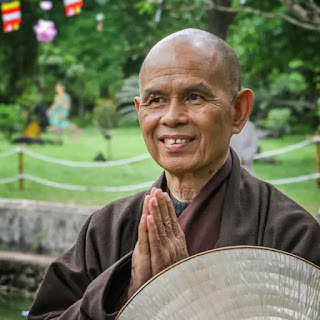
Thich Nhat Hanh was a Buddhist monk from Vietnam was passed away last week. I know very little about him so I am looking forward to learning more about his life and work from Fran Bak, an ambassador of oneness at DhunAnand who happened to be at Thay’s monastery in Vietnam when this happened. We will likely get together on a zoom call for this on March 3 - the 40th day from his passing.

What I do find intriguing is why this Buddhist monk obtained initial fame. As an article in the economist says, “At a time when the Vietnamese Buddhist establishment was largely apolitical, he believed Buddhists had to engage directly with people’s suffering — and that meant getting involved in the political life of the nation.” The courage to stand against what was wrong was the lesson of his life.

This reminds me of Guru Nanak’s poem highlighting Babar’s torture, Jaisi Main Aveh. At a time when most Bhakti saints were largely apolitical, Guru Nanak included in his definition of singing of truth/remembrance of oneness, standing against atrocities.

The following is one of his writings that inspires a beautiful way of dealing with loss.

A dream of my mother - Thich Nhat Hanh.


The day my mother died I wrote in my journal, "A serious misfortune of my life has arrived." I suffered for more than one year after the passing away of my mother.

But one night, in the highlands of Vietnam, I was sleeping in the hut in my hermitage. I dreamed of my mother. I saw myself sitting with her, and we were having a wonderful talk. She looked young and beautiful, her hair flowing down. It was so pleasant to sit there and talk to her as if she had never died.

When I woke up it was about two in the morning, and I felt very strongly that I had never lost my mother. The impression that my mother was still with me was very clear.

I understood then that the idea of having lost my mother was just an idea. It was obvious in that moment that my mother is always alive in me.

I opened the door and went outside. The entire hillside was bathed in moonlight. It was a hill covered with tea plants, and my hut was set behind the temple halfway up. Walking slowly in the moonlight through the rows of tea plants, I noticed my mother was still with me. She was the moonlight caressing me as she had done so often, very tender, very sweet... wonderful!

Each time my feet touched the earth I knew my mother was there with me. I knew this body was not mine but a living continuation of my mother and my father and my grandparents and great-grandparents. Of all my ancestors. Those feet that I saw as "my" feet were actually "our" feet. Together my mother and I were leaving footprints in the damp soil.

From that moment on, the idea that I had lost my mother no longer existed. All I had to do was look at the palm of my hand, feel the breeze on my face or the earth under my feet to remember that my mother is always with me, available at any time.


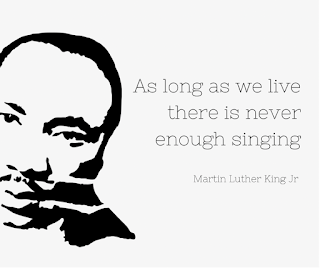
For inspiration on MLK day today I am reading his book “Why we can’t wait.” Martin Luther understood demonstrations, and the effect and power of singing and music. He often talked positively about singing and music. Here are a couple of inspirational MLK quotes:

As long as we live, there is never enough singing.


Beautiful music is the art of the prophets that can calm the agitations of the soul; it is one of the most magnificent and delightful presents God has given us.


Next to the Word of God, music deserves the highest praise. No greater commendation than this can be found — at least not by us. After all, the gift of language combined with the gift of song was only given to man to let him know that he should praise God with both word and music, namely, by proclaiming [the Word of God] through music.

Music and singing played a critical role in inspiring, mobilizing, and giving voice to the civil rights movement. “The freedom songs are playing a strong and vital role in our struggle,” said Martin Luther King, Jr., during the Albany Movement. “They give the people new courage and a sense of unity. I think they keep alive a faith, a radiant hope, in the future, particularly in our most trying hours” (Shelton, “Songs a Weapon”).

The evolution of music in the black freedom struggle reflects the evolution of the movement itself. Calling songs “the soul of the movement,” King explained in his 1964 book Why We Can’t Wait that civil rights activists “sing the freedom songs today for the same reason the slaves sang them, because we too are in bondage and the songs add hope to our determination that ‘We shall overcome, Black and white together, We shall overcome someday’” (King, Why, 86).

Every breath I remember Gobind
- Guru Arjan, Raag Gauri
Every moment I sing Gobind.
- Guru Arjan, Raag Malhar
Newer Posts Older Posts Home

SHIVPREET SINGH

Singing oneness!
- Shivpreet Singh

Related Posts

Popular - 30 days

  • Sanson Ki Mala Pe - Lyrics, Translation and Background
    Sanson ki Maala was made famous by Nusrat Fateh Ali Khan sahib.  Although some have attributed this song to Mirabai and Khusro, this is a gh...
  • Ve Mahiya Tere Vekhan Nu - Tufail Niazi and Wadali Brothers
    I have recently heard this Bulleh Shah song and it has really touched my heart. Several people have sung it, but I love the original composi...
  • Loving in the night - a poem by Rabi'a
    [O my Lord] by rabi'A Translated by Jane hirshfield O my Lord, the stars glitter and the eyes of men are closed. Kings have locked their...
  • Love and the Mool Mantra
    Guru Nanak's teachings are undoubtedly about love. So are Guru Arjan's teachings. The Mool Mantra is given the highest importance i...
  • Vande Mataram - Lyrics and Translation
    I love the Vande Maataram composition in Raag Des sung by Lata Mangeshkar.  Vande Mataram is the national song of India. In 2003, BBC World ...
  • Saas Saas Simro Gobind - Lyrics and Meaning
    iTunes   Amazon   Google Play   Spotify Saas Saas Simro Gobind - Meaning  Listening to the complete Guru I come in the vicinity of oneness...
  • Digging into the 'kaar' of Ek Onkaar
    Exploring the Essence of "Kaar" in Ekonkaar In Sikh philosophy, the term "Ekonkaar" holds profound significance, encapsu...
  • Celebrating International Women's Day with Jane Hirshfield and Mirabai
    Shivoham - Pt. Rajendra Prasanna Two of my favorite women poets, Jane Hirshfield and Mirabai. And singing about the flute. Ah the love!  Now...
  • Bajre Da Sitta - Lyrics and Translation
    Bajre Da Sitta is playful and evergreen Punjabi folk song.   The song is often sung during long Punjabi weddings. One can imagine that a wom...
  • For those who listen to me - A poem
    I am a few breaths of not knowing my wedding day with time.            - Ancient Bard For those who listen to me Do not think me a clean riv...

Blog Archive

  • ▼  2026 (14)
    • ▼  October (2)
      • Bolo Raam: The Words That Awakened Kabir
      • Looking for the Guru, Finding the Seeker
    • ►  June (1)
    • ►  May (1)
    • ►  April (1)
    • ►  March (6)
    • ►  February (1)
    • ►  January (2)
  • ►  2025 (24)
    • ►  October (5)
    • ►  September (7)
    • ►  August (2)
    • ►  July (2)
    • ►  June (3)
    • ►  March (1)
    • ►  February (2)
    • ►  January (2)
  • ►  2024 (21)
    • ►  December (1)
    • ►  November (2)
    • ►  October (3)
    • ►  September (2)
    • ►  August (4)
    • ►  July (2)
    • ►  June (3)
    • ►  May (1)
    • ►  April (1)
    • ►  February (1)
    • ►  January (1)
  • ►  2023 (41)
    • ►  December (4)
    • ►  November (3)
    • ►  October (4)
    • ►  September (7)
    • ►  August (5)
    • ►  July (7)
    • ►  June (3)
    • ►  May (3)
    • ►  April (1)
    • ►  March (1)
    • ►  February (3)
  • ►  2022 (8)
    • ►  March (2)
    • ►  January (6)
  • ►  2021 (139)
    • ►  December (15)
    • ►  November (2)
    • ►  October (6)
    • ►  September (7)
    • ►  August (2)
    • ►  July (4)
    • ►  May (21)
    • ►  April (21)
    • ►  March (35)
    • ►  February (23)
    • ►  January (3)
  • ►  2020 (150)
    • ►  December (2)
    • ►  November (13)
    • ►  October (32)
    • ►  September (47)
    • ►  August (37)
    • ►  July (5)
    • ►  June (3)
    • ►  May (3)
    • ►  April (3)
    • ►  March (2)
    • ►  February (1)
    • ►  January (2)
  • ►  2019 (43)
    • ►  December (5)
    • ►  November (8)
    • ►  October (13)
    • ►  September (4)
    • ►  July (3)
    • ►  June (1)
    • ►  May (2)
    • ►  March (1)
    • ►  February (1)
    • ►  January (5)
  • ►  2018 (53)
    • ►  December (8)
    • ►  November (5)
    • ►  October (3)
    • ►  September (4)
    • ►  August (6)
    • ►  July (3)
    • ►  June (4)
    • ►  May (6)
    • ►  April (5)
    • ►  March (2)
    • ►  February (4)
    • ►  January (3)
  • ►  2017 (73)
    • ►  December (2)
    • ►  November (12)
    • ►  October (8)
    • ►  September (1)
    • ►  August (7)
    • ►  July (6)
    • ►  June (12)
    • ►  May (5)
    • ►  April (4)
    • ►  March (8)
    • ►  February (3)
    • ►  January (5)
  • ►  2016 (141)
    • ►  December (1)
    • ►  November (9)
    • ►  October (16)
    • ►  September (19)
    • ►  August (2)
    • ►  July (5)
    • ►  June (7)
    • ►  May (3)
    • ►  April (18)
    • ►  March (34)
    • ►  February (16)
    • ►  January (11)
  • ►  2015 (28)
    • ►  December (1)
    • ►  November (1)
    • ►  October (2)
    • ►  September (12)
    • ►  August (1)
    • ►  May (1)
    • ►  April (7)
    • ►  March (1)
    • ►  February (1)
    • ►  January (1)
  • ►  2014 (107)
    • ►  December (1)
    • ►  November (6)
    • ►  October (1)
    • ►  August (2)
    • ►  July (1)
    • ►  June (11)
    • ►  April (10)
    • ►  March (15)
    • ►  February (24)
    • ►  January (36)
  • ►  2013 (242)
    • ►  December (13)
    • ►  October (5)
    • ►  September (3)
    • ►  August (3)
    • ►  June (7)
    • ►  May (62)
    • ►  April (79)
    • ►  March (12)
    • ►  February (23)
    • ►  January (35)
  • ►  2012 (145)
    • ►  December (29)
    • ►  November (31)
    • ►  October (44)
    • ►  September (5)
    • ►  August (9)
    • ►  July (7)
    • ►  June (1)
    • ►  May (3)
    • ►  April (1)
    • ►  March (4)
    • ►  February (9)
    • ►  January (2)
  • ►  2011 (252)
    • ►  December (1)
    • ►  November (1)
    • ►  October (4)
    • ►  September (13)
    • ►  August (28)
    • ►  July (44)
    • ►  June (33)
    • ►  May (15)
    • ►  April (2)
    • ►  March (45)
    • ►  February (43)
    • ►  January (23)
  • ►  2010 (70)
    • ►  December (31)
    • ►  November (20)
    • ►  October (2)
    • ►  September (3)
    • ►  August (1)
    • ►  July (2)
    • ►  May (5)
    • ►  March (4)
    • ►  February (1)
    • ►  January (1)
  • ►  2009 (15)
    • ►  December (1)
    • ►  November (3)
    • ►  October (2)
    • ►  September (2)
    • ►  August (1)
    • ►  June (1)
    • ►  April (1)
    • ►  March (1)
    • ►  February (1)
    • ►  January (2)
  • ►  2008 (15)
    • ►  November (1)
    • ►  July (2)
    • ►  June (5)
    • ►  May (1)
    • ►  April (2)
    • ►  March (1)
    • ►  February (1)
    • ►  January (2)
  • ►  2007 (9)
    • ►  November (4)
    • ►  October (2)
    • ►  September (1)
    • ►  August (2)
  • ►  1999 (1)
    • ►  May (1)

Message

Name

Email *

Message *

Twitter

Tweets by @shivpreetsingh


Copyright © Shivpreet Singh. Designed by OddThemes