Shivpreet Singh
Shivpreet Singh
  • Home
  • Music
    • Spotify
    • Apple Music
    • Amazon
    • Pandora
    • SoundCloud
    • Google
    • You Tube
      • Music on YouTube
      • Uplifting Shabads
      • Guru Nanak Shabads
      • Meditation & Chanting
      • Shabads for Kids
      • Shabads of Guru Arjan
      • Shabads of Guru Gobind Singh
  • Videos
    • Latest
    • Popular
    • Uplifting
    • Guru Nanak
    • Meditation
    • For Kids
    • Guru Arjan
    • Guru Gobind Singh
  • Projects
    • DhunAnand Foundation
    • Pandemic 2020
    • Guru Nanak 550
    • Namdev 750
    • Thoughts and Ruminations
    • What I Love to Read
  • News
  • Meet Me
    • Meet Me
    • Request
    • Send Email
    • Newsletter
    • FAQs
  • About
    • Biography
    • Photos
    • Music
    • FAQs

Matthew 7:7 Ask, and it shall be given you; seek, and ye shall find; knock, and it shall be opened unto you:
8 For every one that asketh receiveth; and he that seeketh findeth; and to him that knocketh it shall be opened.
9 Or what man is there of you, whom if his son ask bread, will he give him a stone?
10 Or if he ask a fish, will he give him a serpent?
11 If ye then, being evil, know how to give good gifts unto your children, how much more shall your Father which is in heaven give good things to them that ask him?

Matthew 18:19 Again I say unto you, That if two of you shall agree on earth as touching any thing that they shall ask, it shall be done for them of my Father which is in heaven.

Matthew 21:22 And all things, whatsoever ye shall ask in prayer, believing, ye shall receive.
I am singing this beautiful Mira bhajan while it is raining outside ...


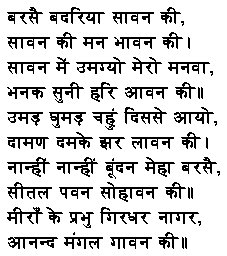
barasai badariyaa saavan kii,
saavan kii man bhaavan kii.
saavan me.n umagyo mero manavaa,
bhanak sunii hari aavan kii..
uma.D ghuma.D chahu.n disase aayo,
daamaNa damake jhar laavan kii.
naanhii.n naanhii.n buu.ndan mehaa barasai,
siital pavan sohaavan kii..
miiraa.N ke prabhu giradhar naagar,
aananda ma.ngal gaavan kii.

jharri -- phuljharri -- damak jhari

It is raining in the month of Savan,
I like the rain coming down.
In Savan, my heart starts to pine,
I hear the sound of Hari coming.
The clouds have rolled in from all sides,
lightening occurs and it pours.
Tiny drops come from the clouds,
and I enjoy the cool breeze.
O lord of Mira, called Giradhar Nagar,
The cloudy season is for singing joyfully

For Hindi version:
http://www.cs.colostate.edu/~malaiya/mira.html

My version:

Clouds pour down during Saavan
Saavan is the time of bliss
Its the time when my mind pines to hear
the whispers of my love's footsteps
For the clouds roll in from all sides
and lightening to strike time and again
Tiny drops to then fall from the clouds
and then blows a cool breeze
Mira welcomes her love Krishna
with her songs of love

*Most altered line, because it is needed to connect the rest of the poem to what Mira wants to convey in her bhajan.
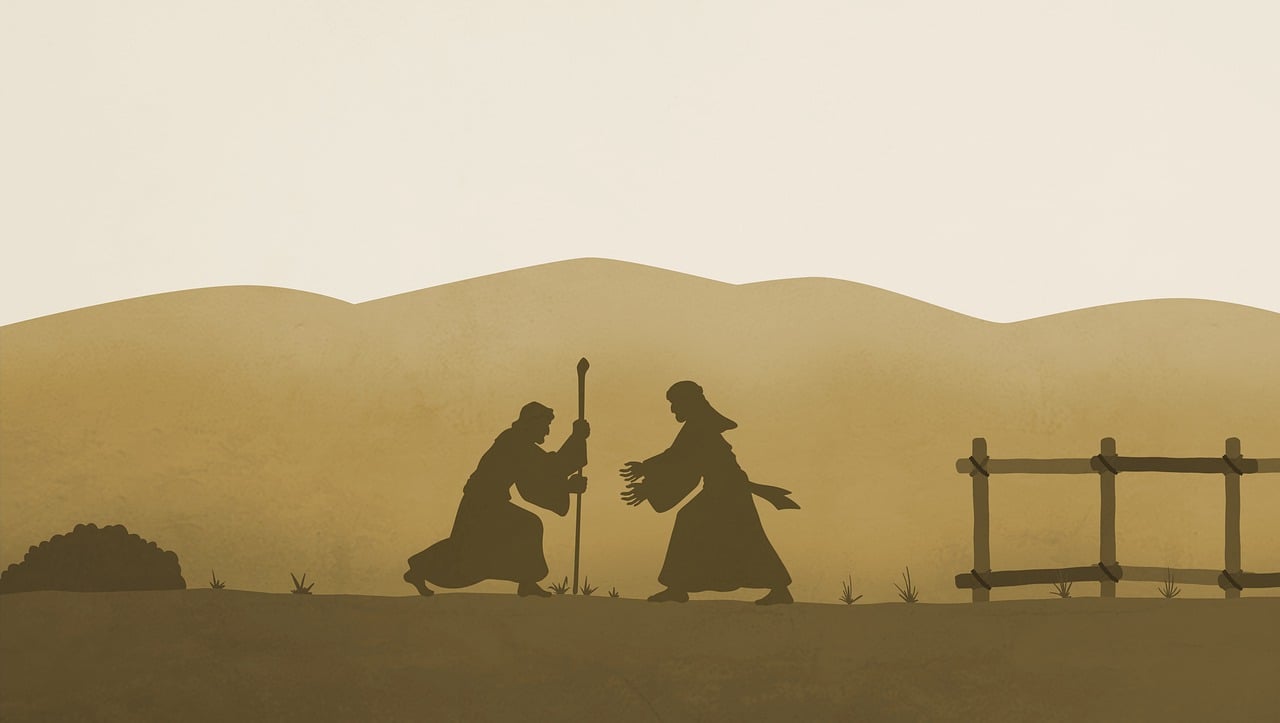
I carry a copy of the Bible with me in my kindle (also the holy Koran).  Today while I was reading the parable of the prodigal son and found that this parable has similar underlying themes compared to Guru Nanak's teachings on Oneness.
 

Parable of the Prodigal Son:

In this parable (see below for text), the prodigal son's journey from separation and folly to reunion and forgiveness is analogous to the journey of the individual soul seeking to return to its divine source. The father's
unconditional love and forgiveness symbolize the divine's unwavering compassion for all beings, regardless of their past mistakes. This story illustrates the oneness between humanity and the divine:

1. Unity of Humanity and God: The prodigal son's story reflects the idea of unity between humanity and God. Just as the son realizes his separation from his father and longs to return, humans often feel a spiritual longing to reconnect with their divine source. This parallels the Sikh concept of recognizing the divine presence within all, highlighting the unity of creation.

2. Forgiveness and Compassion: The father's forgiveness and embrace of the prodigal son highlight the concept of divine forgiveness. This mirrors Guru Nanak's teachings of divine compassion and forgiveness, which emphasize the all-encompassing nature of God's love and the importance of forgiveness in cultivating unity and harmony among humans.

Confluence of Guru Nanak's and Jesus' Teachings:

While Guru Nanak's Sikhism and Jesus' Christianity are distinct religious traditions, there are similarities in their teachings that underscore the concept of oneness:

1. Oneness of God: Both Guru Nanak and Jesus emphasized the oneness and universality of God. Guru Nanak's teaching of "Ik Onkar" and Jesus' proclamation of the greatest commandment as loving God with all one's heart align in stressing the singular, formless, and all-encompassing nature of the divine.

2. Universal Love and Compassion: Both Guru Nanak and Jesus emphasized the importance of love and compassion. Guru Nanak's teachings of selfless service and love for all beings parallel Jesus' teachings of loving one's neighbor as oneself. Both teachings underscore the unity of humanity and the divine through acts of love and service.

3. Equality and Inclusivity: Both spiritual leaders advocated for the equality of all people. Guru Nanak rejected caste-based divisions, and Jesus' interactions with societal outcasts emphasized his commitment to inclusivity. These teachings highlight the interconnectedness of all humans and emphasize their equal worth in the eyes of the divine.

4. Inner Spiritual Journey: Guru Nanak's emphasis on inner meditation (simran) and realization of the divine within aligns with Jesus' teaching that the kingdom of God is within. Both traditions encourage individuals to look inward for spiritual growth and connection to the divine.

In my view, the parable of the prodigal son and the teachings of Guru Nanak and Jesus converge to emphasize the concept of oneness in several ways: unity between humanity and the divine, forgiveness and compassion, love and service, equality, and the significance of inner spiritual awareness. While these teachings emerge from different religious backgrounds, they share common threads that highlight the interconnectedness of all beings and their relationship with the divine.

Luke 15:11-32


The Parable of the Lost Son
(also called the prodigal son)

11 Jesus continued: “There was a man who had two sons. 12 The younger one said to his father, ‘Father, give me my share of the estate.’ So he divided his property between them.
13 “Not long after that, the younger son got together all he had, set off for a distant country and there squandered his wealth in wild living. 14 After he had spent everything, there was a severe famine in that whole country, and he began to be in need. 15 So he went and hired himself out to a citizen of that country, who sent him to his fields to feed pigs. 16 He longed to fill his stomach with the pods that the pigs were eating, but no one gave him anything.

17 “When he came to his senses, he said, ‘How many of my father’s hired servants have food to spare, and here I am starving to death! 18 I will set out and go back to my father and say to him: Father, I have sinned against heaven and against you. 19 I am no longer worthy to be called your son; make me like one of your hired servants.’ 20 So he got up and went to his father.

“But while he was still a long way off, his father saw him and was filled with compassion for him; he ran to his son, threw his arms around him and kissed him.

21 “The son said to him, ‘Father, I have sinned against heaven and against you. I am no longer worthy to be called your son.’

22 “But the father said to his servants, ‘Quick! Bring the best robe and put it on him. Put a ring on his finger and sandals on his feet. 23 Bring the fattened calf and kill it. Let’s have a feast and celebrate. 24 For this son of mine was dead and is alive again; he was lost and is found.’ So they began to celebrate.

25 “Meanwhile, the older son was in the field. When he came near the house, he heard music and dancing. 26 So he called one of the servants and asked him what was going on. 27 ‘Your brother has come,’ he replied, ‘and your father has killed the fattened calf because he has him back safe and sound.’

28 “The older brother became angry and refused to go in. So his father went out and pleaded with him. 29 But he answered his father, ‘Look! All these years I’ve been slaving for you and never disobeyed your orders. Yet you never gave me even a young goat so I could celebrate with my friends. 30 But when this son of yours who has squandered your property with prostitutes comes home, you kill the fattened calf for him!’

31 “‘My son,’ the father said, ‘you are always with me, and everything I have is yours. 32 But we had to celebrate and be glad, because this brother of yours was dead and is alive again; he was lost and is found.’”
The verses of a poem often carry more than just the words printed on the page; they possess an innate vitality that transcends conventional thought and intellect. Billy Collins, in his poem "Introduction to Poetry," takes readers on a journey that unveils the living essence of poetry itself. Through the metaphorical imagery of torturing a poem to extract meaning, Collins invites us to consider the multi-dimensional nature of poetry—its ability to stir emotions, kindle imagination, and provoke introspection. In the light of Collins' insights, I meditated on the profound ways in which poetry reaches beyond mere intellectual grasp, touching upon the emotions, imagination, and symbolism that imbue it with life. This is true of gurbani and other poetry as well.  I have come to understand that poetry, like a living entity, possesses the power to transform us.  For that reason, shabad is my Guru!


Introduction to Poetry
Billy Collins

I ask them to take a poem
and hold it up to the light
like a color slide

or press an ear against its hive.

I say drop a mouse into a poem
and watch him probe his way out,

or walk inside the poem's room
and feel the walls for a light switch.

I want them to waterski
across the surface of a poem
waving at the author's name on the shore.

But all they want to do
is tie the poem to a chair with rope
and torture a confession out of it.

They begin beating it with a hose
to find out what it really means.

The Transcendence of Poetry: Beyond the Bounds of Intellect

Poetry, often described as the language of emotions and the realm of artistic expression, possesses a unique ability to transcend the confines of intellect and touch the deepest recesses of the human soul. While intellect serves as a crucial tool for understanding the world around us, poetry takes us on a journey that goes far beyond the rational mind. It harnesses the power of imagery, symbolism, and metaphor to evoke emotions, provoke introspection, and connect us to the profound aspects of our existence. This essay delves into the ways in which poetry transcends intellect, reminding us that its impact lies in its capacity to resonate on a visceral and emotional level.

The Embrace of Emotion

At the core of poetry's transcendence is its ability to evoke and embrace emotions. As Billy Collins eloquently articulates in his poem "Introduction to Poetry," he likens poetry to a living being and cautions against the act of torturing it for meaning. Collins presents the image of dropping a mouse into a poem, watching it probe its way out, and walking inside the poem's room to feel the walls for a light switch. Here, poetry becomes a dynamic experience, one where readers engage with the verses on an emotional level, akin to holding a poem up to the light like a color slide. Collins' metaphor underscores the intrinsic connection between poetry and emotions, highlighting how the act of dissecting it for mere meaning can detract from its living essence.

The Canvas of Imagination


Collins' poem also accentuates how poetry ignites the flames of imagination. When he encourages readers to "waterski across the surface of a poem, waving at the author's name on the shore," he taps into the participatory nature of engaging with poetry. The readers' own experiences, memories, and emotions fill in the gaps left by the poem, allowing them to co-create the narrative. This collaboration between the poet and the reader blurs the lines between intellect and imagination, transporting the message beyond rational comprehension. The poem, then, becomes a vessel for personal interpretation, offering a richer and more profound connection through the journey of imagination.

The Language of Symbolism

Collins' portrayal of tying a poem to a chair with rope and torturing a confession out of it starkly contrasts the essence of poetry's symbolism. In the poem, he urges us to do the opposite—to interact with the poem gently, allowing it to reveal its meanings rather than forcing them out. Symbolism and metaphor are the tools through which poetry transcends the boundaries of intellect. These literary devices allow poets to convey complex ideas, emotions, and concepts by linking them to tangible and relatable images. By appealing to our sensory perceptions, symbolism bridges the gap between intellectual understanding and emotional impact. The moon, for example, might represent both the passage of time and the ephemeral nature of life in a single poem. Through the fusion of these layered meanings, poetry invites readers to explore truths that extend beyond rational comprehension.

Introspection and Self-Discovery

Collins' poem resonates with the idea that understanding a poem's true essence goes beyond the act of extracting a confession. Instead, poetry serves as a catalyst for introspection and self-discovery, guiding us to confront aspects of ourselves that may remain hidden in everyday discourse. The poem's ability to evoke emotions and resonate with personal experiences fosters a deeper understanding of our inner selves. Collins' vivid imagery of "press[ing] an ear against its hive" underscores the intimacy of this introspective journey. This process of self-discovery contributes to personal growth and empathy, reiterating how poetry transcends intellect by inviting us to explore the human experience through a lens of emotions and reflections.

Transformative Power of Poetry

In a world often dominated by the pursuit of knowledge and the analytical prowess of the intellect, poetry emerges as a beacon of transcendent beauty and emotional connection. As Billy Collins' poem illustrates, the act of torturing a poem for its meaning is a reflection of the reductive approach that fails to capture poetry's living essence. By embracing emotions, inspiring imagination, utilizing symbolism, and fostering introspection, poetry carries us beyond the mere realm of intellectual comprehension. It speaks to the very essence of what it means to be human, offering a medium through which we can explore the vast spectrum of human experiences and emotions. As we journey through life, let us not only engage our intellect but also allow the transformative power of poetry to awaken our hearts and souls to the profound mysteries that lie beyond the surface of rational understanding.
"Sometimes we stare so long at a door that is closing that we see too late the one that is open" ~ Alexander Bell
This poem teaches what man must learn from dog. I was reading a contemporary poem called Fidelity, so I thought I would research other poems. And found this:

A BARKING sound the Shepherd hears,
A cry as of a dog or fox;
He halts--and searches with his eyes
Among the scattered rocks:
And now at distance can discern
A stirring in a brake of fern;
And instantly a dog is seen,
Glancing through that covert green.

The Dog is not of mountain breed;
Its motions, too, are wild and shy;
With something, as the Shepherd thinks,
Unusual in its cry:
Nor is there any one in sight
All round, in hollow or on height;
Nor shout, nor whistle strikes his ear;
What is the creature doing here?

It was a cove, a huge recess,
That keeps, till June, December's snow;
A lofty precipice in front,
A silent tarn below!
Far in the bosom of Helvellyn,
Remote from public road or dwelling,
Pathway, or cultivated land;
From trace of human foot or hand.

There sometimes doth a leaping fish
Send through the tarn a lonely cheer;
The crags repeat the raven's croak,
In symphony austere;
Thither the rainbow comes--the cloud--
And mists that spread the flying shroud;
And sunbeams; and the sounding blast,
That, if it could, would hurry past;
But that enormous barrier holds it fast.

Not free from boding thoughts, a while
The Shepherd stood; then makes his way
O'er rocks and stones, following the Dog
As quickly as he may;
Nor far had gone before he found
A human skeleton on the ground;
The appalled Discoverer with a sigh
Looks round, to learn the history.

From those abrupt and perilous rocks
The Man had fallen, that place of fear!
At length upon the Shepherd's mind
It breaks, and all is clear:
He instantly recalled the name,
And who he was, and whence he came;
Remembered, too, the very day
On which the Traveller passed this way.

But hear a wonder, for whose sake
This lamentable tale I tell!
A lasting monument of words
This wonder merits well.
The Dog, which still was hovering nigh,
Repeating the same timid cry,
This Dog, had been through three months' space
A dweller in that savage place.

Yes, proof was plain that, since the day
When this ill-fated Traveller died,
The Dog had watched about the spot,
Or by his master's side:
How nourished here through such long time
He knows, who gave that love sublime;
And gave that strength of feeling, great
Above all human estimate!

William Wordsworth
For everything you have missed, you have gained something else, and for everything you gain, you lose something else.

~Ralph Waldo Emerson~
Often we find ourselves in the throes of change in life. We are seeing a lot of that in the US now. A lot of families have had to give up houses they have lived in for years. It's quite painful to watch. It is easy to get depressed. However, you always have a choice and you can choose to sing. 
Here is a story about someone who is working hard to achieve balance in life. One who recognizes the gifts given to her when she is loosing so much. She says, "I'm moving this weekend. We finally decided to let this old house go."

http://piecesbymelinda.blogspot.com/2011/03/winds-of-change.html


I have been reading The Best American Poetry 2010, and for the past few days I have been captivated by Fleda Brown's "The Dead." Not only is her poetry very good, and each poem needs to be savored for several days, she also has one of the best tutorials I have found on her website for emerging poets.

This is her website:
http://www.fledabrown.com/index.html

This is the best portion where she talks about poetry, essentially explaining poetry that she likes:
http://www.fledabrown.com/michWriters.html

And here is a link to the audio (more recent material here):
http://ipr.interlochen.org/michiganwriters
Newer Posts Older Posts Home

SHIVPREET SINGH

Singing oneness!
- Shivpreet Singh

Related Posts

Popular - 30 days

  • Sanson Ki Mala Pe - Lyrics, Translation and Background
    Sanson ki Maala was made famous by Nusrat Fateh Ali Khan sahib.  Although some have attributed this song to Mirabai and Khusro, this is a gh...
  • Vande Mataram - Lyrics and Translation
    I love the Vande Maataram composition in Raag Des sung by Lata Mangeshkar.  Vande Mataram is the national song of India. In 2003, BBC World ...
  • Loving in the night - a poem by Rabi'a
    [O my Lord] by rabi'A Translated by Jane hirshfield O my Lord, the stars glitter and the eyes of men are closed. Kings have locked their...
  • Love and the Mool Mantra
    Guru Nanak's teachings are undoubtedly about love. So are Guru Arjan's teachings. The Mool Mantra is given the highest importance i...
  • Kabir's Gao Gao Ri Dulhani - Lyrics and meanings
    One of my favorite Kabir's poem I call "Dulhani." In this beautiful poem, Kabir envisions himself as the bride and the univers...
  • The Many Types of Raag Malhar
    Pour love in your heart, like the rain pours on the land today. As I am working on a Meerabai song I am doing research on the different vari...
  • Jindari Lutti by Ghulam Farid - Lyrics/Translation and Performance by Bade Ghulam Ali Khan (Also Rohi or Dilri Lutti)
    Bade Ghulam Ali Khan's version of this Multani Kafi This is a beautiful spiritual song of separation written by Ghulam Farid.  I recentl...
  • Ve Mahiya Tere Vekhan Nu - Tufail Niazi and Wadali Brothers
    I have recently heard this Bulleh Shah song and it has really touched my heart. Several people have sung it, but I love the original composi...
  • Beethal Bhaila - Namdev Asa - Wherever I go, the playful Beethal is there
    I’ve been working on a musical composition for a beautiful shabad by Bhagat Naamdev, and it’s been making me think deeply about its message....
  • Gulon Mein Rang Bhare - Lyrics and Translation of Mehdi Hassan Ghazal
    I was listening and meditating upon this beautiful ghazal by Faiz Ahmed Faiz, beautifully composed by Mehdi Hassan. It is one of my favorite...

Blog Archive

  • ▼  2026 (12)
    • ▼  June (1)
      • Translation of Laavan - Shivpreet Singh
    • ►  May (1)
    • ►  April (1)
    • ►  March (6)
    • ►  February (1)
    • ►  January (2)
  • ►  2025 (24)
    • ►  October (5)
    • ►  September (7)
    • ►  August (2)
    • ►  July (2)
    • ►  June (3)
    • ►  March (1)
    • ►  February (2)
    • ►  January (2)
  • ►  2024 (21)
    • ►  December (1)
    • ►  November (2)
    • ►  October (3)
    • ►  September (2)
    • ►  August (4)
    • ►  July (2)
    • ►  June (3)
    • ►  May (1)
    • ►  April (1)
    • ►  February (1)
    • ►  January (1)
  • ►  2023 (41)
    • ►  December (4)
    • ►  November (3)
    • ►  October (4)
    • ►  September (7)
    • ►  August (5)
    • ►  July (7)
    • ►  June (3)
    • ►  May (3)
    • ►  April (1)
    • ►  March (1)
    • ►  February (3)
  • ►  2022 (8)
    • ►  March (2)
    • ►  January (6)
  • ►  2021 (139)
    • ►  December (15)
    • ►  November (2)
    • ►  October (6)
    • ►  September (7)
    • ►  August (2)
    • ►  July (4)
    • ►  May (21)
    • ►  April (21)
    • ►  March (35)
    • ►  February (23)
    • ►  January (3)
  • ►  2020 (150)
    • ►  December (2)
    • ►  November (13)
    • ►  October (32)
    • ►  September (47)
    • ►  August (37)
    • ►  July (5)
    • ►  June (3)
    • ►  May (3)
    • ►  April (3)
    • ►  March (2)
    • ►  February (1)
    • ►  January (2)
  • ►  2019 (43)
    • ►  December (5)
    • ►  November (8)
    • ►  October (13)
    • ►  September (4)
    • ►  July (3)
    • ►  June (1)
    • ►  May (2)
    • ►  March (1)
    • ►  February (1)
    • ►  January (5)
  • ►  2018 (53)
    • ►  December (8)
    • ►  November (5)
    • ►  October (3)
    • ►  September (4)
    • ►  August (6)
    • ►  July (3)
    • ►  June (4)
    • ►  May (6)
    • ►  April (5)
    • ►  March (2)
    • ►  February (4)
    • ►  January (3)
  • ►  2017 (73)
    • ►  December (2)
    • ►  November (12)
    • ►  October (8)
    • ►  September (1)
    • ►  August (7)
    • ►  July (6)
    • ►  June (12)
    • ►  May (5)
    • ►  April (4)
    • ►  March (8)
    • ►  February (3)
    • ►  January (5)
  • ►  2016 (141)
    • ►  December (1)
    • ►  November (9)
    • ►  October (16)
    • ►  September (19)
    • ►  August (2)
    • ►  July (5)
    • ►  June (7)
    • ►  May (3)
    • ►  April (18)
    • ►  March (34)
    • ►  February (16)
    • ►  January (11)
  • ►  2015 (28)
    • ►  December (1)
    • ►  November (1)
    • ►  October (2)
    • ►  September (12)
    • ►  August (1)
    • ►  May (1)
    • ►  April (7)
    • ►  March (1)
    • ►  February (1)
    • ►  January (1)
  • ►  2014 (107)
    • ►  December (1)
    • ►  November (6)
    • ►  October (1)
    • ►  August (2)
    • ►  July (1)
    • ►  June (11)
    • ►  April (10)
    • ►  March (15)
    • ►  February (24)
    • ►  January (36)
  • ►  2013 (242)
    • ►  December (13)
    • ►  October (5)
    • ►  September (3)
    • ►  August (3)
    • ►  June (7)
    • ►  May (62)
    • ►  April (79)
    • ►  March (12)
    • ►  February (23)
    • ►  January (35)
  • ►  2012 (145)
    • ►  December (29)
    • ►  November (31)
    • ►  October (44)
    • ►  September (5)
    • ►  August (9)
    • ►  July (7)
    • ►  June (1)
    • ►  May (3)
    • ►  April (1)
    • ►  March (4)
    • ►  February (9)
    • ►  January (2)
  • ►  2011 (252)
    • ►  December (1)
    • ►  November (1)
    • ►  October (4)
    • ►  September (13)
    • ►  August (28)
    • ►  July (44)
    • ►  June (33)
    • ►  May (15)
    • ►  April (2)
    • ►  March (45)
    • ►  February (43)
    • ►  January (23)
  • ►  2010 (70)
    • ►  December (31)
    • ►  November (20)
    • ►  October (2)
    • ►  September (3)
    • ►  August (1)
    • ►  July (2)
    • ►  May (5)
    • ►  March (4)
    • ►  February (1)
    • ►  January (1)
  • ►  2009 (15)
    • ►  December (1)
    • ►  November (3)
    • ►  October (2)
    • ►  September (2)
    • ►  August (1)
    • ►  June (1)
    • ►  April (1)
    • ►  March (1)
    • ►  February (1)
    • ►  January (2)
  • ►  2008 (15)
    • ►  November (1)
    • ►  July (2)
    • ►  June (5)
    • ►  May (1)
    • ►  April (2)
    • ►  March (1)
    • ►  February (1)
    • ►  January (2)
  • ►  2007 (9)
    • ►  November (4)
    • ►  October (2)
    • ►  September (1)
    • ►  August (2)
  • ►  1999 (1)
    • ►  May (1)

Message

Name

Email *

Message *

Twitter

Tweets by @shivpreetsingh


Copyright © Shivpreet Singh. Designed by OddThemes