Shivpreet Singh
Shivpreet Singh
  • Home
  • Music
    • Spotify
    • Apple Music
    • Amazon
    • Pandora
    • SoundCloud
    • Google
    • You Tube
      • Music on YouTube
      • Uplifting Shabads
      • Guru Nanak Shabads
      • Meditation & Chanting
      • Shabads for Kids
      • Shabads of Guru Arjan
      • Shabads of Guru Gobind Singh
  • Videos
    • Latest
    • Popular
    • Uplifting
    • Guru Nanak
    • Meditation
    • For Kids
    • Guru Arjan
    • Guru Gobind Singh
  • Projects
    • DhunAnand Foundation
    • Pandemic 2020
    • Guru Nanak 550
    • Namdev 750
    • Thoughts and Ruminations
    • What I Love to Read
  • News
  • Meet Me
    • Meet Me
    • Request
    • Send Email
    • Newsletter
    • FAQs
  • About
    • Biography
    • Photos
    • Music
    • FAQs


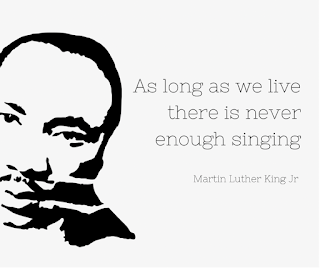
For inspiration on MLK day today I am reading his book “Why we can’t wait.” Martin Luther understood demonstrations, and the effect and power of singing and music. He often talked positively about singing and music. Here are a couple of inspirational MLK quotes:

As long as we live, there is never enough singing.


Beautiful music is the art of the prophets that can calm the agitations of the soul; it is one of the most magnificent and delightful presents God has given us.


Next to the Word of God, music deserves the highest praise. No greater commendation than this can be found — at least not by us. After all, the gift of language combined with the gift of song was only given to man to let him know that he should praise God with both word and music, namely, by proclaiming [the Word of God] through music.

Music and singing played a critical role in inspiring, mobilizing, and giving voice to the civil rights movement. “The freedom songs are playing a strong and vital role in our struggle,” said Martin Luther King, Jr., during the Albany Movement. “They give the people new courage and a sense of unity. I think they keep alive a faith, a radiant hope, in the future, particularly in our most trying hours” (Shelton, “Songs a Weapon”).

The evolution of music in the black freedom struggle reflects the evolution of the movement itself. Calling songs “the soul of the movement,” King explained in his 1964 book Why We Can’t Wait that civil rights activists “sing the freedom songs today for the same reason the slaves sang them, because we too are in bondage and the songs add hope to our determination that ‘We shall overcome, Black and white together, We shall overcome someday’” (King, Why, 86).

Every breath I remember Gobind
- Guru Arjan, Raag Gauri
Every moment I sing Gobind.
- Guru Arjan, Raag Malhar


"When Peace Becomes Obnoxious"
Author: King, Martin Luther, Jr. (Dexter Avenue Baptist Church)
Date: March 18, 1956
Location: Montgomery, Ala.
Genre: Sermon
Topic: Martin Luther King, Jr. - Political and Social Views

King delivered this sermon from Dexter’s pulpit the day before his trial for violating Alabama’s anti-boycott law.1 He begins this handwritten outline by recounting that, after Autherine Lucy's expulsion from the University of Alabama, many celebrated the relative quiet that followed days of rioting at the University. King condemns this calm as “the type of peace that stinks in the nostrils of the almighty God.” He recounts a conversation with someone who suggested the bus boycott was destroying race relations and peace in the community, and responds: "Yes, it is true that if the Negro [accepts] his place, accepts exploitation, and injustice, there will be peace. But it would be an obnoxious peace. Louisville Defender editor Frank L. Stanley, who was in Montgomery covering the trial, reproduced a version of this sermon outline in his newspaper on 29 March 1956.2

Mt 10: 34-363

A few weeks ago, a federal judge handed down an edict which stated in substance that the university of Alabama could no longer deny admission to persons because of their race. With the handing down of this decision, a brave young lady by the name of Autherine Lucy was accepted as the first Negro student to be admitted in the history of the university of Alabama. This was a great moment and a great decision. But with the announcement of this decision, the vanguards of the old order began to emerge. The forces of evil began to congeal. As soon as Autherine Lucy walked on the campus, a group of spoiled students lead by Leonard Wilson and a vicious group of criminals began threatening her on every hand.4 Crosses were burned. Eggs and bricks were thrown at her. The mob even jumped on top of the car in which she was riding. Finally the president and trustees of the university of Alabama asked Autherine to leave for her own safety and the safety of the university. The next day after Autherine was dismissed the paper came out with this headline: “Things are quiet in Tuscaloosa today. There is peace on the campus of the university of Alabama."5 Yes things were quiet in Tuscaloosa. yes there was peace on the campus, but it was peace at a great price. It was peace that had been purchased at the exorbitant price of an inept trustee board succumbing to the whims and caprices of a vicious mob. It was peace that had been purchased at the price of allowing mobocracy to reign supreme over democracy. It was peace that had been purchased at the price of the capitulating to the forces of darkness. This is the type of peace that all men of goodwill hate. It is the type of peace that is obnoxious. It is the type of peace that stinks in the nostrils of the almighty God.

Now let me hasten to say that this is not a concession to or a justification for physical war. I can see no moral justification for war. I believe absolutely and positively that violence is self-defeating. War is devastating. And we know now that if we continue to use these weapons of destruction, our civilization will be plunged across the abyss of destruction

However, there is a type of war that every Christian is involved in. It is a spiritual war. It is a war of ideas. Every true Christian is a fighting pacifist. In a very profound passage, which has been often misunderstood, Jesus utters this. He says “Think not that I am come to bring peace. I come not to bring peace, but a sword.” {Mt 10:34-36} Certainly he is not saying that he comes not to bring peace in the higher sense. What he is saying is: “I come not to bring this peace of escapism, this peace that fails to confront the real issues of life, the peace that makes for stagnant complacency.” Then he says, I come to bring a sword—not a physical sword. Whenever I come a conflict is precipitated between the old and the new, between justice and injustice, between the forces of light and the forces of darkness. “I come to declare war on evil. I come to declare war on injustice

This text is saying in substance Peace is not merely the absence of some negative force—war, tensions, confusion but it is the presence of some positive force—justice, goodwill, the power of the kingdom of God.

I had a long talk the other day with a man about this bus situation. He discussed the peace being destroyed in the community, the destroying of good race relations. I agreed that it is more tension now. But peace is not merely to absence of this tension, but the presence of justice. And even if we didn’t have this tension, we still wouldn’t have positive peace. Yes it is true that if the Negro accept his place, accepts exploitation, and injustice, there will be peace. But it would be an obnoxious peace. It would be a peace that boiled down to stagnant complicity, deadening passivity and

If peace means this, I dont want peace:
If peace means accepting second class citizen ship I dont want it
If peace means keeping my mouth shut in the midst of injustice and evil, I dont want it
If peace means being complacently adjusted to a deadening status quo, I dont want peace.
If peace means a willingness to be exploited economically, dominated polically, humiliated and segregated, I dont want peace.

In a passive non-violent manner we must revolt against this peace.

Jesus says in substance, I will not be content until justice, goodwill, brotherhood, love yes, the kingdom of God are established upon the earth. This is real peace. Peace is the presence of positive good.
Finally, never forget that there is an inner peace that comes as a result of doing God’s will.
Our Father God, who dost overarch our fleeting years with thine eternity and dost undergird our weakness with thy strength, in the midst of the pressures of another day, as we face its vast concerns.

Above all else save us from succumbing to the tragic temptation of Of becoming cynical

1. Dexter’s 18 March 1956 program indicates King preached this sermon. King's trial began on 19 March 1956. Judge Eugene Carter found King guilty after a four-day trial and sentenced him to either pay a $500 fine plus court costs or serve 386 days in jail. The sentence was suspended following an appeal by King’s attorney (Testimony in State of Alabama v. M. L. King, Jr., 22 March 1956, in Papers 3:183-196).

2. King, “When Peace Becomes Obnoxious,” Sermon Delivered on 18 March 1956 at Dexter Avenue Baptist Church, 29 March 1956, in Papers 3:207-208. The published version follows the wording of this handwritten outline. In a 3 April 1956 letter, King wrote to Stanley to thank him for his “fine” coverage of the Montgomery movement and to “express my deepest appreciation for your interest in our cause and for the interest you have stimulated in Alpha men all over the country.” Stanley was national president of King's fraternity, Alpha Phi Alpha, at the time of this letter.

3. Matthew 10:34-36: “Think not that I am come to send peace on earth. I came not to send peace, but a sword. For I am come to set a man at variance against his father, and the daughter against her mother, and the daughter in law against her mother in law. And a man’s foes shall be they of his own household.”

4. University of Alabama officials expelled Leonard Wilson in mid-March because of his “unwarranted and outrageous attacks . . . upon the integrity of the president and faculty and officers of the university” (“Segregation: That Defiant Sophomore,” Newsweek, 26 March 1956, p. 25). Wilson was head of the Citizens Council of West Alabama and a sophomore at the University of Alabama.

5. An editorial in the 7 February 1956 Tuscaloosa News concluded: “Yes, there’s peace on the University campus this morning. But what a price has been paid for it!”

Source: 
CSKC, INP, Coretta Scott King Collection, In Private Hands, Sermon file, folder 111, "When Peace Becomes Obnoxious."
I stumbled across this popular quote from MLK Jr. about courage and speaking the truth:


Did some research and found where this quote comes from.  This was a speech about courage made on March 8, 1965 in Salem, Alabama.  The words have been changed a little bit.


This is the transcript of these powerful words from Martin Luther King Jr.

Deep down in our non-violent creed is the conviction there are some things so dear, some things so precious, some things so eternally true, that they're worth dying for. And if a man happens to be 36-years-old, as I happen to be, some great truth stands before the door of his life--some great opportunity to stand up for that which is right. 
A man might be afraid his home will get bombed, or he's afraid that he will lose his job, or he's afraid that he will get shot, or beat down by state troopers, and he may go on and live until he's 80. He's just as dead at 36 as he would be at 80, and the cessation of breathing in his life is merely the belated announcement of an earlier death of the spirit. He died ... A man dies when he refuses to stand up for that which is right. A man dies when he refuses to stand up for justice. A man dies when he refuses to take a stand for that which is true.
So we're going to stand up amid horses. We're going to stand up right here in Alabama, amid the billy-clubs. We're going to stand up right here in Alabama amid police dogs, if they have them. We're going to stand up amid tear gas!

We're going to stand up amid anything they can muster up, letting the world know that we are determined to be free!


Today is the 25th anniversary of the nation's commemoration of Rev. Martin Luther King's birthday as a national holiday. Following is the text of the "I have a dream" speech, delivered on the steps of the Lincoln Memorial in Washington on Aug. 28, 1963. I read it today with my son while listening to Guru Nanak's "Timeless Truth Meditation" ... words of this great man still ring true, because they have the essence of the eternal truth of equality and freedom:


I am happy to join with you today in what will go down in history as the greatest demonstration for freedom in the history of our nation.

Five score years ago, a great American, in whose symbolic shadow we stand today, signed the Emancipation Proclamation. This momentous decree came as a great beacon light of hope to millions of Negro slaves who had been seared in the flames of withering injustice. It came as a joyous daybreak to end the long night of their captivity.

But one hundred years later, the Negro still is not free. One hundred years later, the life of the Negro is still sadly crippled by the manacles of segregation and the chains of discrimination. One hundred years later, the Negro lives on a lonely island of poverty in the midst of a vast ocean of material prosperity. One hundred years later, the Negro is still languished in the corners of American society and finds himself an exile in his own land. And so we've come here today to dramatize a shameful condition.

In a sense we've come to our nation's capital to cash a check. When the architects of our republic wrote the magnificent words of the Constitution and the Declaration of Independence, they were signing a promissory note to which every American was to fall heir. This note was a promise that all men, yes, black men as well as white men, would be guaranteed the "unalienable Rights" of "Life, Liberty and the pursuit of Happiness." It is obvious today that America has defaulted on this promissory note, insofar as her citizens of color are concerned. Instead of honoring this sacred obligation, America has given the Negro people a bad check, a check which has come back marked "insufficient funds."

But we refuse to believe that the bank of justice is bankrupt. We refuse to believe that there are insufficient funds in the great vaults of opportunity of this nation. And so, we've come to cash this check, a check that will give us upon demand the riches of freedom and the security of justice.

We have also come to this hallowed spot to remind America of the fierce urgency of Now. This is no time to engage in the luxury of cooling off or to take the tranquilizing drug of gradualism. Now is the time to make real the promises of democracy. Now is the time to rise from the dark and desolate valley of segregation to the sunlit path of racial justice. Now is the time to lift our nation from the quicksands of racial injustice to the solid rock of brotherhood. Now is the time to make justice a reality for all of God's children.

It would be fatal for the nation to overlook the urgency of the moment. This sweltering summer of the Negro's legitimate discontent will not pass until there is an invigorating autumn of freedom and equality. Nineteen sixty-three is not an end, but a beginning. And those who hope that the Negro needed to blow off steam and will now be content will have a rude awakening if the nation returns to business as usual. And there will be neither rest nor tranquility in America until the Negro is granted his citizenship rights. The whirlwinds of revolt will continue to shake the foundations of our nation until the bright day of justice emerges.

But there is something that I must say to my people, who stand on the warm threshold which leads into the palace of justice: In the process of gaining our rightful place, we must not be guilty of wrongful deeds. Let us not seek to satisfy our thirst for freedom by drinking from the cup of bitterness and hatred. We must forever conduct our struggle on the high plane of dignity and discipline. We must not allow our creative protest to degenerate into physical violence. Again and again, we must rise to the majestic heights of meeting physical force with soul force.

The marvelous new militancy which has engulfed the Negro community must not lead us to a distrust of all white people, for many of our white brothers, as evidenced by their presence here today, have come to realize that their destiny is tied up with our destiny. And they have come to realize that their freedom is inextricably bound to our freedom.

We cannot walk alone.

And as we walk, we must make the pledge that we shall always march ahead.

We cannot turn back.

There are those who are asking the devotees of civil rights, "When will you be satisfied?" We can never be satisfied as long as the Negro is the victim of the unspeakable horrors of police brutality. We can never be satisfied as long as our bodies, heavy with the fatigue of travel, cannot gain lodging in the motels of the highways and the hotels of the cities. We cannot be satisfied as long as the negro's basic mobility is from a smaller ghetto to a larger one. We can never be satisfied as long as our children are stripped of their self-hood and robbed of their dignity by signs stating: "For Whites Only." We cannot be satisfied as long as a Negro in Mississippi cannot vote and a Negro in New York believes he has nothing for which to vote. No, no, we are not satisfied, and we will not be satisfied until "justice rolls down like waters, and righteousness like a mighty stream."

I am not unmindful that some of you have come here out of great trials and tribulations. Some of you have come fresh from narrow jail cells. And some of you have come from areas where your quest -- quest for freedom left you battered by the storms of persecution and staggered by the winds of police brutality. You have been the veterans of creative suffering. Continue to work with the faith that unearned suffering is redemptive. Go back to Mississippi, go back to Alabama, go back to South Carolina, go back to Georgia, go back to Louisiana, go back to the slums and ghettos of our northern cities, knowing that somehow this situation can and will be changed.

Let us not wallow in the valley of despair, I say to you today, my friends.

And so even though we face the difficulties of today and tomorrow, I still have a dream. It is a dream deeply rooted in the American dream.

I have a dream that one day this nation will rise up and live out the true meaning of its creed: "We hold these truths to be self-evident, that all men are created equal."

I have a dream that one day on the red hills of Georgia, the sons of former slaves and the sons of former slave owners will be able to sit down together at the table of brotherhood.

I have a dream that one day even the state of Mississippi, a state sweltering with the heat of injustice, sweltering with the heat of oppression, will be transformed into an oasis of freedom and justice.

I have a dream that my four little children will one day live in a nation where they will not be judged by the color of their skin but by the content of their character.

I have a dream today!

I have a dream that one day, down in Alabama, with its vicious racists, with its governor having his lips dripping with the words of "interposition" and "nullification" -- one day right there in Alabama little black boys and black girls will be able to join hands with little white boys and white girls as sisters and brothers.

I have a dream today!

I have a dream that one day every valley shall be exalted, and every hill and mountain shall be made low, the rough places will be made plain, and the crooked places will be made straight; "and the glory of the Lord shall be revealed and all flesh shall see it together."

This is our hope, and this is the faith that I go back to the South with.

With this faith, we will be able to hew out of the mountain of despair a stone of hope. With this faith, we will be able to transform the jangling discords of our nation into a beautiful symphony of brotherhood. With this faith, we will be able to work together, to pray together, to struggle together, to go to jail together, to stand up for freedom together, knowing that we will be free one day.

And this will be the day -- this will be the day when all of God's children will be able to sing with new meaning:

My country 'tis of thee, sweet land of liberty, of thee I sing.

Land where my fathers died, land of the Pilgrim's pride,

From every mountainside, let freedom ring!

And if America is to be a great nation, this must become true.

And so let freedom ring from the prodigious hilltops of New Hampshire.

Let freedom ring from the mighty mountains of New York.

Let freedom ring from the heightening Alleghenies of Pennsylvania.

Let freedom ring from the snow-capped Rockies of Colorado.

Let freedom ring from the curvaceous slopes of California.

But not only that:

Let freedom ring from Stone Mountain of Georgia.

Let freedom ring from Lookout Mountain of Tennessee.

Let freedom ring from every hill and molehill of Mississippi.

From every mountainside, let freedom ring.

And when this happens, when we allow freedom ring, when we let it ring from every village and every hamlet, from every state and every city, we will be able to speed up that day when all of God's children, black men and white men, Jews and Gentiles, Protestants and Catholics, will be able to join hands and sing in the words of the old Negro spiritual:

Free at last! Free at last!

Thank God Almighty, we are free at last!
Older Posts Home

SHIVPREET SINGH

Singing oneness!
- Shivpreet Singh

Related Posts

Popular - 30 days

  • Vande Mataram - Lyrics and Translation
    I love the Vande Maataram composition in Raag Des sung by Lata Mangeshkar.  Vande Mataram is the national song of India. In 2003, BBC World ...
  • Kabir's Gao Gao Ri Dulhani - Lyrics and meanings
    One of my favorite Kabir's poem I call "Dulhani." In this beautiful poem, Kabir envisions himself as the bride and the univers...
  • The Many Types of Raag Malhar
    Pour love in your heart, like the rain pours on the land today. As I am working on a Meerabai song I am doing research on the different vari...
  • Sanson Ki Mala Pe - Lyrics, Translation and Background
    Sanson ki Maala was made famous by Nusrat Fateh Ali Khan sahib.  Although some have attributed this song to Mirabai and Khusro, this is a gh...
  • Jindari Lutti by Ghulam Farid - Lyrics/Translation and Performance by Bade Ghulam Ali Khan (Also Rohi or Dilri Lutti)
    Bade Ghulam Ali Khan's version of this Multani Kafi This is a beautiful spiritual song of separation written by Ghulam Farid.  I recentl...
  • Loving in the night - a poem by Rabi'a
    [O my Lord] by rabi'A Translated by Jane hirshfield O my Lord, the stars glitter and the eyes of men are closed. Kings have locked their...
  • Love and the Mool Mantra
    Guru Nanak's teachings are undoubtedly about love. So are Guru Arjan's teachings. The Mool Mantra is given the highest importance i...
  • Beethal Bhaila - Namdev Asa - Wherever I go, the playful Beethal is there
    I’ve been working on a musical composition for a beautiful shabad by Bhagat Naamdev, and it’s been making me think deeply about its message....
  • Krishna's Cosmic Flute - Reflecting upon Bulleh Shah's Kafi, Bansi Kaanh Acharj Bajai
    Krishna's Cosmic Flute Playing Bulleh Shah in a kafi says, "You are playing a surprising, wondrous, flute O Krishna." Bulleh S...
  • Bajre Da Sitta - Lyrics and Translation
    Bajre Da Sitta is playful and evergreen Punjabi folk song.   The song is often sung during long Punjabi weddings. One can imagine that a wom...

Blog Archive

  • ▼  2026 (12)
    • ▼  June (1)
      • Translation of Laavan - Shivpreet Singh
    • ►  May (1)
    • ►  April (1)
    • ►  March (6)
    • ►  February (1)
    • ►  January (2)
  • ►  2025 (24)
    • ►  October (5)
    • ►  September (7)
    • ►  August (2)
    • ►  July (2)
    • ►  June (3)
    • ►  March (1)
    • ►  February (2)
    • ►  January (2)
  • ►  2024 (21)
    • ►  December (1)
    • ►  November (2)
    • ►  October (3)
    • ►  September (2)
    • ►  August (4)
    • ►  July (2)
    • ►  June (3)
    • ►  May (1)
    • ►  April (1)
    • ►  February (1)
    • ►  January (1)
  • ►  2023 (41)
    • ►  December (4)
    • ►  November (3)
    • ►  October (4)
    • ►  September (7)
    • ►  August (5)
    • ►  July (7)
    • ►  June (3)
    • ►  May (3)
    • ►  April (1)
    • ►  March (1)
    • ►  February (3)
  • ►  2022 (8)
    • ►  March (2)
    • ►  January (6)
  • ►  2021 (139)
    • ►  December (15)
    • ►  November (2)
    • ►  October (6)
    • ►  September (7)
    • ►  August (2)
    • ►  July (4)
    • ►  May (21)
    • ►  April (21)
    • ►  March (35)
    • ►  February (23)
    • ►  January (3)
  • ►  2020 (150)
    • ►  December (2)
    • ►  November (13)
    • ►  October (32)
    • ►  September (47)
    • ►  August (37)
    • ►  July (5)
    • ►  June (3)
    • ►  May (3)
    • ►  April (3)
    • ►  March (2)
    • ►  February (1)
    • ►  January (2)
  • ►  2019 (43)
    • ►  December (5)
    • ►  November (8)
    • ►  October (13)
    • ►  September (4)
    • ►  July (3)
    • ►  June (1)
    • ►  May (2)
    • ►  March (1)
    • ►  February (1)
    • ►  January (5)
  • ►  2018 (53)
    • ►  December (8)
    • ►  November (5)
    • ►  October (3)
    • ►  September (4)
    • ►  August (6)
    • ►  July (3)
    • ►  June (4)
    • ►  May (6)
    • ►  April (5)
    • ►  March (2)
    • ►  February (4)
    • ►  January (3)
  • ►  2017 (73)
    • ►  December (2)
    • ►  November (12)
    • ►  October (8)
    • ►  September (1)
    • ►  August (7)
    • ►  July (6)
    • ►  June (12)
    • ►  May (5)
    • ►  April (4)
    • ►  March (8)
    • ►  February (3)
    • ►  January (5)
  • ►  2016 (141)
    • ►  December (1)
    • ►  November (9)
    • ►  October (16)
    • ►  September (19)
    • ►  August (2)
    • ►  July (5)
    • ►  June (7)
    • ►  May (3)
    • ►  April (18)
    • ►  March (34)
    • ►  February (16)
    • ►  January (11)
  • ►  2015 (28)
    • ►  December (1)
    • ►  November (1)
    • ►  October (2)
    • ►  September (12)
    • ►  August (1)
    • ►  May (1)
    • ►  April (7)
    • ►  March (1)
    • ►  February (1)
    • ►  January (1)
  • ►  2014 (107)
    • ►  December (1)
    • ►  November (6)
    • ►  October (1)
    • ►  August (2)
    • ►  July (1)
    • ►  June (11)
    • ►  April (10)
    • ►  March (15)
    • ►  February (24)
    • ►  January (36)
  • ►  2013 (242)
    • ►  December (13)
    • ►  October (5)
    • ►  September (3)
    • ►  August (3)
    • ►  June (7)
    • ►  May (62)
    • ►  April (79)
    • ►  March (12)
    • ►  February (23)
    • ►  January (35)
  • ►  2012 (145)
    • ►  December (29)
    • ►  November (31)
    • ►  October (44)
    • ►  September (5)
    • ►  August (9)
    • ►  July (7)
    • ►  June (1)
    • ►  May (3)
    • ►  April (1)
    • ►  March (4)
    • ►  February (9)
    • ►  January (2)
  • ►  2011 (252)
    • ►  December (1)
    • ►  November (1)
    • ►  October (4)
    • ►  September (13)
    • ►  August (28)
    • ►  July (44)
    • ►  June (33)
    • ►  May (15)
    • ►  April (2)
    • ►  March (45)
    • ►  February (43)
    • ►  January (23)
  • ►  2010 (70)
    • ►  December (31)
    • ►  November (20)
    • ►  October (2)
    • ►  September (3)
    • ►  August (1)
    • ►  July (2)
    • ►  May (5)
    • ►  March (4)
    • ►  February (1)
    • ►  January (1)
  • ►  2009 (15)
    • ►  December (1)
    • ►  November (3)
    • ►  October (2)
    • ►  September (2)
    • ►  August (1)
    • ►  June (1)
    • ►  April (1)
    • ►  March (1)
    • ►  February (1)
    • ►  January (2)
  • ►  2008 (15)
    • ►  November (1)
    • ►  July (2)
    • ►  June (5)
    • ►  May (1)
    • ►  April (2)
    • ►  March (1)
    • ►  February (1)
    • ►  January (2)
  • ►  2007 (9)
    • ►  November (4)
    • ►  October (2)
    • ►  September (1)
    • ►  August (2)
  • ►  1999 (1)
    • ►  May (1)

Message

Name

Email *

Message *

Twitter

Tweets by @shivpreetsingh


Copyright © Shivpreet Singh. Designed by OddThemes