Shivpreet Singh
Shivpreet Singh
  • Home
  • Music
    • Spotify
    • Apple Music
    • Amazon
    • Pandora
    • SoundCloud
    • Google
    • You Tube
      • Music on YouTube
      • Uplifting Shabads
      • Guru Nanak Shabads
      • Meditation & Chanting
      • Shabads for Kids
      • Shabads of Guru Arjan
      • Shabads of Guru Gobind Singh
  • Videos
    • Latest
    • Popular
    • Uplifting
    • Guru Nanak
    • Meditation
    • For Kids
    • Guru Arjan
    • Guru Gobind Singh
  • Projects
    • DhunAnand Foundation
    • Pandemic 2020
    • Guru Nanak 550
    • Namdev 750
    • Thoughts and Ruminations
    • What I Love to Read
  • News
  • Meet Me
    • Meet Me
    • Request
    • Send Email
    • Newsletter
    • FAQs
  • About
    • Biography
    • Photos
    • Music
    • FAQs
Today on I am reading Autobiography by Eve today by Ansel Elkins. In a short package this poem comes with a resounding  message for our times. It is a lovely retelling of Eve's story from the Bible.  In the Bible, Eve gets a bad reputation -- she is the known to be the one that leads Adam astray, and thereby man falls from grace. And when God begins to question Adam and Eve concerning their sin (Gen. 3:11-13), they each pass off the responsibility to someone else: Adam blamed Eve; she in turn blamed the serpent. But they both agree that there was a fall from grace. Boldly correcting the history of the bible and that of every woman, Ansel claims that this was not a falling from grace. It was a leaping into freedom.  I loved the take on this: every falling of grace in terms of the society might actually be a rightful leap to freedom.  In just a few words Elkins unshackles bonds of centuries.  This is the power of revolutionary poetry that sings oneness. 

This poem reminded me of God's Garden by Robert Frost which is a different retelling of the genesis story from the Bible. It also reminds me of Guru Nanak's Bhand Jamiyeh where he says "Why do you call her low? Woman is only second to God."

[published with the permission of the author]

Autobiography of Eve

Wearing nothing but snakeskin
boots, I blazed a footpath, the first
radical road out of that old kingdom
toward a new unknown.
When I came to those great flaming gates
of burning gold,
I stood alone in terror at the threshold
between Paradise and Earth.
There I heard a mysterious echo:
my own voice
singing to me from across the forbidden
side. I shook awake—
at once alive in a blaze of green fire.

Let it be known: I did not fall from grace.

I leapt
to freedom.

- Ansel Elkins

More on Ansel Elkins 2014 book, Blue Yodel: https://anselelkins.net/yodel.html


I was thinking of Guru Nanak's poem Bhand Jamiye and found the following essay written by Jessi Kaur. I have known Jessi Kaur as Jessi didi since a long time. I used to participate in monthly kirtans that she organized in the California bay area. She is an avid writer and speaker.  


Empowerment Of Women
By Jessi Kaur

Bhand jamiye bhand nimmiye, bhand mangan veaho.
Bhando hovey dosti, bhando challe raho.
Bhand mua bhand bhaliye, bhand hove bandhaan.
So kyon mandaaakhieay jit jamme raajan
Bhando hi bhand upje
Bhande baajh na koay
Nanak bhande bahra, eko sacha soay.
     – SGGS P. 413 ­

From woman, man is born;
Within woman, man is conceived; to woman he is engaged and married.
Woman becomes his friend; through woman, the future generations come.
When his woman dies, he seeks another woman; to woman he is bound.
Don’t condemn her, she births the royals you revere.
From woman, woman is born; without woman, there would be no one at all. O Nanak, only the True Lord is without a woman.

When Guru Nanak pronounced the above words, he made a radical call not just for the equality of women, but for a social order in which women would be front and center; in which their role as wife, mother, companion, nurturer, leader was appreciated, and they were held in high esteem.

In the fifteenth century, women were relegated to an inferior position. Neither religion, nor the prevalent law accorded women equal rights to men. They played a subservient role at home, in society as well as in social and religious ceremonies. Child- marriage was customary, Sati, the practice of women burning themselves on their husband’s pyre was common and widow remarriage prohibited. Dowry was widely prevalent.

S.S. Kohli in Philosophy of Guru Nanak (1969) states: “The Hindus considered the woman a very inferior thing, a sort of possession and a device for sexual pleasure. She was kept in purdah and within the four walls of the house. The freedom given to women in Vedic times and her status in society of that age was utterly forgotten. Guru Nanak could not tolerate the sad plight of Indian women.”

In Guru Nanak’s vision of social justice sexist norms that undervalued the equality of women had to be uprooted. Child marriage, sati, purdah and dowry were terrible inequities perpetuated against women. Guru Nanak challenged the patriarchal culture that was responsible for many of the ills including considering women unclean during menstruation and after child birth. He condemned the killing of the female fetus, censured the practice of dowry and sati, opened the doors of higher education to women and encouraged their participation in religious and social ceremonies.

Guru Nanak’s proclamation that only God exists outside of a woman’s creative and nurturing power was revolutionary. In one fell sweep it ripped the prejudices against women, and put them on a pedestal. In The Sisters of the Spinning Wheel, Professor Puran Singh, commenting on the core of Guru Nanak’s mission to ensure a rightful place for women said: “A Divine sovereignty is conferred upon her (woman).”

Building on Guru Nanak’s initiative of upliftment of women and the development of a socially just society, the subsequent Gurus encouraged and solicited the participation of women in religious and educational institutions. During the period of Guru Angad women took active roles in sangat (religious congregations) and pangat (community kitchen). Under the patronage of the Gurus they became community organizers, educators, and even heads of religious centers.

Guru Ram Das gave the institution of marriage a new significance.

Dhan pir eh na akhiyan behn ikatthe hoe.

Ek jot doey murti, dhan pir kahiye soe.

SGGS P 788

“Call them not husband and wife who only dwell together. Those that shine as one light in two bodies are to be deemed as husband and wife.”

According to Guru Ram Das marriage was a spiritual partnership between two individuals who were aligned in purpose and supported each other’s endeavors.

The enduring activism of the Sikh Gurus was marked by women engaged in leadership roles in various fields. Women in the immediate families of the Gurus became role models. History records the devotion, dedication, and active engagement in Sikh affairs of Mata Khivi, Bibi Amro, Bibi Bhani, Mata Ganga, and Mata Gujri. The inspirational legend of Mai Bhago who rode along with other women into the battlefield to stand up against the tyranny of the Moghuls points to the skills and expertise of women in archery and horsemanship. Essentially the Sikh Gurus challenged male/female stereotypes and created space and legitimacy for women to take up positions in multiple fields.

Guru Nanak and the subsequent Gurus exalted women in yet another way. In Sri Guru Granth Sahib the outpouring of love for the Divine is captured in the metaphor of a wedded woman’s love for her husband, or the yearning of the soul-bride for her true love. Nikki Guninder Kaur Singh in Feminine Principal in the Sikh Vision of the Transcendent (1993) and Prabhjot Kaur in Women Liberation –Through the prism of Sikh Faith (2015) have explored in depth the feminine perspective in Sri Guru Granth Sahib.

Prabhjot Kaur expounds upon three kinds of women mentioned in Sri Guru Granth Sahib. Kuchaji (one without merit), suchaji (one with merits) and Gunvanti (full of virtues). The Divine is enchanted only by the gunvanti who is held up as a role model for humanity. The kuchaji is condemned and suchaji has to evolve to gunvanti; a woman empowered by her goodness. She is a selfless mother, a nurturer; she is humble, contented, compassionate and forgiving. Gunvanti creates harmony in her household and is a spiritual guide for her family; powerful and dignified she is the princess and the queen whose beauty shines through her virtues, who is second to no male yet never compromises her humility. Men and women alike are urged to take on the qualities of gunvanti to woo the Divine.

On the temporal plane, right through post Maharaja Ranjit Singh period Sikh women flourished as shining examples incorporating the Sikh model of Sant Sipahi put forth by Guru Gobind Singh.

Tremendous progress was made in establishing gender equality and women took on important socio-religious positions. However, the dominant mainstream culture of India with its powerful caste system and strong patriarchal roots continued to exert its influence. Social change is not sustainable without constant vigilance. Five hundred years after Guru Nanak’s clarion call for equality, women still face violence, discrimination, and a strong resistance to equal participation in society. Many of the evil practices that the Gurus sought to demolish are back. Female infanticide has reached shocking numbers in Punjab. Ultra sound clinics that determine the sex of the fetus solely for the elimination of female fetus are flourishing. The sexist practice of dowry continues unabated. It puts a huge burden on the less affluent, and is the root cause of bride burning. The old patriarchal traditions continue the overt and covert subjugation of women. Violence against women in the form of rape, domestic violence, double standards at home and in communities is still wide spread. Shockingly discrimination against women is most glaringly practiced in Harmandir Sahib where women are disallowed to perform Kirtan. This is appalling and totally against the equal participation of women in religious services advocated by Guru Nanak.

Punjab is but a microcosm of the world and reflects a wider landscape ridden with violation of women’s rights across the world. In 1993, the UN General Assembly passed a declaration on the elimination of violence against women. And yet more than 20 years later the facts and figures of violence against women are appalling. When Boko Haram kidnapped more than 200 girls from their school, the world was horrified, but the villainous perpetrators have not been apprehended. The religious police of Saudi Arabia dictate the socio-cultural milieu of the land, and women who disobey are administered horrific punishment. These two examples of injustice against women expose only the tip of the iceberg. The plight of millions of women around the world remains pitiful.Heifer International (www.heifer.org) an East African non-profit organization claims that 70% of the world’s poor and two thirds of the world’s illiterates are women. They own only 1% of the world’s property.

In the US, the most progressive nation in the world, women are paid less than men, an intangible but real glass ceiling keeps them from rising to the upper most rungs of corporate and public life; and even though the number of rapes has declined, domestic violence is still widespread.

No amount of legislation can rid the world of aggression against women. While it is important to put strict punitive consequences for violence against women, and not sweep the problem under the rug, a lasting change and systemic reform is not sustainable without continued effort to keep it fueled in the hearts and minds of people. Investing in women’s and girls’ education is one of the most effective tools to promote equality for women. Cultural mores that perpetuate sexist roles at home must be vigilantly avoided. Youth must be sensitized about the social, economic, psychological, and the potential of horrific consequences of dowry. Affluent members of the community must set an example by holding simple rather than ostentatious weddings.

Women must take the lead in their own empowerment. All mothers must teach their sons from an early age to respect women. They must also instill high self esteem in their daughters. Fathers need to teach respect for women by their own example. Every woman must think ahead and work towards creating financial independence. She must from an early age learn to make independent decisions.

It’s time to put Guru Nanak’s vision of gender equality, social justice, and respect and dignity for women in action. The journey has to begin in every home. Without equality and empowerment of women, the world will continue to short change itself.

Bibliography:

Sisters of the Spinning Wheel 1921) Professor Puran Singh

Philosophy of Guru Nanak (1969) S.S. Kohli

Feminine Principal in the Sikh Vision of the Transcendent (1993) Nikki Guninder Kaur Singh

Women Liberation –Through the prism of Sikh Faith (2015) Prabhjot Kaur

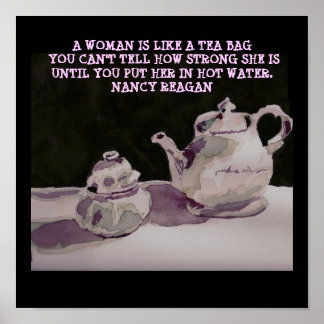
Nancy Reagan died today. But her sayings remain with us ... 

More on Nancy Reagan

Nancy Davis Reagan (born Anne Frances Robbins; July 6, 1921 – March 6, 2016) was an American actress and the wife of the 40th President of the United States, Ronald Reagan. She was the First Lady of the United States from 1981 to 1989.

She was born in New York City. After her parents separated, she lived in Maryland with an aunt and uncle for some years.[1]She moved to Chicago when her mother remarried and she took the name Davis from her stepfather. As Nancy Davis, she was a Hollywood actress in the 1940s and 1950s, starring in films such as The Next Voice You Hear..., Night Into Morning, and Donovan's Brain. In 1952, she married Ronald Reagan who was then president of the Screen Actors Guild. They had two children together. Reagan was the First Lady of California when her husband was Governor from 1967 to 1975 and she began to work with the Foster Grandparents Program.

Nancy Reagan became First Lady of the United States in January 1981, following her husband's victory in the 1980 presidential election. She was criticized early in his first term largely due to her decision to replace the White House china, despite its being paid for by private donations. She aimed to restore a Kennedy-esque glamour to the White House following years of lax formality, and her interest in high-end fashion garnered much attention as well as criticism. She championedrecreational drug prevention causes by founding the "Just Say No" drug awareness campaign, which was considered her major initiative as First Lady. More controversy ensued when it was revealed in 1988 that she had consulted an astrologer to assist in planning the president's schedule after the attempted assassination of her husband in 1981. She had a strong influence on her husband and played a role in a few of his personnel and diplomatic decisions.

The Reagans retired to their home in Bel Air, Los Angeles, California, in 1989. Nancy devoted most of her time to caring for her husband, diagnosed with Alzheimer's disease in 1994, until his death at the age of 93 in 2004. Nancy remained active within the Reagan Library and in politics, particularly in support of embryonic stem cell research, until her death in March 2016.

Quotes from Nancy Reagan
I believe that people would be alive today if there were a death penalty.

A woman is like a tea bag, you can not tell how strong she is until you put her in hot water.

The movies were custard compared to politics.

It's appropriate that this symbol of American strength and resilience and optimism has come to rest at the library that bears Ronald Reagan's name. After all, it was President Reagan who always reminded us that when we set our eyes on the horizon, every day is morning in America. ... The Reagan Library is a place the sun will never set on the principles that Ronnie believed in so deeply.

I see the first lady as another means to keep a president from becoming isolated.

My life really began when I married my husband.

I think a woman gets more if she acts feminine.

Pornography is pornography, what is there to see? Movies are attempting to destroy something that's supposed to be the most beautiful thing a man and a woman can have by making it cheap and common. It's what you don't see that's attractive.

As we celebrate the International Women’s Day today, here is a rough translation of the beautiful sentiment laid out in Raag Asa (a song of hope) by Guru Nanak. He says, that the rightful place of woman is only next to God; this he says with hope in Raag Asa.

Today, in a progressive government of the US, less than 1 out 5 legislators are women (CNN). Women perform 66% of the world's work, earn 10% of world's income and own 1% of the world's property (http://www.weareequals.org/). It shows how much we still have to learn from this sage who was so far ahead of his time in preaching gender equality in the 16th century, four hundred years before we even started celebrating International Women's Day. I hope for change too ... for my little 5 year old, and countless others who have the same father as me.

Woman

Within woman, man is conceived;
From woman, man is born;

To woman he is engaged, then married.
Woman remains his close friend
with her life's path is laid.

When his woman dies,
man seeks another woman;
he cannot do without her.

Weren't kings
born from her?
And other women too?

And Man calls her bad!
And He thinks her low!
Why I ask, why?

Without woman there'd be no one at all;
I say woman's place is next to God.

– Guru Nanak, Raag Aasaa Mehal 1, Page 473

More from Guru Nanak: Rajai - In Grace
Older Posts Home

SHIVPREET SINGH

Singing oneness!
- Shivpreet Singh

Related Posts

Popular - 30 days

  • Vande Mataram - Lyrics and Translation
    I love the Vande Maataram composition in Raag Des sung by Lata Mangeshkar.  Vande Mataram is the national song of India. In 2003, BBC World ...
  • Kabir's Gao Gao Ri Dulhani - Lyrics and meanings
    One of my favorite Kabir's poem I call "Dulhani." In this beautiful poem, Kabir envisions himself as the bride and the univers...
  • The Many Types of Raag Malhar
    Pour love in your heart, like the rain pours on the land today. As I am working on a Meerabai song I am doing research on the different vari...
  • Praising Shri Krishna in the Guru Granth Sahib - Dhan Dhan O Raam Ben by Bhagat Namdev
    I made a new composition for this shabad today. Hopefully I will get to record it one day. I'd like to focus our discussion on this part...
  • Sanson Ki Mala Pe - Lyrics, Translation and Background
    Sanson ki Maala was made famous by Nusrat Fateh Ali Khan sahib.  Although some have attributed this song to Mirabai and Khusro, this is a gh...
  • Shunya Gadh Shehar - Gorakhnath Bhajan Composed by Pt. Kumar Gandharva
    Listening to this beautiful bhajan today by Pt. Kumar Gandharva.  I don't know if this is authentically by Gorakhnath, but it made me th...
  • Samrath Guru - Video and Translation
    Sometime last year I heard this haunting melody from Nirinjan Kaur ... and fell in love with it. Since then I have been singing it and recor...
  • Jindari Lutti by Ghulam Farid - Lyrics/Translation and Performance by Bade Ghulam Ali Khan (Also Rohi or Dilri Lutti)
    Bade Ghulam Ali Khan's version of this Multani Kafi This is a beautiful spiritual song of separation written by Ghulam Farid.  I recentl...
  • Loving in the night - a poem by Rabi'a
    [O my Lord] by rabi'A Translated by Jane hirshfield O my Lord, the stars glitter and the eyes of men are closed. Kings have locked their...
  • Love and the Mool Mantra
    Guru Nanak's teachings are undoubtedly about love. So are Guru Arjan's teachings. The Mool Mantra is given the highest importance i...

Blog Archive

  • ▼  2026 (12)
    • ▼  June (1)
      • Translation of Laavan - Shivpreet Singh
    • ►  May (1)
    • ►  April (1)
    • ►  March (6)
    • ►  February (1)
    • ►  January (2)
  • ►  2025 (24)
    • ►  October (5)
    • ►  September (7)
    • ►  August (2)
    • ►  July (2)
    • ►  June (3)
    • ►  March (1)
    • ►  February (2)
    • ►  January (2)
  • ►  2024 (21)
    • ►  December (1)
    • ►  November (2)
    • ►  October (3)
    • ►  September (2)
    • ►  August (4)
    • ►  July (2)
    • ►  June (3)
    • ►  May (1)
    • ►  April (1)
    • ►  February (1)
    • ►  January (1)
  • ►  2023 (41)
    • ►  December (4)
    • ►  November (3)
    • ►  October (4)
    • ►  September (7)
    • ►  August (5)
    • ►  July (7)
    • ►  June (3)
    • ►  May (3)
    • ►  April (1)
    • ►  March (1)
    • ►  February (3)
  • ►  2022 (8)
    • ►  March (2)
    • ►  January (6)
  • ►  2021 (139)
    • ►  December (15)
    • ►  November (2)
    • ►  October (6)
    • ►  September (7)
    • ►  August (2)
    • ►  July (4)
    • ►  May (21)
    • ►  April (21)
    • ►  March (35)
    • ►  February (23)
    • ►  January (3)
  • ►  2020 (150)
    • ►  December (2)
    • ►  November (13)
    • ►  October (32)
    • ►  September (47)
    • ►  August (37)
    • ►  July (5)
    • ►  June (3)
    • ►  May (3)
    • ►  April (3)
    • ►  March (2)
    • ►  February (1)
    • ►  January (2)
  • ►  2019 (43)
    • ►  December (5)
    • ►  November (8)
    • ►  October (13)
    • ►  September (4)
    • ►  July (3)
    • ►  June (1)
    • ►  May (2)
    • ►  March (1)
    • ►  February (1)
    • ►  January (5)
  • ►  2018 (53)
    • ►  December (8)
    • ►  November (5)
    • ►  October (3)
    • ►  September (4)
    • ►  August (6)
    • ►  July (3)
    • ►  June (4)
    • ►  May (6)
    • ►  April (5)
    • ►  March (2)
    • ►  February (4)
    • ►  January (3)
  • ►  2017 (73)
    • ►  December (2)
    • ►  November (12)
    • ►  October (8)
    • ►  September (1)
    • ►  August (7)
    • ►  July (6)
    • ►  June (12)
    • ►  May (5)
    • ►  April (4)
    • ►  March (8)
    • ►  February (3)
    • ►  January (5)
  • ►  2016 (141)
    • ►  December (1)
    • ►  November (9)
    • ►  October (16)
    • ►  September (19)
    • ►  August (2)
    • ►  July (5)
    • ►  June (7)
    • ►  May (3)
    • ►  April (18)
    • ►  March (34)
    • ►  February (16)
    • ►  January (11)
  • ►  2015 (28)
    • ►  December (1)
    • ►  November (1)
    • ►  October (2)
    • ►  September (12)
    • ►  August (1)
    • ►  May (1)
    • ►  April (7)
    • ►  March (1)
    • ►  February (1)
    • ►  January (1)
  • ►  2014 (107)
    • ►  December (1)
    • ►  November (6)
    • ►  October (1)
    • ►  August (2)
    • ►  July (1)
    • ►  June (11)
    • ►  April (10)
    • ►  March (15)
    • ►  February (24)
    • ►  January (36)
  • ►  2013 (242)
    • ►  December (13)
    • ►  October (5)
    • ►  September (3)
    • ►  August (3)
    • ►  June (7)
    • ►  May (62)
    • ►  April (79)
    • ►  March (12)
    • ►  February (23)
    • ►  January (35)
  • ►  2012 (145)
    • ►  December (29)
    • ►  November (31)
    • ►  October (44)
    • ►  September (5)
    • ►  August (9)
    • ►  July (7)
    • ►  June (1)
    • ►  May (3)
    • ►  April (1)
    • ►  March (4)
    • ►  February (9)
    • ►  January (2)
  • ►  2011 (252)
    • ►  December (1)
    • ►  November (1)
    • ►  October (4)
    • ►  September (13)
    • ►  August (28)
    • ►  July (44)
    • ►  June (33)
    • ►  May (15)
    • ►  April (2)
    • ►  March (45)
    • ►  February (43)
    • ►  January (23)
  • ►  2010 (70)
    • ►  December (31)
    • ►  November (20)
    • ►  October (2)
    • ►  September (3)
    • ►  August (1)
    • ►  July (2)
    • ►  May (5)
    • ►  March (4)
    • ►  February (1)
    • ►  January (1)
  • ►  2009 (15)
    • ►  December (1)
    • ►  November (3)
    • ►  October (2)
    • ►  September (2)
    • ►  August (1)
    • ►  June (1)
    • ►  April (1)
    • ►  March (1)
    • ►  February (1)
    • ►  January (2)
  • ►  2008 (15)
    • ►  November (1)
    • ►  July (2)
    • ►  June (5)
    • ►  May (1)
    • ►  April (2)
    • ►  March (1)
    • ►  February (1)
    • ►  January (2)
  • ►  2007 (9)
    • ►  November (4)
    • ►  October (2)
    • ►  September (1)
    • ►  August (2)
  • ►  1999 (1)
    • ►  May (1)

Message

Name

Email *

Message *

Twitter

Tweets by @shivpreetsingh


Copyright © Shivpreet Singh. Designed by OddThemes