Shivpreet Singh
Shivpreet Singh
  • Home
  • Music
    • Spotify
    • Apple Music
    • Amazon
    • Pandora
    • SoundCloud
    • Google
    • You Tube
      • Music on YouTube
      • Uplifting Shabads
      • Guru Nanak Shabads
      • Meditation & Chanting
      • Shabads for Kids
      • Shabads of Guru Arjan
      • Shabads of Guru Gobind Singh
  • Videos
    • Latest
    • Popular
    • Uplifting
    • Guru Nanak
    • Meditation
    • For Kids
    • Guru Arjan
    • Guru Gobind Singh
  • Projects
    • DhunAnand Foundation
    • Pandemic 2020
    • Guru Nanak 550
    • Namdev 750
    • Thoughts and Ruminations
    • What I Love to Read
  • News
  • Meet Me
    • Meet Me
    • Request
    • Send Email
    • Newsletter
    • FAQs
  • About
    • Biography
    • Photos
    • Music
    • FAQs
Aum just comes from the combination of two letters of the old Indian alphabets. "Au" comes from what we call "oora" in punjabi -- it even looks like Aum. That's the you get when your mouth is fully open without any obstruction. "M" is the last alphabet in the old Indian system. It is the sound we make when our mouth is fully obstructed.

I find interesting that in other language and religious systems the same emphasis is paid to the beginning and ending letters of the alphabet. It is also interesting to note how the beginning and end is related to "truth" in many different cultures. See the following notes from Wikipedia:

Alpha and Omega

Alpha and Omega, alpha (α or Α) and omega (ω or Ω), are the first and the last letters of the Greek alphabet and are an appellation of Christ or of God in the Book of Revelation. These couple of letters are used as Christian symbols,[1] and are often combined with the Cross, Chi-rho, or other Christian symbols.

The term Alpha and Omega comes from the phrase "I am the alpha and the omega" (Koiné Greek: τὸ Α καὶ τὸ Ω), an appellation of Jesus[2] in the Book of Revelation (verses 1:8, 21:6, and 22:13). The first part of this phrase ("I am the Alpha and Omega") is first found in Chapter 1 verse 8, and is found in every manuscript of Revelation that has 1v8. Several later manuscripts repeat "I am the Alpha and Omega" in 1v11 too, but it does not receive support here from most of the oldest manuscripts, including the Alexandrine, Sinaitic, and Codex Ephraemi Rescriptus. It is, therefore, omitted in some modern translations. Scholar Robert Young stated, with regard to "I am the Alpha and Omega" in 1v11, that the "oldest [manuscripts] omit" it.[3]

Meaning in Christianity

Its meaning is found in the fact that alpha (Α) and omega (Ω) are respectively the first and last letters of the Classical (Ionic) Greek alphabet. This would be similar to referring to someone in English as the "A and Z". Thus, twice when the title appears it is further clarified with the additional title "the beginning and the end" (Revelation 21:6, 22:13).
Though many commentators and dictionaries apply this title both to God and to Christ,[4] some secular sources argue otherwise. Barnes’ Notes on the New Testament (1974) claims: "It cannot be absolutely certain that the writer meant to refer to the Lord Jesus specifically here ... There is no real incongruity in supposing, also, that the writer here meant to refer to God as such." [5] Most Christian denominations also teach that the title applies to both Jesus and God.
The letters Alpha and Omega in juxtaposition are often used as a Christian visual symbol (see examples). The letters were shown hanging from the arms of the cross in Early Christian art, and some crux gemmata, jeweled crosses in precious metal, have formed letters hanging in this way, called pendilia. In fact, despite always being in Greek, the letters became more common in Western than Eastern Orthodox Christian art. They are often shown to the left and right of Christ's head, sometimes within his halo, where they take the place of the christogram used in Orthodox art.
This symbol was suggested by the Apocalypse, where many believe that Christ, as well as the Father, is "the First and the Last" (ii, 8); "the Alpha and Omega, the first and the last, the beginning and the end" (cf., xxii, 13; i, 8). Clement of Alexandria (2nd century, philosopher and commentator on pagan and Christian information) speaks of the Word as "the Alpha and the Omega of Whom alone the end becomes beginning, and ends again at the original beginning without any break" (Stromata, IV, 25). Tertullian (lawyer, theologian) also alludes to Christ as the Alpha and Omega (De Monogamiâ, v), and from Prudentius (Cathemer., ix, 10) we learn that in the fourth century the interpretation of the apocalyptic letters was still the same: "Alpha et Omega cognominatus, ipse fons et clausula, Omnium quae sunt, fuerunt, quaeque post futura sunt." It was, however, in the monuments of early Christianity that the symbolic Alpha and Omega had their greatest vogue.
This phrase is interpreted by many Christians to mean that Jesus has existed for all eternity. The phrase "alpha and omega" may signify that God is eternal. The symbols were used in early Christianity and appear in the Roman catacombs.

Judaism

In Rabbinic literature, the word emet (אמת meaning "truth"), one of the names of God in Judaism, has been interpreted as consisting of the first, middle and final letters of the Hebrew alphabet.


Islam

The Qur'an gives al'Awwal (الأول), meaning "The First" and al'Akhir (الأخر), meaning "The Last" as two of the names of God: 57:3.


Here is an Emily Dickinson poem on the mysteries of our world.  The origins of beauty are mysterious.  And what better way to desribe a mystery than through the element of music.  Emily claims that the mystery behind Earth's beauty is unknown.  But we can find signs of the mystery if we can hear the cricket singing about the lands, the seas, the peninsulas and keys.

The earth has many keys,
Where melody is not
Is the unknown peninsula
Beauty is nature's fact

But witness for her land
And witness for her sea
The cricket is her utmost
Of elegy to me

key
Noun
1. small piece of shaped metal, with incisions cut to fit the wards of a particular lock, that is inserted into a lock and turned to open...
2. low-lying island or reef, esp. in the Caribbean.

el·e·gy
/ˈeləjē/
Noun
1. poem of serious reflection, typically a lament for the dead.
2. piece of music in a mournful style.

I just finished a vocal track recording of Guru Arjan's "Bhinni Rainariye" -- here is a music in the making

The dear night is drenched with due
stars are sparkling, shiv
lovers are awake.  

Lovers are always awake, 
their stars always sparkle.


Once there was a very powerful demon by name Vritasura. In order to defeat him, Indra had pretended to be his friend. After learning of Vritasura's weakness, Indra then killed Vritasura. After killing the demon Vritasura, Indra, felt very uneasy. He knew that he had committed a sinful act and that he could never forgive himself.

Indra, the king of the Devas, relinquished his throne and his kingdom and went away. He hid himself so that the other Devas would not be able to find him and make him come back.

'Who should take the place of Indra?' Agni said looking around at his friends.

Vayu nodded, 'Yesterday I tried looking for Indra. I searched everywhere, still I could not find him anywhere. I do not think there is any chance that Indra would come...come...' Vayu did not complete the sentence. The other Gods understood. Even if Indra was found, he would not come back and rule them. Indra had lost the will to rule the Devas.

Varuna spoke softly, 'I think we will have to choose someone else to be our king...' He looked around. All the other Devas looked at each other. They knew that this was the only option available to them.

'We cannot just choose anybody to be our king...' Agni said, 'I mean, we need someone who is deserving. Some one who can handle the pressures of being the king well...'

Vayu said softly, 'Nahusha would be a good option.'

All the Devas looked at Vayu but did not say anything. They were all thinking about Nahusha...

Nahusha was the son of Aayu and a king of the Lunar Dynasty. He was taught by Sage Vasishta and had learnt the Vedas and the Shastras when he was very young. Nahusha had ruled well and had performed a 100 Ashwamedha Yagnas. His fame had spread all over the world and the heavens and people were in awe of him.

As the Devas thought of this, they slowly nodded their head. Nahusha would be a perfect man to be their king.

So with the permission of their Guru - Brihaspati, the very next day all the Devas went to Nahusha.

Nahusha was delighted on seeing them. He welcomed them heartily, 'Welcome Devas! Please come...' He offered them food to eat. The Devas enjoyed his hospitality.

Then after some time hesitatingly Agni talked to Nahusha, 'Nahusha you must know that we are not without a king....'

Nahusha gravely nodded his head as Agni continued, 'It is for that reason that we have come to see you...'

Nahusha frowned wondering where this was leading to. But Nahusha did not say anything.

Varuna continued from where Agni left off, '...Nahusha, we need a good king and one who can handle the pressures of ruling the Devas and also control the natural elements of the earth...'

Nahusha nodded still not saying anything as Agni said, 'Would you consider becoming our king, Nahusha?'

Nahusha looked flabbergasted at the Devas. He wondered whether this was all some sort of joke. He was just plain Nahusha, and these Devas wanted him to be their king...Surely there was some mistake. He croaked out, 'Devas! I am very happy that you considered me for this post. But seriously, why me? I mean there are better people suited for this job...Not only that Indra....' Nahusha snapped his fingers as he remembered Indra, 'I am sure Indra will come back...Why are you being so hasty?'

Vayu shook his head, 'Indra will not come back. After the death of Vritasura, Indra has always felt uncomfortable...I seriously doubt whether he would come back soon...The Devas need a king, Nahusha....We cannot be without a king. What if the Asuras were to attack when we are without a king....'

The others Devas shuddered as they heard these words. Vayu continued, 'So you see Nahusha, we have to crown a king and fast...'

Agni spoke, 'You seem to be a good king. Your people are happy under your rule and you have completed a hundred Ashwamedha Yagnas...I think we are right in offering you the crown...You truly deserve it...

Nahusha watched the Devas and thought for some time. He was not influenced by pride or arrogance as he was a good king. Finally he decided that everything the Devas said was right and slowly nodded his head. 'I think you are right Devas! But...' He frowned, 'I am just an ordinary humand, how will I have the powers of Indra? Do I have to do something....'

Agni shook his head, 'Nahusha! We are the Devas, once you become our king, our powers will be added to you and you will become powerful as the King of Devas. You will become invincible.'

Nahusha nodded without any feeling. If he was to lead the Devas to war, these powers would be handy...

Nahusha was appointed the King and at the right time, a great yagn a was conducted and he was made the King of the Devas. Nahusha continued to be a good king. Looking at Nahusha rule, the Devas felt happy that they had made a good choice. Nahusha proved to a very good diplomat and negotiator.

However things did not stay the same. Nahusha for all his skill, the continuous exposure to the unlimited power had weakened his resolve. Slowly the power eroded him. Nahusha was soon drunk by the power that he wielded and became arrogant and haughty. He soon became thinking that he was the reason everything was going so smoothly. He wanted more and more power and grew more and more corrupt and vain.

Nahusha would call up the court and scold people who did not bow to him properly or when he felt that they were disrespectful to him. He asked people to write stories and poems of his greatness and have them put on the palaces. The Devas were stunned by the change over Nahusha. However now that Nahusha was their king, they could not do anything about that....They grumbled in private hoping that Indra would come back and become their king...

Once as Nahusha was going through the palace he saw the beautiful and intelligent Shachi – wife of Indra, in the palace. Shachi was one of the reasons, Indra had not strayed from the path of righteousness often. She mostly kept him in line with her wit and intelligence. However when Nahusha saw Shachi, Nahusha felt that he had marry the beautiful queen!

He called her, 'Shachi! I am the king of the Devas now! Now that your husband has left you, you have to become my wife now....'

Sahachi stared at Nahusha as if he had gone mad. 'Giving up Indra...her Indra for this wretched man...Never....! She looked at Nahusha straight in the eye, 'Nahusha! You may be the king of the Devas! But I am the wife of only one man...my Indra...whom I shall not give up for anything....'

Nahusha smiled at her cruelly, 'Well this is my palace and you are here! Everything here is mine....' He said looking at the queen with dark eyes.

The queen flashed her eyes angrily, 'Fine!' She turned to her maid, 'Arrange my chariot! Take me to the palace of Guru Brihaspati!' She looked at Nahusha angrily, 'It seems I do not have the right to stay here any more! The maid left.

Nahusha looked angrily as the queen left. He could not stop the queen by force.

After the queen had left, Nahusha could not think of anything else. He needed to have her! How dare she refuse him! The King of Gods...! Who does she think she was!

He finally sent a messenger to Shachi Devi, though the Devas. The Devas came to see Shachi. 'Shachi! He is making us miserable!' Agni said angrily, 'He keeps on ranting about what a great man he is and that it was our duty to fulfil his wishes! Please come and talk to him...'

Shachi flashed at Agni, 'I love only one man, Agni!...'

'And you shall have that man...' Guru Brihaspati came inside the room and talked to her. The Devas and Shachi bowed to Brihaspati. Brihaspati looked to Shachi. He knew she was strong-willed and intelligent enough to get rid of Nahusha. He repeated, 'You shall have your man, if you act intelligently, Shachi!'

Shachi looked at Guru Brihaspati uncomprehendingly as he continued, 'Remember he desires you! And also remember that blind desire can make a man act without common sense and make him behave rashly!'

Shachi looked at Guru Brihaspati for a long minute as the other Devas looked on. Shachi slowly nodded and smiled. She then turned to Agni, 'Agni! Tell your King, I am willing to see him privately! At once!'

Agni looked surrprised but left immediately. Shachi then turned to Vayu, 'Vayu, Can you please find Indra! It is important! You will otherwise not have a king soon!'

Vayu was confused but said, 'I will find him!' and left.

However Vayu could not find Indra anywhere.

Nahusha on the other hand was very happy when he heard Agni's words! He dressed himself well and went to Gurru Brihaspati's palace. There he saw Shachi. He looked at her and saw her sitting regally and smirked So the great queen finally realized how powerful I am and has decided to fall on her knees before me...

Shachi looked at Nahusha, 'Nahusha! I apologize for acting so rashly then...' She said in a sweet voice. Nahusha nodded his head curtly. The queen has to apologize later...But that I will take care later...

'Nahusha, 'I...I am doing a yagna for fifteen days! After it is over, I want you to come to me and pick me up from this palace and take me to our palace, with pomp and show...'

Nahusha nodded. A grand homecoming for the queen..He asked the queen, 'Is there any particular chariot, the queen loves...?'

'Chariot?' Shachi looked at his as if he was mad...'A chariot?' No I do not want a chariot... I have something even more grand..'

Nahusha frowned, 'What does the queen have in mind?'

'Kings always come on horse back, elephants or chariots...But you must be different, because you are the king of Gods! You must come in a palanquin!'

Nahusha frowned even more, 'A palanquin?'

'Yes!' Shachi said, with a small smile, 'A palanquin carried by the greatest sages of all times...I will come only when you come in such a palanquin...' Shachi said softly looking at Nahusha.

Nahusha not realising the trap, nodded. He was after all king. Who could refuse him?

Nahusha nodded and went away to his palace. He called in the greatest sages including Agastya to lift his palanquin for him to meet Shachi. The sages agreed. He was after all the king of the Devas...

Shachi used the fifteen days well. With the help of Goddess Upashruti, she found Indra. Indra was hidden in a great Lake called Manasarovar. He had hidden himself inside a lotus in the lake. He was meditating there to remove the sin of killing Vritrasura.

Shachi then convinced Indra that he was now fit to rule the Devas and that she planned to get rid of Nahusha. She told him of his plan. Indra nodded and smiled at his wife's boldness. He decided that the time had come to become the king again and reclaim his crown.

On the fifteenth day, Nahusha called eight sages and ordered them to carry the palanquin. Nahusha had become so arrogant that he had not realized that these men were powerful rishis with great powers - these men were more powerful than the King of Gods!

The sages carried the palanquin. Agastya was a short man and the palanquin titlted to one side and Agastya was slow too. Nahusha was enraged by this and kicked Agastya in the back saying Sarpa...Sarpa ' [meaning faster....faster]

That was the last straw! Nahusha had committed his last act of arrogance as Sage Agastya was enraged by the appalling behaviour of the king, 'Sarpa?' He said angrily, 'May you become a sarpa [serpent]!'

Nahusha felt himself slither away and change into a serpent! He looked at his snake like body and suddenly his mistakes flashed before him. He was appalled of his arrogance. He looked at the Sage and bowed to him, 'Sir! I was blind! Please save me!'

Sage Agastya shook his head, 'You will remain a snake till you learn the rules of being a good king...Go!'

And the sages vanished from there as Nahusha the Great king fell on earth as the python!

Many years later, when the Pandavas [the heroes of the Mahabharatha] came to the jungle where Nahusha was living as a serpent. Nahusha caught Bheema, the third Pandava. In order to free his brother, Yudhistara, the eldest Pandava explained to the serpent the rules of being a good king...After learning this, Nahusha released Bheema and Nahusha became his old self without arrogance and pride.

Shachi was a happy woman. She had got back her Indra and had got rid of the arrogant Nahusha all in one masterly stroke!

Usually I thank one individual on each blog entry, but I thought this week I would write a note of thanks to all you angels who listen to my music and encourage me to sing. I am blessed that I have you as my angels; I am a big fan of yours and hope I get to know most of you better.

You look at me like Mother Teresa looked at those children at Calcutta. I am truly thankful to you and the honor that you bestow upon me.

I have a regular day-time job and also like spending time with my family. So I have lesser time than a full-time musician would have on their music. Also, for that same reason, I don't, like many musicians travel from town to town to make my songs heard. I sit in the corner of your computer, like a street musician, and sing to myself hoping that a listening angel will encourage me.

I don't have a very well equipped studio. Its just me, a room with a computer and a keyboard, with a few flutes and myself. Sometimes I get help from musicians who are gracious enough to help me, but mostly I do everything from recording, mixing and production myself.

I try to hire musicians on reverbnation and elsewhere on the web and radio and am generally in awe with the talent out there. There are so many talented people that sing and you have many choices for listening. I am often amazed that you give me some time from the time you can spend listening to such brilliantly talented artists. I am truly grateful.

And my marketing is laughable by even indie music standards. It entails presence on a few webpages, some blogs, facebook, myspace and twitter. That is it! I don't know any radio stations. I don't know how the music business

You are used to listening to much better musicians

However, not everything is to my disadvantage. My biggest advantages are my teachers.  Guru Nanak is my spiritual guide and essentially the inspiration for all my music; he has shown me how to love. Pandit Raghunath Prasanna trained me in Indian Classical Music; he did not ever ask for or expect any monetary renumeration for what he taught me. How could he; what he taught me was priceless.

My parents encourage me on a day-to-day basis and do not get tired with my practice sessions around the house, and let me spare some time from my holidays -- which I could be spending with them -- on my music. I am truly grateful.

  1. Singing is the purpose of life.
  2. Singing requires intellectual contemplation, for this is the ultimate realization of our rational capacities.
  3. Singing depends on acquiring a moral character, where one displays the virtues of courage, generosity, justice, friendship, and citizenship in one’s life. These virtues involve striking a balance or “mean” between an excess and a deficiency.
  4. Singing is perfection in imperfection as it is not just acceptance, it is a celebration of the past, present and future.
  5. Singing is hard, but it can be achieved now.

Too happy Time dissolves itself
And leaves no remnant by –
‘Tis Anguish not a Feather hath
Or too much weight to fly –

Notes:

Happiness dissolves itself; flies away fast, leaves no remnants.  Anguish doesn't go away.  It either has too much weight, or even when it is weightless, lacks feathers.   The purpose of life is not happiness. The purpose of life is to sing.  Singing is an attitude of celebration. 

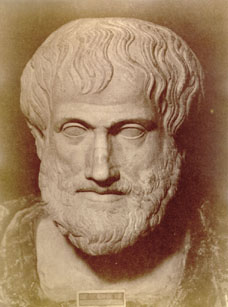
Read what Aristotle says about happiness here:
http://shivsangels.blogspot.com/2013/04/singing-is-prerequisite-to-happiness.html


I just read about Aristotle's philosophy on the purpose of life. He says that happiness is the purpose of life.  I beg to differ, because happiness is not in our hands.  Additionally, sadness and misery is as part of our life as happiness.  We can prevent much sadness if we sing.  Singing is the purpose of life.  In response to Aristotle's conclusions on happiness (see the end of this post), here are some conclusions on singing as the path of life:


1. Singing is the purpose of life (polits).
2. Singing requires intellectual contemplation, for this is the ultimate realization of our rational capacities.
3. Singing depends on acquiring a moral character, where one displays the virtues of courage, generosity, justice, friendship, and citizenship in one’s life. These virtues involve striking a balance or “mean” between an excess and a deficiency.
4. Singing is perfection in imperfection as it is not just acceptance, it is a celebration of the past, present and future.
5. Singing is hard, but it can be achieved now.

ARISTOTLE’S DEFINITION OF HAPPINESS


“Happiness depends on ourselves.” More than anybody else, Aristotle enshrines happiness as a central purpose of human life and a goal in itself. As a result he devotes more space to the topic of happiness than any thinker prior to the modern era. Living during the same period as Mencius, but on the other side of the world, he draws some similar conclusions. That is, happiness depends on the cultivation of virtue, though his virtues are somewhat more individualistic than the essentially social virtues of the Confucians. Yet as we shall see, Aristotle was convinced that a genuinely happy life required the fulfillment of a broad range of conditions, including physical as well as mental well-being. In this way he introduced the idea of a science of happiness in the classical sense, in terms of a new field of knowledge.

Essentially, Aristotle argues that virtue is achieved by maintaining the Mean, which is the balance between two excesses. Aristotle’s doctrine of the Mean is reminiscent of Buddha’s Middle Path, but there are intriguing differences. For Aristotle the mean was a method of achieving virtue, but for Buddha the Middle Path referred to a peaceful way of life which negotiated the extremes of harsh asceticism and sensual pleasure seeking. The Middle Path was a minimal requirement for the meditative life, and not the source of virtue in itself.

ARISTOTLE: A LITTLE BACKGROUND

Aristotle is one of the greatest thinkers in the history of western science and philosophy, making contributions to logic, metaphysics, mathematics, physics, biology, botany, ethics, politics, agriculture, medicine, dance and theatre. He was a student of Plato who in turn studied under Socrates. Although we do not actually possess any of Aristotle’s own writings intended for publication, we have volumes of the lecture notes he delivered for his students; through these Aristotle was to exercise his profound influence through the ages. Indeed, the medieval outlook is sometimes considered to be the “Aristotelian worldview” and St. Thomas Aquinas simply refers to Aristotle as “The Philosopher” as though there were no other.

Aristotle was the first to classify areas of human knowledge into distinct disciplines such as mathematics, biology, and ethics. Some of these classifications are still used today, such as the species-genus system taught in biology classes. He was the first to devise a formal system for reasoning, whereby the validity of an argument is determined by its structure rather than its content. Consider the following syllogism: All men are mortal; Socrates is a man; therefore, Socrates is mortal. Here we can see that as long as the premises are true, the conclusion must also be true, no matter what we substitute for “men or “is mortal.” Aristotle’s brand of logic dominated this area of thought until the rise of modern symbolic logic in the late 19th Century.

Aristotle was the founder of the Lyceum, the first scientific institute, based in Athens, Greece. Along with his teacher Plato, he was one of the strongest advocates of a liberal arts education, which stresses the education of the whole person, including one’s moral character, rather than merely learning a set of skills. According to Aristotle, this view of education is necessary if we are to produce a society of happy as well as productive individuals.

HAPPINESS AS THE ULTIMATE PURPOSE OF HUMAN EXISTENCE

One of Aristotle’s most influential works is the Nicomachean Ethics, where he presents a theory of happiness that is still relevant today, over 2300 years later. The key question Aristotle seeks to answer in these lectures is: what is the ultimate purpose of human existence? What is that end or goal for which we should direct all of our activities? Everywhere we see people seeking pleasure, wealth, and a good reputation. But while each of these has some value, none of them can occupy the place of the chief good for which humanity should aim. To be an ultimate end, an act must be self-sufficient and final, “that which is always desirable in itself and never for the sake of something else,” and it must be attainable by man. Aristotle claims that nearly everyone would agree that happiness is the end which meets all these requirements. It is easy enough to see that we desire money, pleasure, and honor only because we believe that these goods will make us happy. It seems that all other goods are a means towards obtaining happiness, while happiness is always an end in itself.

The Greek word that usually gets translated as “happiness” is eudaimonia, and like most translations from ancient languages, this can be misleading. The main trouble is that happiness (especially in modern America) is often conceived of as a subjective state of mind, as when one says one is happy when one is enjoying a cool beer on a hot day, or is out “having fun” with one’s friends. For Aristotle, however, happiness is a final end or goal that encompasses the totality of one’s life. It is not something that can be gained or lost in a few hours, like pleasurable sensations. It is more like the ultimate value of your life as lived up to this moment, measuring how well you have lived up to your full potential as a human being. For this reason, one cannot really make any pronouncements about whether one has lived a happy life until it is over, just as we would not say of a football game that it was a “great game” at halftime (indeed we know of many such games that turn out to be blowouts or duds). For the same reason we cannot say that children are happy, anymore than we can say that an acorn is a tree, for the potential for a flourishing human life has not yet been realized. As Aristotle says, “for as it is not one swallow or one fine day that makes a spring, so it is not one day or a short time that makes a man blessed and happy.” ( Nichomachean Ethics,1098a18)

THE HIERARCHICAL VIEW OF NATURE

In order to explain human happiness, Aristotle draws on a view of nature he derived from his biological investigations. If we look at nature, we notice that there are four different kinds of things that exist in the world, each one defined by a different purpose:

Mineral: rocks, metals and other lifeless things. The only goal which these things seek is to come to a rest. They are “beyond stupid” since they are inanimate objects with no soul

Vegetative: plants and other wildlife. Here we see a new kind of thing emerge,something which is alive. Because plants seek nourishment and growth, they have souls and can be even said to be satisfied when they attain these goals

Animal: all the creatures we study as belonging to the animal kingdom. Here we see a higher level of life emerge: animals seek pleasure and reproduction, and we can talk about a happy or sad dog, for example, to the extent that they are healthy and lead a pleasant life

Human: what is it that makes human beings different from the rest of the animal kingdom? Aristotle answers: Reason. Only humans are capable of acting according to principles, and in so doing taking responsibility for their choices. We can blame Johnny for stealing the candy since he knows it is wrong,” but we wouldn’t blame an animal since it doesn’t know any better.

It seems that our unique function is to reason: by reasoning things out we attain our ends, solve our problems, and hence live a life that is qualitatively different in kind from plants or animals. The good for a human is different from the good for an animal because we have different capacities or potentialities. We have a rational capacity and the exercising of this capacity is thus the perfecting of our natures as human beings. For this reason, pleasure alone cannot constitute human happiness, for pleasure is what animals seek and human beings have higher capacities than animals. The goal is not to annihilate our physical urges, however, but rather to channel them in ways that are appropriate to our natures as rational animals.

Thus Aristotle gives us his definition of happiness:

…the function of man is to live a certain kind of life, and this activity implies a rational principle, and the function of a good man is the good and noble performance of these, and if any action is well performed it is performed in accord with the appropriate excellence: if this is the case, then happiness turns out to be an activity of the soul in accordance with virtue. (Nichomachean Ethics,1098a13)

THE PURSUIT OF HAPPINESS AS THE EXERCISE OF VIRTUE

In this last quote we can see another important feature of Aristotle’s theory: the link between the concepts of happiness and virtue. Aristotle tells us that the most important factor in the effort to achieve happiness is to have a good moral character — what he calls “complete virtue.” But being virtuous is not a passive state: one must act in accordance with virtue. Nor is it enough to have a few virtues; rather one must strive to possess all of them. As Aristotle writes:

He is happy who lives in accordance with complete virtue and is sufficiently equipped with external goods, not for some chance period but throughout a complete life. (Nichomachean Ethics,1101a10)

According to Aristotle, happiness consists in achieving, through the course of a whole lifetime all the goods — health, wealth, knowledge, friends, etc., that lead to the perfection of human nature and to the enrichment of human life. This requires us to make choices, some of which may be very difficult. Often the lesser good promises immediate pleasure and is more tempting, while the greater good is painful and requires some sort of sacrifice. For example, it may be easier and more enjoyable to spend the night watching television, but you know that you will be better off if you spend it researching for your term paper. Developing a good character requires a strong effort of will to do the right thing, even in difficult situations.

Another example which is becoming more and more of a problem in our society today is the taking of drugs. For a fairly small price, one can immediately take one’s mind off of one’s troubles and experience deep euphoria by popping an oxycontin pill or snorting some cocaine. Yet, inevitably, this short-term pleasure will lead to longer term pain. A few hours later you may feel miserable and so need to take the drug again, which leads to a never ending spiral of need and relief. Addiction inevitably drains your funds and provides a burden to your friends and family. All of those virtues—generosity, temperance, friendship, courage, etc, that make up the good life appear to be conspicuously absent in a life of drug use.

Aristotle would be strongly critical of the culture of “instant gratification” which seems to predominate in our society today. In order to achieve the life of complete virtue, we need to make the right choices, and this involves keeping our eye on the future, on the ultimate result we want for our lives as a whole. We will not achieve happiness simply by enjoying the pleasures of the moment. Unfortunately, this is something most people are not able to overcome in themselves. As he laments, “the mass of mankind are evidently quite slavish in their tastes, preferring a life suitable to beasts (Nichomachean Ethics, 1095b 20) Later in the Ethics Aristotle will draw attention to the concept of akrasia, or weakness of the will. In many cases the overwhelming prospect of some great pleasure obscures one’s perception of what is truly good. Fortunately, this natural disposition is curable through training, which for Aristotle meant education and the constant aim to perfect virtue. As he puts it, a clumsy archer may indeed get better with practice, so long as he keeps aiming for the target.

Note also that it is not enough to think about doing the right thing, or even intend to do the right thing: we have to actually do it. Thus, it is one thing to think of writing the great American novel, another to actually write it. When we impose a form and order upon all those letters to actually produce a compelling story or essay, we are manifesting our rational potential, and the result of that is a sense of deep fulfillment. Or to take another example, when we exercise our citizenship by voting, we are manifesting our rational potential in yet another way, by taking responsibility for our community. There are myriad ways in which we can exercise our latent virtue in this way, and it would seem that the fullest attainment of human happiness would be one which brought all these ways together in a comprehensive rational life-plan.

There is yet another activity few people engage in which is required to live a truly happy life, according to Aristotle: intellectual contemplation. Since our nature is to be rational, the ultimate perfection of our natures is rational reflection. This means having an intellectual curiosity which perpetuates that natural wonder to know which begins in childhood but seems to be stamped out soon thereafter. For Aristotle, education should be about the cultivation of character,and this involves a practical and a theoretical component. The practical component is the acquisition of a moral character, as discussed above. The theoretical component is the making of a philosopher. Here there is no tangible reward, but the critical questioning of things raises our minds above the realm of nature and closer to the abode of the gods.

FRIENDSHIP

For Aristotle, friendship is one of the most important virtues in achieving the goal of eudaimonia (happiness). While there are different kinds of friendship, the highest is one that is based on virtue (arête). This type of friendship is based on a person wishing the best for their friends regardless of utility or pleasure. Aristotle calls it a “…complete sort of friendship between people who are good and alike in virtue…” This type of friendship is long lasting and tough to obtain because these types of people are hard to come by and it takes a lot of work to have a complete virtuous friendship. Aristotle notes that one cannot have a large number of friends because of the amount of time and care that a virtuous friendship requires. Aristotle values friendship so highly that he argues friendship supersedes justice and honor. First of all, friendship seems to be so valued by people that no one would choose to live without friends. People who value honor will likely seek out either flattery or those who have more power than they do, in order that they may obtain personal gain through these relationships. Aristotle believes that the love of friendship is greater than this because it can be enjoyed as it is. “Being loved, however, people enjoy for its own sake, and for this reason it would seem it is something better than being honoured and that friendship is chosen for its own sake.” The emphasis on enjoyment here is noteworthy: a virtuous friendship is one that is most enjoyable since it combines pleasure and virtue together, thus fulfilling our emotional and intellectual natures.

THE GOLDEN MEAN

Aristotle’s ethics is sometimes referred to as “virtue ethics” since its focus is not on the moral weight of duties or obligations, but on the development of character and the acquiring of virtues such as courage, justice, temperance, benevolence, and prudence. And anyone who knows anything about Aristotle has heard his doctrine of virtue as being a “golden mean” between the extremes of excess and deficiency. Courage, for example, is a mean regarding the feeling of fear, between the deficiency of rashness (too little fear) and the excess of cowardice (too much fear). Justice is a mean between getting or giving too much and getting or giving too little. Benevolence is a mean between giving to people who don’t deserve it and not giving to anyone at all. Aristotle is not recommending that one should be moderate in all things, since one should at all times exercise the virtues. One can’t reason “I should be cruel to my neighbor now since I was too nice to him before.” The mean is a mean between two vices, and not simply a mean between too much and too little.

Furthermore, the mean is “relative to ourselves,” indicating that one person’s mean may be another person’s extreme. Milo the wrestler, as Aristotle puts it, needs more gruel than a normal person, and his mean diet will vary accordingly. Similarly for the moral virtues. Aristotle suggests that some people are born with weaker wills than others; for these people, it may actually be a mean to flee in battle (the extreme being to get slaughtered or commit suicide). Here we see the flexibility in Aristotle’s account: as soon as he begins to lay down some moral rules, he relaxes them in order to take into consideration the variety and contingency of particular temperaments.

Aristotle’s doctrine of the mean is well in keeping with ancient ways of thinking which conceived of justice as a state of equilibrium between opposing forces. In the early cosmologies, the Universe is stabilized as a result of the reconciliation between the opposing forces of Chaos and Order. The Greek philosopher Heraclitus conceived of right living as acting in accordance with the Logos, the principle of the harmony of opposites; and Plato defined justice in the soul as the proper balance among its parts. Like Plato, Aristotle thought of the virtuous character along the lines of a healthy body. According to the prevailing medical theory of his day, health in the body consists of an appropriate balance between the opposing qualities of hot, cold, the dry, and the moist. The goal of the physician is to produce a proper balance among these elements, by specifying the appropriate training and diet regimen, which will of course be different for every person.

Similarly with health in the soul: exhibiting too much passion may lead to reckless acts of anger or violence which will be injurious to one’s mental well-being as well as to others; but not showing any passion is a denial of one’s human nature and results in the sickly qualities of morbidity, dullness, and antisocial behavior. The healthy path is the “middle path,” though remember it is not exactly the middle, given that people who are born with extremely passionate natures will have a different mean than those with sullen, dispassionate natures. Aristotle concludes that goodness of character is “a settled condition of the soul which wills or chooses the mean relatively to ourselves, this mean being determined by a rule or whatever we like to call that by which the wise man determines it.” (1006b36)

CONCLUSION

In conclusion, according to Aristotle, what is happiness?

Happiness is the ultimate end and purpose of human existence
Happiness is not pleasure, nor is it virtue. It is the exercise of virtue.
Happiness cannot be achieved until the end of one’s life. Hence it is a goal and not a temporary state.
Happiness is the perfection of human nature. Since man is a rational animal, human happiness depends on the exercise of his reason.
Happiness depends on acquiring a moral character, where one displays the virtues of courage, generosity, justice, friendship, and citizenship in one’s life. These virtues involve striking a balance or “mean” between an excess and a deficiency.
Happiness requires intellectual contemplation, for this is the ultimate realization of our rational capacities.

BIBLIOGRAPHY

Ackrill, J., Aristotle the Philosopher, Oxford: Oxford University Press, 1981. A comprehensive introduction to Aristotle.

Adler, Mortimer (1978). Aristotle for Everybody. New York: Macmillan. Apopular exposition for the general reader.

Aristotle, Nichomachean Ethics (2004),ed. Hugh Treddenick. London: Penguin. The main source for Aristotle’s ethics

Aristotle, Politics (1992), ed. Trevor Saunders. London: Penguin. Aristotle situates ethics within the discussion of the best constitution.

A History of Greek Philosophy, Vol. 6. Cambridge University Press. One of the standard classics of the history of Greek philosophy.

Hughes, Gerald J. (2001). Routledge Philosophy Guidebook to Aristotle on Ethics. London: Routledge.

Ross, Sir David (1995). Aristotle (6th ed.). London: Routledge. A classic overview by one of Aristotle’s most prominent English translators, in print since 1923.

OTHER INTERNET RESOURCES

Online Nichomachean Ethics: http://classics.mit.edu/Aristotle/nicomachaen.html

Aristotle’s Ethics. http://plato.stanford.edu/entries/aristotle-ethics/
Newer Posts Older Posts Home

SHIVPREET SINGH

Singing oneness!
- Shivpreet Singh

Related Posts

Popular - 30 days

  • Vande Mataram - Lyrics and Translation
    I love the Vande Maataram composition in Raag Des sung by Lata Mangeshkar.  Vande Mataram is the national song of India. In 2003, BBC World ...
  • Kabir's Gao Gao Ri Dulhani - Lyrics and meanings
    One of my favorite Kabir's poem I call "Dulhani." In this beautiful poem, Kabir envisions himself as the bride and the univers...
  • The Many Types of Raag Malhar
    Pour love in your heart, like the rain pours on the land today. As I am working on a Meerabai song I am doing research on the different vari...
  • Praising Shri Krishna in the Guru Granth Sahib - Dhan Dhan O Raam Ben by Bhagat Namdev
    I made a new composition for this shabad today. Hopefully I will get to record it one day. I'd like to focus our discussion on this part...
  • Sanson Ki Mala Pe - Lyrics, Translation and Background
    Sanson ki Maala was made famous by Nusrat Fateh Ali Khan sahib.  Although some have attributed this song to Mirabai and Khusro, this is a gh...
  • Shunya Gadh Shehar - Gorakhnath Bhajan Composed by Pt. Kumar Gandharva
    Listening to this beautiful bhajan today by Pt. Kumar Gandharva.  I don't know if this is authentically by Gorakhnath, but it made me th...
  • Samrath Guru - Video and Translation
    Sometime last year I heard this haunting melody from Nirinjan Kaur ... and fell in love with it. Since then I have been singing it and recor...
  • Jindari Lutti by Ghulam Farid - Lyrics/Translation and Performance by Bade Ghulam Ali Khan (Also Rohi or Dilri Lutti)
    Bade Ghulam Ali Khan's version of this Multani Kafi This is a beautiful spiritual song of separation written by Ghulam Farid.  I recentl...
  • Gulon Mein Rang Bhare - Lyrics and Translation of Mehdi Hassan Ghazal
    I was listening and meditating upon this beautiful ghazal by Faiz Ahmed Faiz, beautifully composed by Mehdi Hassan. It is one of my favorite...
  • Beethal Bhaila - Namdev Asa - Wherever I go, the playful Beethal is there
    I’ve been working on a musical composition for a beautiful shabad by Bhagat Naamdev, and it’s been making me think deeply about its message....

Blog Archive

  • ▼  2026 (12)
    • ▼  June (1)
      • Translation of Laavan - Shivpreet Singh
    • ►  May (1)
    • ►  April (1)
    • ►  March (6)
    • ►  February (1)
    • ►  January (2)
  • ►  2025 (24)
    • ►  October (5)
    • ►  September (7)
    • ►  August (2)
    • ►  July (2)
    • ►  June (3)
    • ►  March (1)
    • ►  February (2)
    • ►  January (2)
  • ►  2024 (21)
    • ►  December (1)
    • ►  November (2)
    • ►  October (3)
    • ►  September (2)
    • ►  August (4)
    • ►  July (2)
    • ►  June (3)
    • ►  May (1)
    • ►  April (1)
    • ►  February (1)
    • ►  January (1)
  • ►  2023 (41)
    • ►  December (4)
    • ►  November (3)
    • ►  October (4)
    • ►  September (7)
    • ►  August (5)
    • ►  July (7)
    • ►  June (3)
    • ►  May (3)
    • ►  April (1)
    • ►  March (1)
    • ►  February (3)
  • ►  2022 (8)
    • ►  March (2)
    • ►  January (6)
  • ►  2021 (139)
    • ►  December (15)
    • ►  November (2)
    • ►  October (6)
    • ►  September (7)
    • ►  August (2)
    • ►  July (4)
    • ►  May (21)
    • ►  April (21)
    • ►  March (35)
    • ►  February (23)
    • ►  January (3)
  • ►  2020 (150)
    • ►  December (2)
    • ►  November (13)
    • ►  October (32)
    • ►  September (47)
    • ►  August (37)
    • ►  July (5)
    • ►  June (3)
    • ►  May (3)
    • ►  April (3)
    • ►  March (2)
    • ►  February (1)
    • ►  January (2)
  • ►  2019 (43)
    • ►  December (5)
    • ►  November (8)
    • ►  October (13)
    • ►  September (4)
    • ►  July (3)
    • ►  June (1)
    • ►  May (2)
    • ►  March (1)
    • ►  February (1)
    • ►  January (5)
  • ►  2018 (53)
    • ►  December (8)
    • ►  November (5)
    • ►  October (3)
    • ►  September (4)
    • ►  August (6)
    • ►  July (3)
    • ►  June (4)
    • ►  May (6)
    • ►  April (5)
    • ►  March (2)
    • ►  February (4)
    • ►  January (3)
  • ►  2017 (73)
    • ►  December (2)
    • ►  November (12)
    • ►  October (8)
    • ►  September (1)
    • ►  August (7)
    • ►  July (6)
    • ►  June (12)
    • ►  May (5)
    • ►  April (4)
    • ►  March (8)
    • ►  February (3)
    • ►  January (5)
  • ►  2016 (141)
    • ►  December (1)
    • ►  November (9)
    • ►  October (16)
    • ►  September (19)
    • ►  August (2)
    • ►  July (5)
    • ►  June (7)
    • ►  May (3)
    • ►  April (18)
    • ►  March (34)
    • ►  February (16)
    • ►  January (11)
  • ►  2015 (28)
    • ►  December (1)
    • ►  November (1)
    • ►  October (2)
    • ►  September (12)
    • ►  August (1)
    • ►  May (1)
    • ►  April (7)
    • ►  March (1)
    • ►  February (1)
    • ►  January (1)
  • ►  2014 (107)
    • ►  December (1)
    • ►  November (6)
    • ►  October (1)
    • ►  August (2)
    • ►  July (1)
    • ►  June (11)
    • ►  April (10)
    • ►  March (15)
    • ►  February (24)
    • ►  January (36)
  • ►  2013 (242)
    • ►  December (13)
    • ►  October (5)
    • ►  September (3)
    • ►  August (3)
    • ►  June (7)
    • ►  May (62)
    • ►  April (79)
    • ►  March (12)
    • ►  February (23)
    • ►  January (35)
  • ►  2012 (145)
    • ►  December (29)
    • ►  November (31)
    • ►  October (44)
    • ►  September (5)
    • ►  August (9)
    • ►  July (7)
    • ►  June (1)
    • ►  May (3)
    • ►  April (1)
    • ►  March (4)
    • ►  February (9)
    • ►  January (2)
  • ►  2011 (252)
    • ►  December (1)
    • ►  November (1)
    • ►  October (4)
    • ►  September (13)
    • ►  August (28)
    • ►  July (44)
    • ►  June (33)
    • ►  May (15)
    • ►  April (2)
    • ►  March (45)
    • ►  February (43)
    • ►  January (23)
  • ►  2010 (70)
    • ►  December (31)
    • ►  November (20)
    • ►  October (2)
    • ►  September (3)
    • ►  August (1)
    • ►  July (2)
    • ►  May (5)
    • ►  March (4)
    • ►  February (1)
    • ►  January (1)
  • ►  2009 (15)
    • ►  December (1)
    • ►  November (3)
    • ►  October (2)
    • ►  September (2)
    • ►  August (1)
    • ►  June (1)
    • ►  April (1)
    • ►  March (1)
    • ►  February (1)
    • ►  January (2)
  • ►  2008 (15)
    • ►  November (1)
    • ►  July (2)
    • ►  June (5)
    • ►  May (1)
    • ►  April (2)
    • ►  March (1)
    • ►  February (1)
    • ►  January (2)
  • ►  2007 (9)
    • ►  November (4)
    • ►  October (2)
    • ►  September (1)
    • ►  August (2)
  • ►  1999 (1)
    • ►  May (1)

Message

Name

Email *

Message *

Twitter

Tweets by @shivpreetsingh


Copyright © Shivpreet Singh. Designed by OddThemes