Shivpreet Singh
Shivpreet Singh
  • Home
  • Music
    • Spotify
    • Apple Music
    • Amazon
    • Pandora
    • SoundCloud
    • Google
    • You Tube
      • Music on YouTube
      • Uplifting Shabads
      • Guru Nanak Shabads
      • Meditation & Chanting
      • Shabads for Kids
      • Shabads of Guru Arjan
      • Shabads of Guru Gobind Singh
  • Videos
    • Latest
    • Popular
    • Uplifting
    • Guru Nanak
    • Meditation
    • For Kids
    • Guru Arjan
    • Guru Gobind Singh
  • Projects
    • DhunAnand Foundation
    • Pandemic 2020
    • Guru Nanak 550
    • Namdev 750
    • Thoughts and Ruminations
    • What I Love to Read
  • News
  • Meet Me
    • Meet Me
    • Request
    • Send Email
    • Newsletter
    • FAQs
  • About
    • Biography
    • Photos
    • Music
    • FAQs
Don't bend; don't water it down; don't try to make it logical; don't edit your own soul according to the fashion. Rather, follow your most intense obsessions mercilessly. -Franz Kafka 
"Jaisi Main Aveh" is one of the four poems included in what is called "Babarvani" describing the four invasions by Mughal Emperor Babar (1483-1530).  While three of these poems are in Raag Asa (the color of Hope), this poem is in Raag Tilang (the color of Mideast).


Read More: Complete Babarvani


Babar and Guru Nanak in 1520-1521

Before we go into the shabad, let's consider the historical background based on what I have gathered from several sources including Babar's Autobiography in the past few days.

The year was 1520.  The season was winter.  Babar made his third invasion into India and easily subdued several cities including Sialkot.  He wanted to do the same with Saidpur, a town of landowners and merchants.  The inhabitants of Saidpur, not knowing Babar's savage intentions, resisted and in his wrath Babar ordered a bloody massacre of city dwellers.

Guru Nanak was traveling back home after his trip to Mecca, and reached Saidpur from Punja Sahib and stayed with disciple and friend Bhai Lalo.  Guru Nanak and Bhai Lalo, along with other older men, women and children were imprisoned by Babar.  Babar had to leave Saidpur because of attacks at his home in Afganisthan.  According to the Puratan Janam Saaki, Guru Nanak and Bhai Lalo were made to carry loads of wealth on their backs for Babar's troops to take away (See Babur's Invasion).

Many of the historical accounts of Babar's third invasion I found were short and colorless. For example, one account mentioned Babar's invasion in the following way:
"There is no doubt, however, that he made an expedition, called the third, in 1520. On this occasion he crossed the Indus, marched into the part known now as the Rawal Pindi division, crossed the Jehlam, reached Sialkot, which he spared, and then marched on Saiyidpur, which he plundered. He was called from this place to Kabul to meet a threatened attack upon that capital."

In comparsion ... Guru Nanak is beautifully descriptive, and he calls the savagery like it is: evil and sinful:

Calling it like it is ... Guru Nanak Style

Guru Nanak's courageous song of truth that describes the condition of Saidpur after it was devastated by Babar's attack in 1521:

Tilang, First Mehl:

Jaisi Main Avai Khasam ki Baani, taisada kari gyaan vey Lalo
As the Word of the divine comes to me, so do I express it, O Lalo

Guru Nanak is going to describe the horrors of Babur's atrocities. He says, look, I'm going to say it like it is. This is not just ordinary "Bani" or ordinary "word," it is "Khasam ki Bani" or the "word of the eternal husband." And what is "khasam" according to Guru Nanak -- it is "satnam" or the truth. So this is the word of truth according to Guru Nanak! Because Khasam can also be defined as "love," one can say that Guru Nanak is saying, "These are not necessarily my words. These are the words that have come to me from my love."

Another interpretation of this line is that Guru Nanak is emphasizing that it is not he who is making any judgements, because in the end whether someone is good or evil, is a judgement.  He says that the source his knowledge (gyaan) is the divine husband (khasam).  He is just imparting what has come to him from the divine.  He is just doing what God willed him to do: sing!

This line reminds me of Bob Dylan's song Blowin in the Wind. In this song that was meant to be a protest against war, Bob Dylan asks several poignant questions. For instance:
How many times can a man turn his head
And pretend that he just doesn't see?
The convenient thing to do is to ignore atrocities.  It saves you from any negative repercussions.  But the right and courageous thing to do is to stand by the truth.  Guru Nanak's poem is especially courageous because it could result in him losing his life; despite this, he choses to write and sing this.

Paap kee janj lai Kabulon Dhaaeiaa Jori Mangai Daan vey Lalo
Bringing the wedding party of sin from Kabul he (Babur) demands land as his wedding gift, O Lalo.

He is saying it like it is.  

The Wedding Metaphor

Wedding are often used as metaphors of death in sufi poetry and gurbani. Just like the bridegroom leaves her temporary house and goes to her husband's house one day, it is inevitable that we all die.  Guru Nanak extends this metaphor chillingly -- the wedding party has come from Kabul and "demands" land.  This sin has come from greed.  Through this poem he slays the greed of acquirers of land and women. The fact that he wanted the land and riches of the people of Saidpur has been corroborated from primary sources.  

The wedding party of sin comes from Kabul.  After Babur's failures in Central Asia he had moved south east to Kabul and established his supremacy.  He was especially punitive to the Afghans, often setting up "pillars of heads" after winning battles; now he brings such horrors to India.  

One historian remarks that Guru Nanak knew about Babur's attack beforehand and came to Saidpur to warn Bhai Lalo of the devastation.  I believe the shabad was written afterwards because of the specific description and the evidence (chakki). 

Saram Dharam Doi Chhap Khaloye Kood Phire Pardhaan vey Lalo
Decency and righteousness are hiding, and falsehood struts around like a leader, O Lalo.

Kajiyan Baamana ki gal Thakki, Agad Padai Saitan vey Lalo
The Qazis and the Brahmins have lost their roles, and Satan now conduct wedding rites, O Lalo.

Normally weddings are decent and righteous affairs; they are celebrations. And normally the pious elevated individuals conduct marriage ceremonies. So that would be the brahman for hindus and the kazi for muslims. But in this case Satan is conducting wedding rites. As we go on in this shabad, the wedding metaphors will continue - especially about singing wedding songs in the end of the shabad.

Toll of War on Women

Musalamaaneeaa parrehi kathaebaa kasatt mehi karehi khudhaae vae laalo
The Muslim women read the Koran, and in their misery, they call upon God, O Lalo.

Jaath sanaathee hor hidhavaaneeaa eaehi bhee laekhai laae vae laalo
The Hindu women of different statuses, as well, have been met with the same fate, O Lalo.

The Muslim women are suffering ... they have no where else to go but God. And Hindu women of all statuses are met with the same fate.  Everyone is suffering.


Zainab Salbi, an Iraqi author, who has written a book on the plight of women in war, claims that things are not different now. She claims that we talk about only one side of war.  We talk about the missiles, the destruction, the valiant warriors, the vanquished ones, troop levels, tactics, dollars and casualties. We treat casualties rather casually. We don't talk about where the social fabric is most torn. We don't talk about the suffering of women, the suffering of children ... they remain the the unspoken sufferers of war. And the fact is that seventy-five percent of the casualties of war are women and children.

It is also possible, that Guru Nanak only mentions women, because he is continuing to use the wedding metaphor, where everyone is the soulbride of the one in power.

Babar - Jabar - Equal Opportunity Savage

It is clear from this description that Babar is indiscriminately killing and torturing people regardless of religion.  He was an equal opportunity savage. History shows that Babar (and for that matter his ancestor Genghiz Khan) was more interested in capturing land and wealth than converting folks to Islam. As an aside, it was much later, after he had conqured Delhi, Babar used Islam to rally his troops to defeating Rajputs of Mewar.

A noted Pakistani Journalist, Mushtak Soofi, describes Babar's intent in his article on Guru Nanak: 
Babar was like a character one finds in one of Bertolt Brecht’s poems; 'where my tank passes is my street/what my gun says is my opinion.'
When Babar decided to savagely kill the people of Saidpur, much of its male population must have been killed in the attack. Guru Nanak only mentions the plight of the Muslim and Hindu women, perhaps because most of the men were dead. But, it is clear that it was the women who suffered the most. 

Guru Nanak And Bhai Lalo Survive

It is interesting that both Guru Nanak and Bhai Lalo survived the attack. It might have been because Guru Nanak was highly regarded (because he was returning from Mecca and was considered a Haji; there weren't too many people in that time and place who had completed the Hajj), or because he was spiritual, because he was a musician (and Babar loved music and musicians), or just because he was old (>50 years old). We don't know this; but it is also possible that Babar only killed folks who were opposing his invasion; he imprisoned the others. According to the puratam janam sakhi over 11,000 people were imprisoned.

Imbued in Red

Khoon kae sohilae gaaveeahi naanak rath kaa kungoo paae vae laalo |1|
Sing the songs of murder, O Nanak, sprinkling kungoo* of blood, O Lalo.

Although kungoo is often translated as "saffron" in most translations of this shabad, this is not accurate. Kungoo is a powdered dye from a variety of millet that was used as make-up by women. I found some references of modern use of this millet for making hair pink (More on Kungoo)! Continuing the extension of this chilling metaphor of death, the poet is also decorated with the kungoo, but its the kungoo of blood and he sings the songs of murder.

It is interesting to note that Khoon is red.  Kungoo is pink, derived from red. And Lalo, although a person's name, is also derived from red.  Red is the color of blood. It is the color of blood that makes a memory of war so gory. Yet, it is also the color of love. It is the traditional color of a bride's dress.  The redness of Guru Nanak's last line highlights the dichotomy of the world that we live in. This world is full of suffering, yet it is also full of love.  And all us poets of life have a choice.

Guru Nanak Sings His Part 

What does Guru Nanak do despite all the suffering. He is not dejected. He sings! The poet of the soul is ready to die.  He is ready to die a bloody death.  Not just ready, he accepts the bloody death gleefully. He sings the songs of murder. He does what he is here for. He does his part.   In the darkest hours of life, he sees stars; he has optimism. He has hope. He rejoices in His Will.
How can we remove all this dark falsehood? By rejoicing in His Will, says Nanak! (Japji 1)
We live in a time of great confusion and pain. There was uncalled for bloodshed in Paris, Syria and California last year.  Terrorists were killing innocent people for reasons even baser than Babar's. But you shouldn't be discouraged. While you might not be able to fix this, but you should not lose heart. Peace begins with you. Just like Guru Nanak, you have a unique mission. Just like him, you can be singing.  Just like him, you can make a big difference. Just like him, you can truly live.

Martin Luther King once said, "A man dies when he refuses to stand up for that which is right. A man dies when he refuses to stand up for justice. A man dies when he refuses to take a stand for that which is true." To truly live, you have to sing what is right, you have to sing for justice, you have have to sing the truth.  The Guru Nanak within us lives as long as we sing the truth. He sings eternally, 'Akhaan Jeevan Visrai Mar Jaon' ... he sings, "As long as I sing I live; as soon as I forget I die."

Note: This is ongoing research as of December 2018. Please contribute if you can help improve this.

Also spelt: Jaisi Main Avai


Here is an account of Babar's Invasion of India as described by Harbans Singh in the Encyclopedia of Sikhism. It is an interesting essay that combines history, references from Gurbani and stories written about Guru Nanak by early Sikhs.  Some of the material used, especially from the early stories, don't seem accurate (like the miracles described about Guru Nanak and Bhai Mardana), but much of the other material seems very accurate and well collated.  

Babar was soldier of fortune, founder of the Mughal dynasty in India, diarist and poet, descending in the fifth generation from Timur, was born on 14 February 1483. In June 1494, he succeeded his father, 'Umar Shaik , as ruler of Farghana, whose revenues supported no more than a few hundred cavalry. With this force of helmeted, mailclad warriors, Babar began his career of conquest. He joined in the family struggle for power, thrice winning and thrice losing Samarkand, alternately master of a kingdom or a wanderer through the hills. In 1504, he made himself master of Kabul and so came in touch with India whose wealth was a standing temptation. In 1517 and again in 1519, he swept down the Afghan plateau into the plains of India. He entered the Punjab in 1523 on the invitation of Daulat Khan Lodhi, the governor of the province, and 'Alam Khan, an uncle of Ibrahim Lodhi, the Delhi Sultan. But, wars in his home country however, compelled Babar to return so that his final invasion was not begun until November 1525.

Babar's army of 12,000 men was mostly undisciplined group of men who wanted to loot the riches of India. These 12,000 men, a tiny army with which to attempt the conquest of Ibrahim Lodhi's realm, first devasted Punjab. Guru Nanak in his famous epic named "Babarvani" describes the atrocities of Babar and his men in Punjab.

Babarvani (Babar's command or sway) is how the four hymns by Guru Nanak alluding to the invasions by Babar (1483-1530), are collectively known in Sikh literature. The name is derived from the use of the term in one of these hymns "Babarvani phiri gal kuiru na rot khai -Babar's command or sway has spread; even the princes go without food" (GG, 417). Three of these hymns are in Asa measure at pages 360 and 417-18 of the standard recension of Guru Granth Sahib and the fourth is in Tilang measure on pages 722-23.

In his first invasion, Babar came as far as Peshawar. The following year he crossed the Indus and, conquering Sialkot without resistance, marched on Saidpur (now Eminabad, 15 km southeast of Gujranwala in Pakistan) which suffered the worst fury of the invading host. The town was taken by assault, the garrison put to the sword and the inhabitants carried into captivity. During his next invasion in 1524, Babar ransacked Lahore. His final invasion was launched during the winter of 1525-26 and he became master of Delhi after his Victory at Panipat on 21 April 1526.

Guru Nanak was an eye-witness to the havoc created during these invasions. Janam Sakhis mention that he himself was taken captive at Saidpur. A little of his, outside of Babarwani hymns, indicates that he may have been present in Lahore when the city was given up to plunder. In six pithy words this line conveys, "For a pahar and a quarter, i.e. for nearly four hours, the city of Lahore remained subject to death and fury" (GG,1412). The mention in one of the Babalvani hymns of the use of guns by the Mughals against the Afghan defence relying mainly upon their war - elephants may well be a reference to the historic battle of Panipat which sealed the fate of the Afghan king, Ibrahim Lodhi.

The Sikh tradition strongly subscribes to a meeting in 1520 between  Guru Nanak and Babar during the latter's invasion of Saidpur, now called Eminabad, in Gujranwala district of Pakistan. The town was taken by assault, the garrison put to the sword and the inhabitants carried into captivity. According to the Puratan Janam Sakhi,  Guru Nanak and Mardana, also among the captives, were ordered to be taken to prison as slaves. The Guru was given a load to carry and Mardana a horse to lead. But Mir Khan, says the Janam Sakhi, saw that the Guru's bundle was carried without any support and Mardana's horse followed him without the reins. He reported this to Sultan Babar who remarked, "If there was such a holy man here, the town should not have been destroyed." The Janam Sakhi continues, "Babar kissed his (Guru Nanak's) feet. He said, 'On the face of this fair one sees God himself.' Then all the people, Hindus and Musalmans, began to make their salutations. The king spoke again, 'O dervish, accept something'. The Guru answered, 'I take nothing, but you must release all the prisoners of Saidpur and restore their property to them'. King Babar ordered, 'Those who are in detention be released and their property be returned to them'. All the prisoners of Saidpur were set at liberty"

Babarvani hymns are not a narrative of historical events like Guru Gobind Singh's Bachitra Natak, nor are they an indictment of Babar as his Zafarnamah was that of Aurangzab. They are the outpourings of a compassionate soul touched by scenes of human misery and by the cruelty perpetrated by the invaders. The sufferings of the people are rendered here in accents of intense power and protest. The events are placed in the larger social and historical perspective decline in moral standards must lead to chaos. A corrupt political system must end in dissolution. Lure of power divides men and violence unresisted tends to flourish It could not be wished away by magic or sorcery Guru Nanak reiterated his faith in the Almighty and in His justice. Yet so acute was his realization of the distress of the people that he could not resist making the complaint: "When there was such suffering, such killing, such shrieking in pain, did not Thou, O God, feel pity? Creator, Thou art the same for all!"

The people for Guru Nanak were the people as a whole, the Hindus and the Muslims, the high-caste and the low-caste, soldiers and civilians, men and women. These hymns are remarkable for their moral structurs and poetical eloquence. Nowhere else in contemporary literature are the issues in medieval Indian situation comprehended with such clarity or presented in tones of greater urgency. In spite of his destructive role Babar is seen by Guru Nanak to have been an unwitting instrument of the divine Will. Because the Lodhi's had violated God's laws, they had to pay the penalty. Babar descended from Kabul as God's chosen agent, demonstrating the absolute authority of God and the retribution which must follow defiance of His laws. Guru Nanak's commentary on the events which he actually witnessed thus becomes a part of the same universal message. God is absolute and no man may disobey. His commands with impunity. Obey Him and receive freedom. Disobey him and the result must inevitably be retribution, a dire reckoning which brings suffering in this present life and continued transmigration in the hereafter. The hymn rendered in free English verse reads:Lord, Thou takest Khurasan under Thy wing, but yielded India to the invader's wrath. Yet thou takest no blame; And sendest the Mughal as the messenger of death. When there was such suffering, killing, such shrieking in pain, Didst not Thou, O God, feel pity ?


The fourth Babarvani hymn is probably addressed to Bhal Lalo, one of Guru Nanak's devotees living at Saidpur itself. It ends on a prophetic note, alluding perhaps to the rise of Sher Khan, an Afghan of Sur clan, who had already captured Bengal and Bihar, defeated Babar's son and successor, Humayun, at Chausa on the Ganga in June 1539 (during the lifetime of Guru Nanak), and who finally drove the Mughal king out of India in the following year. The hymn in Tilang measure is, like the other three, an expression of Guru Nanak feeling of distress at the moral degradation of the people at the imposition by the mighty. It is a statement also of his belief in God's justice and in the ultimate victory of good over evil. In an English rendering:" As descendeth the Lord's word to me, so do I deliver it unto you, O Lalo: [Babar] leading a wedding-array of sin hath descended from Kabul and demandeth by force the bride, O Lalo. decency and righteousness have vanished, and falsehood struts abroad, O Lalo. Gone are the days of Qazis and Brahmans, Satan now conducts the nuptials, O Lalo. The Muslim women recite the Qur'an and in distress remember their God, O Lalo. Similar is the fate of Hindu women of castes high and low, O Lalo. They sing paeans of blood, O Nanak, and by blood, not saffron, ointment is made, O Lalo. In this city of corpses, Nanak proclaimeth God's praises, and uttereth this true saying: The Lord who created men and put them to their tasks watcheth them from His seclusion. True is that Lord, true His verdict, and true is the justice He dealeth. As her body's vesture is torn to shreds, India shall remember my words. In seventy-eight they come, in ninety seven shall depart; another man of destiny shall arise. Nanak pronounceth words of truth, Truth he uttereth; truth the time calls for."


The words Seventy-eight and ninetyseven" in the penultimate line are interpreted as 1578 and 1597 of the Indian calendar, corresponding respectively with 1521 and 1540 which are the dates of Babar's invasion and Humayun's dethronement by Sher Khan/Shah. Though Babar's Tuzk, or Memoirs, a work of high literary quality, gives many interesting details of the campaigns and the events he was involved in and also describes the Indian life and customs very minutely there is no mention in these recollections that he met Guru Nanak. Nevertheless, the possibility of such a meeting having taken place cannot be ruled out. There are references in Guru Nanak's bans to Babars's invasions. An open tragedy like the one that struck Saidpur moved him profoundly and he described the sorrows of Indians-Hindus and Muslims alike-in words of intense power and suffering. Babar's army, in the words of Guru Nanak, was "the bridal procession of sin." In fact, Indian literature of that period records no more virile protest against the invading hordes than do Guru Nanak's four hymns of Babarvani in the Guru Granth Sahib.

Babar died on 26 December 1530 at Agra. Several years later his body was moved to its present grave in one of the gardens of Kabul.

Babar's ivasion and occupation of India impacted the life in India in all aspects. His generals forced people to be converted to Islam, his Zamindar's and other influential people bestowed lands and property on the newly converted Muslims. Babar himself became a Ghazi which in Islamic terminology is a positive epitecht and it means "a muslim who has killed a non-muslim", such a person is guaranteed heaven with "beautiful women, wine and rivers of honey." Another thing to note is that Babar destroyed several Hindu temples all over Punjab, and UP. Reason being is because founder of islam, Mohammad had done the same thing when he attacked Meeca and destroyed its temple and idolized Kaba. He made a pathway to kaaba using destroyed debree of the old temple, this tradition was continued by all the Mughal kings who invaded Indian, including Humayun, Akbar, Jahangir, Shahjahan and Aurungzeb, they destroyed temples and converted them to mosques, even though it is not allowed in islam as muslims claim but Mohammad himself had done it so they followed their leader.

The clash between Sikh and Islamic culture was inevitable and resulted in first small hostilities between Guru's followers starting with the Sixth Guru Hargobind Singh and later into full scale with Tenth Guru Gobind Singh.


Ain't gonna let nobody turn me around
Turn me around, turn me around
Ain't gonna let nobody turn me around
I'm gonna keep on a-walkin', keep on a-talkin'
Marchin' down to freedom land

Ain't gonna let segregation turn me around
Turn me around, turn me around
Ain't gonna let segregation turn me around
I'm gonna keep on a-walkin', keep on a-talkin'
Marchin' up to freedom's land

Ain't gonna let racism turn me around
Turn me around, turn me around
Ain't gonna let racism turn me around
I'm gonna keep on a-walkin', keep on a-talkin'
Marchin' up to freedom's land

Ain't gonna let no hatred turn me around
Turn me around, turn me around
Ain't gonna let no hatred turn me around
I'm gonna keep on a-walkin', keep on a-talkin'
Marchin' up to freedom's land

Ain't gonna let injustice turn me around
Turn me around, turn me around
Ain't gonna let injustice turn me around
I'm gonna keep on a-walkin', keep on a-talkin'
Marchin' up to freedom's land

Ain't gonna let no jail cell turn me around
Turn me around, turn me around
Ain't gonna let no jail cell turn me around
I'm gonna keep on a-walkin', keep on a-talkin'
Marchin' up to freedom's land

Ain't gonna let nobody turn me around
Turn me around, turn me around
Ain't gonna let nobody turn me around
I'm gonna keep on a-walkin', keep on a-talkin'
Marchin' up to freedom's land


Imagine someone observing you and me from a galaxy far far away ...


"As it comes to me, I impart the wisdom, O Lalo" - Guru Nanak

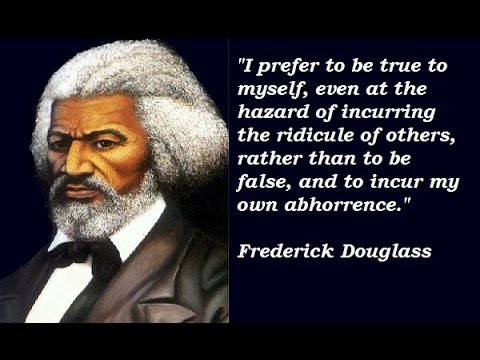
No matter how challenging it may be to articulate the truth, it is essential to vocalize it. Expressing the truth brings people closer to it, as demonstrated when Guru Nanak fearlessly addresses the atrocities of Babur or when Guru Gobind Singh speaks out against similar injustices. A parallel truth is evident in Frederick Douglass's discourse on slavery. In the midst of Abraham Lincoln's era, Douglass, an African American Civil Rights activist, boldly altered his speech during an event on July 5, 1852, originally intended to commemorate the Declaration of Independence, to address the pressing issue of American Slavery.


Within the now-famous address is what historian Philip S. Foner has called "probably the most moving passage in all of Douglass' speeches."

What, to the American slave, is your 4th of July? I answer; a day that reveals to him, more than all other days in the year, the gross injustice and cruelty to which he is the constant victim. To him, your celebration is a sham; your boasted liberty, an unholy license; your national greatness, swelling vanity; your sound of rejoicing are empty and heartless; your denunciation of tyrants brass fronted impudence; your shout of liberty and equality, hollow mockery; your prayers and hymns, your sermons and thanks-givings, with all your religious parade and solemnity, are to him, mere bombast, fraud, deception, impiety, and hypocrisy -- a thin veil to cover up crimes which would disgrace a nation of savages. There is not a nation on the earth guilty of practices more shocking and bloody than are the people of the United States, at this very hour.
Newer Posts Older Posts Home

SHIVPREET SINGH

Singing oneness!
- Shivpreet Singh

Related Posts

Popular - 30 days

  • Vande Mataram - Lyrics and Translation
    I love the Vande Maataram composition in Raag Des sung by Lata Mangeshkar.  Vande Mataram is the national song of India. In 2003, BBC World ...
  • Kabir's Gao Gao Ri Dulhani - Lyrics and meanings
    One of my favorite Kabir's poem I call "Dulhani." In this beautiful poem, Kabir envisions himself as the bride and the univers...
  • The Many Types of Raag Malhar
    Pour love in your heart, like the rain pours on the land today. As I am working on a Meerabai song I am doing research on the different vari...
  • Praising Shri Krishna in the Guru Granth Sahib - Dhan Dhan O Raam Ben by Bhagat Namdev
    I made a new composition for this shabad today. Hopefully I will get to record it one day. I'd like to focus our discussion on this part...
  • Sanson Ki Mala Pe - Lyrics, Translation and Background
    Sanson ki Maala was made famous by Nusrat Fateh Ali Khan sahib.  Although some have attributed this song to Mirabai and Khusro, this is a gh...
  • Jindari Lutti by Ghulam Farid - Lyrics/Translation and Performance by Bade Ghulam Ali Khan (Also Rohi or Dilri Lutti)
    Bade Ghulam Ali Khan's version of this Multani Kafi This is a beautiful spiritual song of separation written by Ghulam Farid.  I recentl...
  • Shunya Gadh Shehar - Gorakhnath Bhajan Composed by Pt. Kumar Gandharva
    Listening to this beautiful bhajan today by Pt. Kumar Gandharva.  I don't know if this is authentically by Gorakhnath, but it made me th...
  • Samrath Guru - Video and Translation
    Sometime last year I heard this haunting melody from Nirinjan Kaur ... and fell in love with it. Since then I have been singing it and recor...
  • Loving in the night - a poem by Rabi'a
    [O my Lord] by rabi'A Translated by Jane hirshfield O my Lord, the stars glitter and the eyes of men are closed. Kings have locked their...
  • Love and the Mool Mantra
    Guru Nanak's teachings are undoubtedly about love. So are Guru Arjan's teachings. The Mool Mantra is given the highest importance i...

Blog Archive

  • ▼  2026 (12)
    • ▼  June (1)
      • Translation of Laavan - Shivpreet Singh
    • ►  May (1)
    • ►  April (1)
    • ►  March (6)
    • ►  February (1)
    • ►  January (2)
  • ►  2025 (24)
    • ►  October (5)
    • ►  September (7)
    • ►  August (2)
    • ►  July (2)
    • ►  June (3)
    • ►  March (1)
    • ►  February (2)
    • ►  January (2)
  • ►  2024 (21)
    • ►  December (1)
    • ►  November (2)
    • ►  October (3)
    • ►  September (2)
    • ►  August (4)
    • ►  July (2)
    • ►  June (3)
    • ►  May (1)
    • ►  April (1)
    • ►  February (1)
    • ►  January (1)
  • ►  2023 (41)
    • ►  December (4)
    • ►  November (3)
    • ►  October (4)
    • ►  September (7)
    • ►  August (5)
    • ►  July (7)
    • ►  June (3)
    • ►  May (3)
    • ►  April (1)
    • ►  March (1)
    • ►  February (3)
  • ►  2022 (8)
    • ►  March (2)
    • ►  January (6)
  • ►  2021 (139)
    • ►  December (15)
    • ►  November (2)
    • ►  October (6)
    • ►  September (7)
    • ►  August (2)
    • ►  July (4)
    • ►  May (21)
    • ►  April (21)
    • ►  March (35)
    • ►  February (23)
    • ►  January (3)
  • ►  2020 (150)
    • ►  December (2)
    • ►  November (13)
    • ►  October (32)
    • ►  September (47)
    • ►  August (37)
    • ►  July (5)
    • ►  June (3)
    • ►  May (3)
    • ►  April (3)
    • ►  March (2)
    • ►  February (1)
    • ►  January (2)
  • ►  2019 (43)
    • ►  December (5)
    • ►  November (8)
    • ►  October (13)
    • ►  September (4)
    • ►  July (3)
    • ►  June (1)
    • ►  May (2)
    • ►  March (1)
    • ►  February (1)
    • ►  January (5)
  • ►  2018 (53)
    • ►  December (8)
    • ►  November (5)
    • ►  October (3)
    • ►  September (4)
    • ►  August (6)
    • ►  July (3)
    • ►  June (4)
    • ►  May (6)
    • ►  April (5)
    • ►  March (2)
    • ►  February (4)
    • ►  January (3)
  • ►  2017 (73)
    • ►  December (2)
    • ►  November (12)
    • ►  October (8)
    • ►  September (1)
    • ►  August (7)
    • ►  July (6)
    • ►  June (12)
    • ►  May (5)
    • ►  April (4)
    • ►  March (8)
    • ►  February (3)
    • ►  January (5)
  • ►  2016 (141)
    • ►  December (1)
    • ►  November (9)
    • ►  October (16)
    • ►  September (19)
    • ►  August (2)
    • ►  July (5)
    • ►  June (7)
    • ►  May (3)
    • ►  April (18)
    • ►  March (34)
    • ►  February (16)
    • ►  January (11)
  • ►  2015 (28)
    • ►  December (1)
    • ►  November (1)
    • ►  October (2)
    • ►  September (12)
    • ►  August (1)
    • ►  May (1)
    • ►  April (7)
    • ►  March (1)
    • ►  February (1)
    • ►  January (1)
  • ►  2014 (107)
    • ►  December (1)
    • ►  November (6)
    • ►  October (1)
    • ►  August (2)
    • ►  July (1)
    • ►  June (11)
    • ►  April (10)
    • ►  March (15)
    • ►  February (24)
    • ►  January (36)
  • ►  2013 (242)
    • ►  December (13)
    • ►  October (5)
    • ►  September (3)
    • ►  August (3)
    • ►  June (7)
    • ►  May (62)
    • ►  April (79)
    • ►  March (12)
    • ►  February (23)
    • ►  January (35)
  • ►  2012 (145)
    • ►  December (29)
    • ►  November (31)
    • ►  October (44)
    • ►  September (5)
    • ►  August (9)
    • ►  July (7)
    • ►  June (1)
    • ►  May (3)
    • ►  April (1)
    • ►  March (4)
    • ►  February (9)
    • ►  January (2)
  • ►  2011 (252)
    • ►  December (1)
    • ►  November (1)
    • ►  October (4)
    • ►  September (13)
    • ►  August (28)
    • ►  July (44)
    • ►  June (33)
    • ►  May (15)
    • ►  April (2)
    • ►  March (45)
    • ►  February (43)
    • ►  January (23)
  • ►  2010 (70)
    • ►  December (31)
    • ►  November (20)
    • ►  October (2)
    • ►  September (3)
    • ►  August (1)
    • ►  July (2)
    • ►  May (5)
    • ►  March (4)
    • ►  February (1)
    • ►  January (1)
  • ►  2009 (15)
    • ►  December (1)
    • ►  November (3)
    • ►  October (2)
    • ►  September (2)
    • ►  August (1)
    • ►  June (1)
    • ►  April (1)
    • ►  March (1)
    • ►  February (1)
    • ►  January (2)
  • ►  2008 (15)
    • ►  November (1)
    • ►  July (2)
    • ►  June (5)
    • ►  May (1)
    • ►  April (2)
    • ►  March (1)
    • ►  February (1)
    • ►  January (2)
  • ►  2007 (9)
    • ►  November (4)
    • ►  October (2)
    • ►  September (1)
    • ►  August (2)
  • ►  1999 (1)
    • ►  May (1)

Message

Name

Email *

Message *

Twitter

Tweets by @shivpreetsingh


Copyright © Shivpreet Singh. Designed by OddThemes