Shivpreet Singh
Shivpreet Singh
  • Home
  • Music
    • Spotify
    • Apple Music
    • Amazon
    • Pandora
    • SoundCloud
    • Google
    • You Tube
      • Music on YouTube
      • Uplifting Shabads
      • Guru Nanak Shabads
      • Meditation & Chanting
      • Shabads for Kids
      • Shabads of Guru Arjan
      • Shabads of Guru Gobind Singh
  • Videos
    • Latest
    • Popular
    • Uplifting
    • Guru Nanak
    • Meditation
    • For Kids
    • Guru Arjan
    • Guru Gobind Singh
  • Projects
    • DhunAnand Foundation
    • Pandemic 2020
    • Guru Nanak 550
    • Namdev 750
    • Thoughts and Ruminations
    • What I Love to Read
  • News
  • Meet Me
    • Meet Me
    • Request
    • Send Email
    • Newsletter
    • FAQs
  • About
    • Biography
    • Photos
    • Music
    • FAQs


For inspiration on MLK day today I am reading his book “Why we can’t wait.” Martin Luther understood demonstrations, and the effect and power of singing and music. He often talked positively about singing and music. Here are a couple of inspirational MLK quotes:

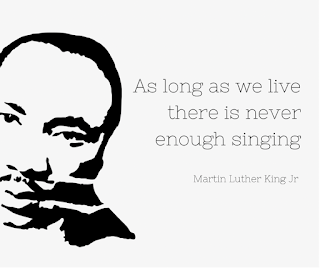
As long as we live, there is never enough singing.


Beautiful music is the art of the prophets that can calm the agitations of the soul; it is one of the most magnificent and delightful presents God has given us.


Next to the Word of God, music deserves the highest praise. No greater commendation than this can be found — at least not by us. After all, the gift of language combined with the gift of song was only given to man to let him know that he should praise God with both word and music, namely, by proclaiming [the Word of God] through music.

Music and singing played a critical role in inspiring, mobilizing, and giving voice to the civil rights movement. “The freedom songs are playing a strong and vital role in our struggle,” said Martin Luther King, Jr., during the Albany Movement. “They give the people new courage and a sense of unity. I think they keep alive a faith, a radiant hope, in the future, particularly in our most trying hours” (Shelton, “Songs a Weapon”).

The evolution of music in the black freedom struggle reflects the evolution of the movement itself. Calling songs “the soul of the movement,” King explained in his 1964 book Why We Can’t Wait that civil rights activists “sing the freedom songs today for the same reason the slaves sang them, because we too are in bondage and the songs add hope to our determination that ‘We shall overcome, Black and white together, We shall overcome someday’” (King, Why, 86).

Every breath I remember Gobind
- Guru Arjan, Raag Gauri
Every moment I sing Gobind.
- Guru Arjan, Raag Malhar


It is John Lennon’s birthday today. He was a singer of peace and hope, a kindler of imaginations. He passed away prematurely at the age of 40, but he left behind a legacy of lovely melodies and a message of love.

Lennon attained fame all over the world after joining the Beatles as a founding member. The songwriting connection he formed with Paul McCartney was one of the most productive in music history. Together, they produced enduring works that resonate across generations.

I especially like the lyrics of “Imagine”. The song challenges us to picture a world free of division and conflicts. It urges us to work for peace and imagine a society devoid of material possessions and greed, and it strikes a deep chord with me. The lyrics clearly convey Lennon's faith in group effort and his desire for a peaceful society.

Personally, I think John Lennon's idealism and capacity for human connection through music to be inspirational. His creations, such as "Imagine," cross barriers and inspire us to envision a better future. We cherish his message of love and unity that continues to touch hearts all across the world as we commemorate his life and honor his memory today, the day of his birthday.

Imagine by John Lennon

Imagine there's no heaven
It's easy if you try
No hell below us
Above us, only sky
Imagine all the people
Livin' for today
Ah
Imagine there's no countries
It isn't hard to do
Nothing to kill or die for
And no religion, too
Imagine all the people
Livin' life in peace
You
You may say I'm a dreamer
But I'm not the only one
I hope someday you'll join us
And the world will be as one
Imagine no possessions
I wonder if you can
No need for greed or hunger
A brotherhood of man
Imagine all the people
Sharing all the world
You
You may say I'm a dreamer
But I'm not the only one
I hope someday you'll join us
And the world will live as one


#quote #johnlennon #flowers #shivpreetsingh #love #imagine #kirtanyoga #yoga

Two Bhagwad Gita Shlokas about Dedicating all deeds to Krishna:

Chapter 3, Verse 30

mayi sarvani karmani
sannyasyadhyatma-cetasa
nirasir nirmamo bhutva
yudhyasva vigata-jvarah?

Translation of Bhagavad Gita 3.30

Therefore, O Arjuna, surrendering all your works unto Me, with full knowledge of Me, without desires for profit, with no claims to proprietorship, and free from lethargy, fight.


Commentary by Sri A.C. Bhaktivedanta Swami Prabhupada of Gaudiya Sampradaya:


This verse clearly indicates the purpose of the Bhagavad-gita. The Lord instructs that one has to become fully Krishna conscious to discharge duties, as if in military discipline. Such an injunction may make things a little difficult; nevertheless duties must be carried out, with dependence on Krishna, because that is the constitutional position of the living entity. The living entity cannot be happy independent of the cooperation of the Supreme Lord, because the eternal constitutional position of the living entity is to become subordinate to the desires of the Lord. Arjuna was therefore ordered by Sri Krishna to fight as if the Lord were his military commander. One has to sacrifice everything for the good will of the Supreme Lord, and at the same time discharge prescribed duties without claiming proprietorship. Arjuna did not have to consider the order of the Lord; he had only to execute His order. The Supreme Lord is the soul of all souls; therefore, one who depends solely and wholly on the Supreme Soul without personal consideration, or in other words, one who is fully Krishna conscious, is called adhyatma-cetas. Nirasih means that one has to act on the order of the master but should not expect fruitive results. The cashier may count millions of dollars for his employer, but he does not claim a cent for himself. Similarly, one has to realize that nothing in the world belongs to any individual person, but that everything belongs to the Supreme Lord. That is the real purport of mayi, or “unto Me.” And when one acts in such Krishna consciousness, certainly he does not claim proprietorship over anything. This consciousness is called nirmama, or “nothing is mine.” And if there is any reluctance to execute such a stern order, which is without consideration of so-called kinsmen in the bodily relationship, that reluctance should be thrown off; in this way one may become vigata-jvara, or without feverish mentality or lethargy. Everyone, according to his quality and position, has a particular type of work to discharge, and all such duties may be discharged in Krishna consciousness, as described above. That will lead one to the path of liberation.

Chapter 9, Verse 28

शुभाशुभफलैरेवं मोक्ष्यसे कर्मबन्धनै: |
संन्यासयोगयुक्तात्मा विमुक्तो मामुपैष्यसि || 28||

śhubhāśhubha-phalair evaṁ mokṣhyase karma-bandhanaiḥ
sannyāsa-yoga-yuktātmā vimukto mām upaiṣhyasi

śhubha aśhubha phalaiḥ—from good and bad results; evam—thus; mokṣhyase—you shall be freed; karma—work; bandhanaiḥ—from the bondage; sanyāsa-yoga—renunciation of selfishness; yukta-ātmā—having the mind attached to Me; vimuktaḥ—liberated; mām—to Me; upaiṣhyasi—you shall reach
Translation
BG 9.28: By dedicating all your works to Me, you will be freed from the bondage of good and bad results. With your mind attached to Me through renunciation, you will be liberated and will reach Me.

Commentary -

Every action has defects, just as fire is covered by smoke.  When we walk on the earth, we unknowingly kill millions of tiny living entities.  In our occupational duties, no matter how careful we are in the fulfillment of our duties, we still end up harming the environment and hurting others.  Even if we eat a cup of yogurt, we still incur the sin of destroying the living entities that reside in it.  Some religious sects try to reduce this involuntary killing by tying a cloth over their mouth.  Even this does not fully eliminate the destruction of living entities in our breath. 

When we perform our actions with the intention of fulfilling our self-interest, we are culpable for the sins we commit, knowingly or unknowingly.  In accordance with the law of karma, we have to reap their karmic reactions.  Good works can also be binding because they oblige the soul to go to the celestial abodes to enjoy their results.  Thus, both bad and good karmas result in the continuity of the cycle of birth and death.   However, in this verse, Shree Krishna gives a simple solution for destroying all karmic reactions of work.  He uses the word sanyās yog, meaning renunciation of selfishness.  He says that when we dedicate our actions for the pleasure of the Lord, we are freed from the fetters of both good and bad results. 

Those who establish themselves in such consciousness are called yog yuktātmā (united in consciousness with God).  Such yogis become jīvan mukt (liberated in consciousness) even in this body.  And, upon leaving their mortal frame, they receive a divine body and eternal service in the divine Abode of God. 
Balhaari Jaon Jete Tere Nav Hai 
I am a sacrifice to Your Names, as many as there are, O Lord. 
- Guru Nanak


This quote comes at the end of a Raag Basant shabad, Tera Daasan Daasa. Oneness is found in so many colors in this world. And Guru Nanak sings all the colors of oneness. To him all the names of the supreme are celebratory.  


ਮਹਲਾ ੧ ਬਸੰਤੁ ॥
महला १ बसंतु ॥
Mėhlā 1 basanṯ.
First Mehl, Basant:

ਰੁਤਿ ਆਈਲੇ ਸਰਸ ਬਸੰਤ ਮਾਹਿ ॥
रुति आईले सरस बसंत माहि ॥
Ruṯ ā▫īle saras basanṯ māhi.
The season of spring, so delightful, has come.

ਰੰਗਿ ਰਾਤੇ ਰਵਹਿ ਸਿ ਤੇਰੈ ਚਾਇ ॥
रंगि राते रवहि सि तेरै चाइ ॥
Rang rāṯe ravėh sė ṯerai cẖā▫e.
Those who are imbued with love for You, O Lord, chant Your Name with joy.

ਕਿਸੁ ਪੂਜ ਚੜਾਵਉ ਲਗਉ ਪਾਇ ॥੧॥
किसु पूज चड़ावउ लगउ पाइ ॥१॥
Kis pūj cẖaṛāva▫o laga▫o pā▫e. ||1||
Whom else should I worship? At whose feet should I bow? ||1||

ਤੇਰਾ ਦਾਸਨਿ ਦਾਸਾ ਕਹਉ ਰਾਇ ॥
तेरा दासनि दासा कहउ राइ ॥
Ŧerā ḏāsan ḏāsā kaha▫o rā▫e.
I am the slave of Your slaves, O my Sovereign Lord King.

ਜਗਜੀਵਨ ਜੁਗਤਿ ਨ ਮਿਲੈ ਕਾਇ ॥੧॥ ਰਹਾਉ ॥
जगजीवन जुगति न मिलै काइ ॥१॥ रहाउ ॥
Jagjīvan jugaṯ na milai kā▫e. ||1|| rahā▫o.
O Life of the Universe, there is no other way to meet You. ||1||Pause||

ਤੇਰੀ ਮੂਰਤਿ ਏਕਾ ਬਹੁਤੁ ਰੂਪ ॥
तेरी मूरति एका बहुतु रूप ॥
Ŧerī mūraṯ ekā bahuṯ rūp.
You have only One Form, and yet You have countless forms.

ਕਿਸੁ ਪੂਜ ਚੜਾਵਉ ਦੇਉ ਧੂਪ ॥
किसु पूज चड़ावउ देउ धूप ॥
Kis pūj cẖaṛāva▫o ḏe▫o ḏẖūp.
Which one should I worship? Before which one should I burn incense?

ਤੇਰਾ ਅੰਤੁ ਨ ਪਾਇਆ ਕਹਾ ਪਾਇ ॥
तेरा अंतु न पाइआ कहा पाइ ॥
Ŧerā anṯ na pā▫i▫ā kahā pā▫e.
Your limits cannot be found. How can anyone find them?

ਤੇਰਾ ਦਾਸਨਿ ਦਾਸਾ ਕਹਉ ਰਾਇ ॥੨॥
तेरा दासनि दासा कहउ राइ ॥२॥
Ŧerā ḏāsan ḏāsā kaha▫o rā▫e. ||2||
I am the slave of Your slaves, O my Sovereign Lord King. ||2||

ਤੇਰੇ ਸਠਿ ਸੰਬਤ ਸਭਿ ਤੀਰਥਾ ॥
तेरे सठि स्मबत सभि तीरथा ॥
Ŧere saṯẖ sambaṯ sabẖ ṯīrthā.
The cycles of years and the places of pilgrimage are Yours, O Lord.

ਤੇਰਾ ਸਚੁ ਨਾਮੁ ਪਰਮੇਸਰਾ ॥
तेरा सचु नामु परमेसरा ॥
Ŧerā sacẖ nām parmesrā.
Your Name is True, O Transcendent Lord God.

ਤੇਰੀ ਗਤਿ ਅਵਿਗਤਿ ਨਹੀ ਜਾਣੀਐ ॥
तेरी गति अविगति नही जाणीऐ ॥
Ŧerī gaṯ avigaṯ nahī jāṇī▫ai.
Your State cannot be known, O Eternal, Unchanging Lord God.

ਅਣਜਾਣਤ ਨਾਮੁ ਵਖਾਣੀਐ ॥੩॥
अणजाणत नामु वखाणीऐ ॥३॥
Aṇjāṇaṯ nām vakẖāṇī▫ai. ||3||
Although You are unknown, still we chant Your Name. ||3||

ਨਾਨਕੁ ਵੇਚਾਰਾ ਕਿਆ ਕਹੈ ॥
नानकु वेचारा किआ कहै ॥
Nānak vecẖārā ki▫ā kahai.
What can poor Nanak say?

ਸਭੁ ਲੋਕੁ ਸਲਾਹੇ ਏਕਸੈ ॥
सभु लोकु सलाहे एकसै ॥
Sabẖ lok salāhe eksai.
All people praise the One Lord.

ਸਿਰੁ ਨਾਨਕ ਲੋਕਾ ਪਾਵ ਹੈ ॥
सिरु नानक लोका पाव है ॥
Sir Nānak lokā pāv hai.
Nanak places his head on the feet of such people.

ਬਲਿਹਾਰੀ ਜਾਉ ਜੇਤੇ ਤੇਰੇ ਨਾਵ ਹੈ ॥੪॥੨॥
बलिहारी जाउ जेते तेरे नाव है ॥४॥२॥
Balihārī jā▫o jeṯe ṯere nāv hai. ||4||2||
I am a sacrifice to Your Names, as many as there are, O Lord. ||4||2||
Log jaanai eho geet hai, eho to brahm beechar
People thing these are songs, but these are discussions of the infinite

Lake, Mountains, Water, Reflection, Landscape, Scenic

From the following Bhagat Kabir Shabad:


Matthew 6:14-15

For if you forgive other people when they sin against you, your heavenly Father will also forgive you. But if you do not forgive others their sins, your Father will not forgive your sins.

“Everything flows out and in; everything has its tides; all things rise and fall; the pendulum-swing manifests in everything; the measure of the swing to the right, is the measure of the swing to the left; rhythm compensates.”– The Kybalion

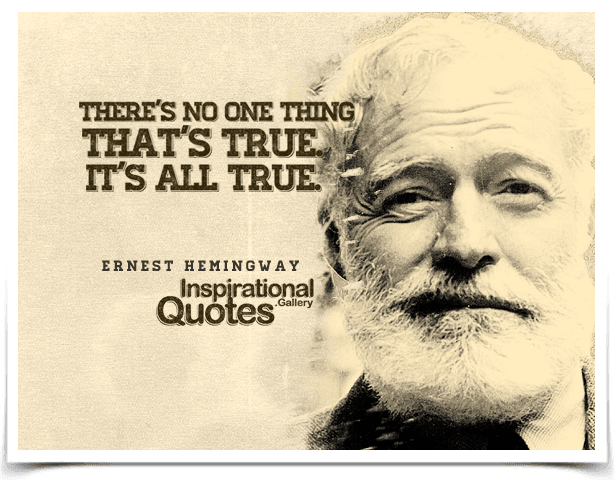
“There is no one thing that is true. It is all true.” – Hemingway in "For Whom the Bell Tolls"


I am reading about Ernest Hemingway and his novel "For whom the bell tolls" and this is the best explanation of the title:


John Donne (1572-1631), 
Devotions Upon Emergent Occasions, 
Meditation XVII: Nunc Lento Sonitu Dicunt, Morieris:
"Perchance he for whom this bell tolls may be so ill, as that he knows not it tolls for him; and perchance I may think myself so much better than I am, as that they who are about me, and see my state, may have caused it to toll for me, and I know not that.
...
No man is an island, entire of itself; every man is a piece of the continent, a part of the main. If a clod be washed away by the sea, Europe is the less, as well as if a promontory were, as well as if a manor of thy friend's or of thine own were: any man's death diminishes me, because I am involved in mankind, and therefore never send to know for whom the bells tolls; it tolls for thee."
Donne lived in Tudor and Stewart England, and at that time the tolling of church bells to mark various events was an important feature of daily life. The tolling referred to in the quotation is, of course, that of funeral bells. Donne's view, which has, oddly for a 17th century Christian, much in common with 21st century eastern religions, was that all people are socially and spiritually interconnected; for example, the contemporary Buddhist view is demonstrated by the reply given by the Dalai Lama, when asked during a visit to Northern Ireland how the warring Protestants and Catholics could co-exist: "Remember we are all one - all the same". Donne seems to be saying that whatever affects one affects us all. This is highlighted by the famous 'no man is an island' line at the beginning of the 'for whom the bells tolls' paragraph.

Donne's Meditations concern man's spiritual and social functioning, especially with regard to illness and death. They are somewhat mystical and difficult to interpret, especially without the benefit of experience of the nuances of the social and religious sensibilities of a 17th century Englishman. It is a testament to Donne's insight that the work contains much that strikes deep chords with people living and dying today.

There's some debate about what precisely what was meant. Some think that Donne was simply pointing out people's mortality and that when a funeral bell was heard it was a reminder that we are nearer death each day, that is, the bell is tolling for us. Others view it more mystically and argue that Donne is saying we are all one and that, when one dies, we all die a little. This isn't as bleak as it might sound, as the counterpoint would be that there is some part of the living in the dead and that we continue a form of life after death.

Ernest Hemingway helped to make the phrase commonplace in the language when he chose to use the quotation for the title of his 1940-published book about the Spanish Civil War. Hemingway refers back to 'for whom the bells tolls' and to 'no man is an island' to demonstrate and examine his feelings of solidarity with the allied groups fighting the fascists. There was a strong feeling amongst many intellectuals around the world at the time that it was a moral duty to fight fascism, which they feared may take root world-wide if not checked. 

This view was given voice later in the well-known poem First They Came for the Jews, attributed to Pastor Martin Niemöller:


First they came for the Jews
and I did not speak out
because I was not a Jew.

Then they came for the Communists
and I did not speak out
because I was not a Communist.

Then they came for the trade unionists
and I did not speak out
because I was not a trade unionist.

Then they came for me
and there was no one left to speak out for me. 


Hemingway adapted the novel as the screenplay to a successful 1943 film of the same title, starring Gary Cooper and Ingrid Bergman.


Pau Casals (29 December 1876 – 22 October 1973), born Pau Casals i Defilló, was a Spanish cellist and conductor

This is what he said: "The love of one's country is a splendid thing. But why should love stop at the border? There is a brotherhood among all men. This must be recognized if life is to remain. We must learn the love of man." As quoted in Joys and Sorrows: Reflections‎ by Pablo Casals as told to Albert E. Kahn (1974) by Albert E. Kahn

I've written a poem based on this:

The love of one’s country
is a splendid thing—
yet why should love be confined
by borders? A brotherhood, unseen,
hums among all men.
But why not extend beyond
what is known, to lands untraveled?
If love stops at the edge of a map,
can it truly be called love?
A border is just a line, after all,
a mere suggestion. Life could be a line,
an indicator of the heart, the originator
of love. Life and love, fragile and fleeting,
depend on this recognition: brotherhood
is not a boundary but a bridge.
Let love be a love that knows no limits,
reaching out beyond,
forgetting it ever learned to stop.

(first revision, poem in development)

More About Pablo Casals

Pablo Casals was regarded as one of the greatest cello players and composers (writers of music) of the twentieth century. He was also an active protester against oppressive governments (those that misuse their power and mistreat citizens), including that of the Spanish tyrant Francisco Franco (1892–1975).

Early life

Pablo Casals was born on December 29, 1876, in Vendrell, in the Catalonian region of Spain. He was the second of eleven children of Carlos Casals and Pilar Defillo de Casals. Casals's father, the local church organist, would play the piano while the infant Casals rested his head against it and sang along. By the age of four Casals was playing the piano, and at five he joined the church choir. At six he was composing songs with his father, and by the age of nine he could play the violin and organ. From the age of ten Casals began each day with a walk, taking inspiration from nature. He would then play two Johann Sebastian Bach(1685–1750) pieces on the piano when he returned home.

Masters the cello

Casals became interested in the cello after seeing the instrument in a music recital at age eleven; soon, his father built him one. His parents argued about his future; his father wanted him to study carpentry, but his mother would not hear of it and enrolled him in the Municipal School of Music in Barcelona, Spain. Casals clashed with his strict instructors, preferring to play the cello in his own, more expressive, manner. His progress was extraordinary, and Casals's new way of playing made the cello a more popular instrument.

Among those impressed by Casals was the Spanish composer Isaac Albéniz (1860–1909). After hearing Casals play, Albéniz gave him a letter of introduction to Count Guillermo de Morphy, secretary to the Queen Regent of Spain, Maria Cristine. In 1894 Casals traveled to Madrid, Spain, and gave concerts for the queen and her court. Over the next few years his reputation spread as he played with various orchestras in Madrid. With his formal debut as a concert soloist in Paris, France, in 1899, Casals's career was assured.

New respect for Bach's music

Sometime in 1890, while Casals and his father were in a Barcelona bookstore, he found a volume of Bach's six suites (arrangements of music) for solo cello. Previously the suites were considered merely musical exercises, but Casals saw in them something deeper. He studied and practiced the suites every day for a dozen years before performing


Pablo Casals.

Casals's performance of the suites shocked listeners by correcting the previously held belief that Bach's solo music for strings had no warmth or artistic value. Casals's love of Bach's music carried over into the rest of his life. As he told José Maria Corredor in Conversations With Casals, "I am everyday more convinced that the main-spring of any human enterprise must be moral strength and generosity." Casals came to understand the suffering of the poor as he walked the streets of Barcelona. He vowed to use his music to help his fellow people.

Silenced cello in protest

Casals often wrote letters and organized concerts on behalf of the oppressed, and he refused to perform in countries, such as the Soviet Union, Germany, and Italy, whose governments mistreated their citizens. After the Spanish Civil War (1936–39), when General Francisco Franco took power, Casals announced he would never return to Spain while Franco was in charge. He settled in Prades, France, and gave occasional concerts until 1946, when, to take a stand against tyrants such as Franco, Casals vowed never to perform again.

Reflecting on German's conquering Spain and Poland Casals wrote, "A ferocious beast is abroad that ravages everything and through crime and terror enslaves one nation after another."

The events of 1945 would disappoint him. Casals observed, "Though Hitler and Mussolini had been crushed, the fascist dictatorship they had fostered in Spain remained in power." When the victorious Western democracies eschewed intervention in his homeland to bring down the Franco dictatorship, Pablo Casals cancelled future concert performances, returned to exile in Prades, and refused all efforts to entice him back to Spain while the despised "Caudillo" ruled from Madrid.

Encouraged by friends, Casals resumed playing in 1950, participating in the Prades Festival organized to honor Bach. Casals agreed to participate on condition that all proceeds were to go to a refugee hospital in nearby Perpignan. At the end of the festival and every concert he gave after that, Casals played "Song of the Birds," a Catalonian folk song, to protest the continued oppression in Spain. In 1956 he settled in Puerto Rico and started the Casals Festival, which led to the creation of a symphony orchestra and a music school on the island. Casals never returned to Spain.

Casals also continued to refuse to perform in countries that officially recognized the Franco government. Until his death in 1973, Casals made only one exception—in 1961 he performed at the White House for U.S. President John F. Kennedy (1917–1963), a man he greatly admired. In 1971, at the age of ninety-five, he performed his "Hymn of the United Nations" before the United Nations General Assembly. Casals sought to inspire harmony among people, with both his cello and his silence.
"The world will not be destroyed by those who do evil, but by those who watch them without doing anything." - Einstein

It can also be paraphrased, more closer to Einstein's words as, "The world is a dangerous place not just because of those who commit evil, but because of those who silently watch."


Albert Einstein (1879-1955) was a German-born theoretical physicist. He developed the general theory of relativity, one of the two pillars of modern physics. Einstein's work is also known for its influence on the philosophy of science.
This quote comes from what Albert Einstein said about Pablo Casals, a Spanish cellist in 1953:
It is certainly unnecessary to await my voice in acclaiming Pablo Casals as a very great artist, since all who are qualified to speak are unanimous on this subject. What I particularly admire in him is the firm stand he has taken, not only against the oppressors of his countrymen, but also against those opportunists who are always ready to compromise with the Devil. He perceives very clearly that the world is in greater peril from those who tolerate or encourage evil than from those who actually commit it.
I stumbled across this popular quote from MLK Jr. about courage and speaking the truth:


Did some research and found where this quote comes from.  This was a speech about courage made on March 8, 1965 in Salem, Alabama.  The words have been changed a little bit.


This is the transcript of these powerful words from Martin Luther King Jr.

Deep down in our non-violent creed is the conviction there are some things so dear, some things so precious, some things so eternally true, that they're worth dying for. And if a man happens to be 36-years-old, as I happen to be, some great truth stands before the door of his life--some great opportunity to stand up for that which is right. 
A man might be afraid his home will get bombed, or he's afraid that he will lose his job, or he's afraid that he will get shot, or beat down by state troopers, and he may go on and live until he's 80. He's just as dead at 36 as he would be at 80, and the cessation of breathing in his life is merely the belated announcement of an earlier death of the spirit. He died ... A man dies when he refuses to stand up for that which is right. A man dies when he refuses to stand up for justice. A man dies when he refuses to take a stand for that which is true.
So we're going to stand up amid horses. We're going to stand up right here in Alabama, amid the billy-clubs. We're going to stand up right here in Alabama amid police dogs, if they have them. We're going to stand up amid tear gas!

We're going to stand up amid anything they can muster up, letting the world know that we are determined to be free!


Don't bend; don't water it down; don't try to make it logical; don't edit your own soul according to the fashion. Rather, follow your most intense obsessions mercilessly. -Franz Kafka 

Imagine someone observing you and me from a galaxy far far away ...


The saintly abbess Hildegard of Bingen (1098-1179) likened rain to the vital energy of the soul, which makes the body flourish and "keeps it from drying out, as the rain moistens the earth. For when the rainfall is moderate and not excessive, the earth brings forth new life. But if it is inordinately heavy, it destroys the earth and drowns new shoots. From the soul there emanate certain forces to vitalize the body, just as rainwater with its moisture vitalizes the earth..." 


"To do something crazy and to be amazing, to achieve something crazy, you have to do something crazy. You have to sacrifice and do something that's not normal, because you want to become not normal. To become a great champion, you can't do what the average Joe does. Because you're not going to get there." 


"When you do something beautiful and nobody noticed, do not be sad. For the sun every morning is a beautiful spectacle yet most of the audience still sleeps." - John Lennon

Subscribe to Classical Shabad Kirtan by Email
Older Posts Home

SHIVPREET SINGH

Singing oneness!
- Shivpreet Singh

Related Posts

Popular - 30 days

  • Vande Mataram - Lyrics and Translation
    I love the Vande Maataram composition in Raag Des sung by Lata Mangeshkar.  Vande Mataram is the national song of India. In 2003, BBC World ...
  • Kabir's Gao Gao Ri Dulhani - Lyrics and meanings
    One of my favorite Kabir's poem I call "Dulhani." In this beautiful poem, Kabir envisions himself as the bride and the univers...
  • The Many Types of Raag Malhar
    Pour love in your heart, like the rain pours on the land today. As I am working on a Meerabai song I am doing research on the different vari...
  • Praising Shri Krishna in the Guru Granth Sahib - Dhan Dhan O Raam Ben by Bhagat Namdev
    I made a new composition for this shabad today. Hopefully I will get to record it one day. I'd like to focus our discussion on this part...
  • Sanson Ki Mala Pe - Lyrics, Translation and Background
    Sanson ki Maala was made famous by Nusrat Fateh Ali Khan sahib.  Although some have attributed this song to Mirabai and Khusro, this is a gh...
  • Shunya Gadh Shehar - Gorakhnath Bhajan Composed by Pt. Kumar Gandharva
    Listening to this beautiful bhajan today by Pt. Kumar Gandharva.  I don't know if this is authentically by Gorakhnath, but it made me th...
  • Samrath Guru - Video and Translation
    Sometime last year I heard this haunting melody from Nirinjan Kaur ... and fell in love with it. Since then I have been singing it and recor...
  • Jindari Lutti by Ghulam Farid - Lyrics/Translation and Performance by Bade Ghulam Ali Khan (Also Rohi or Dilri Lutti)
    Bade Ghulam Ali Khan's version of this Multani Kafi This is a beautiful spiritual song of separation written by Ghulam Farid.  I recentl...
  • Gulon Mein Rang Bhare - Lyrics and Translation of Mehdi Hassan Ghazal
    I was listening and meditating upon this beautiful ghazal by Faiz Ahmed Faiz, beautifully composed by Mehdi Hassan. It is one of my favorite...
  • Beethal Bhaila - Namdev Asa - Wherever I go, the playful Beethal is there
    I’ve been working on a musical composition for a beautiful shabad by Bhagat Naamdev, and it’s been making me think deeply about its message....

Blog Archive

  • ▼  2026 (12)
    • ▼  June (1)
      • Translation of Laavan - Shivpreet Singh
    • ►  May (1)
    • ►  April (1)
    • ►  March (6)
    • ►  February (1)
    • ►  January (2)
  • ►  2025 (24)
    • ►  October (5)
    • ►  September (7)
    • ►  August (2)
    • ►  July (2)
    • ►  June (3)
    • ►  March (1)
    • ►  February (2)
    • ►  January (2)
  • ►  2024 (21)
    • ►  December (1)
    • ►  November (2)
    • ►  October (3)
    • ►  September (2)
    • ►  August (4)
    • ►  July (2)
    • ►  June (3)
    • ►  May (1)
    • ►  April (1)
    • ►  February (1)
    • ►  January (1)
  • ►  2023 (41)
    • ►  December (4)
    • ►  November (3)
    • ►  October (4)
    • ►  September (7)
    • ►  August (5)
    • ►  July (7)
    • ►  June (3)
    • ►  May (3)
    • ►  April (1)
    • ►  March (1)
    • ►  February (3)
  • ►  2022 (8)
    • ►  March (2)
    • ►  January (6)
  • ►  2021 (139)
    • ►  December (15)
    • ►  November (2)
    • ►  October (6)
    • ►  September (7)
    • ►  August (2)
    • ►  July (4)
    • ►  May (21)
    • ►  April (21)
    • ►  March (35)
    • ►  February (23)
    • ►  January (3)
  • ►  2020 (150)
    • ►  December (2)
    • ►  November (13)
    • ►  October (32)
    • ►  September (47)
    • ►  August (37)
    • ►  July (5)
    • ►  June (3)
    • ►  May (3)
    • ►  April (3)
    • ►  March (2)
    • ►  February (1)
    • ►  January (2)
  • ►  2019 (43)
    • ►  December (5)
    • ►  November (8)
    • ►  October (13)
    • ►  September (4)
    • ►  July (3)
    • ►  June (1)
    • ►  May (2)
    • ►  March (1)
    • ►  February (1)
    • ►  January (5)
  • ►  2018 (53)
    • ►  December (8)
    • ►  November (5)
    • ►  October (3)
    • ►  September (4)
    • ►  August (6)
    • ►  July (3)
    • ►  June (4)
    • ►  May (6)
    • ►  April (5)
    • ►  March (2)
    • ►  February (4)
    • ►  January (3)
  • ►  2017 (73)
    • ►  December (2)
    • ►  November (12)
    • ►  October (8)
    • ►  September (1)
    • ►  August (7)
    • ►  July (6)
    • ►  June (12)
    • ►  May (5)
    • ►  April (4)
    • ►  March (8)
    • ►  February (3)
    • ►  January (5)
  • ►  2016 (141)
    • ►  December (1)
    • ►  November (9)
    • ►  October (16)
    • ►  September (19)
    • ►  August (2)
    • ►  July (5)
    • ►  June (7)
    • ►  May (3)
    • ►  April (18)
    • ►  March (34)
    • ►  February (16)
    • ►  January (11)
  • ►  2015 (28)
    • ►  December (1)
    • ►  November (1)
    • ►  October (2)
    • ►  September (12)
    • ►  August (1)
    • ►  May (1)
    • ►  April (7)
    • ►  March (1)
    • ►  February (1)
    • ►  January (1)
  • ►  2014 (107)
    • ►  December (1)
    • ►  November (6)
    • ►  October (1)
    • ►  August (2)
    • ►  July (1)
    • ►  June (11)
    • ►  April (10)
    • ►  March (15)
    • ►  February (24)
    • ►  January (36)
  • ►  2013 (242)
    • ►  December (13)
    • ►  October (5)
    • ►  September (3)
    • ►  August (3)
    • ►  June (7)
    • ►  May (62)
    • ►  April (79)
    • ►  March (12)
    • ►  February (23)
    • ►  January (35)
  • ►  2012 (145)
    • ►  December (29)
    • ►  November (31)
    • ►  October (44)
    • ►  September (5)
    • ►  August (9)
    • ►  July (7)
    • ►  June (1)
    • ►  May (3)
    • ►  April (1)
    • ►  March (4)
    • ►  February (9)
    • ►  January (2)
  • ►  2011 (252)
    • ►  December (1)
    • ►  November (1)
    • ►  October (4)
    • ►  September (13)
    • ►  August (28)
    • ►  July (44)
    • ►  June (33)
    • ►  May (15)
    • ►  April (2)
    • ►  March (45)
    • ►  February (43)
    • ►  January (23)
  • ►  2010 (70)
    • ►  December (31)
    • ►  November (20)
    • ►  October (2)
    • ►  September (3)
    • ►  August (1)
    • ►  July (2)
    • ►  May (5)
    • ►  March (4)
    • ►  February (1)
    • ►  January (1)
  • ►  2009 (15)
    • ►  December (1)
    • ►  November (3)
    • ►  October (2)
    • ►  September (2)
    • ►  August (1)
    • ►  June (1)
    • ►  April (1)
    • ►  March (1)
    • ►  February (1)
    • ►  January (2)
  • ►  2008 (15)
    • ►  November (1)
    • ►  July (2)
    • ►  June (5)
    • ►  May (1)
    • ►  April (2)
    • ►  March (1)
    • ►  February (1)
    • ►  January (2)
  • ►  2007 (9)
    • ►  November (4)
    • ►  October (2)
    • ►  September (1)
    • ►  August (2)
  • ►  1999 (1)
    • ►  May (1)

Message

Name

Email *

Message *

Twitter

Tweets by @shivpreetsingh


Copyright © Shivpreet Singh. Designed by OddThemes