Shivpreet Singh
Shivpreet Singh
  • Home
  • Music
    • Spotify
    • Apple Music
    • Amazon
    • Pandora
    • SoundCloud
    • Google
    • You Tube
      • Music on YouTube
      • Uplifting Shabads
      • Guru Nanak Shabads
      • Meditation & Chanting
      • Shabads for Kids
      • Shabads of Guru Arjan
      • Shabads of Guru Gobind Singh
  • Videos
    • Latest
    • Popular
    • Uplifting
    • Guru Nanak
    • Meditation
    • For Kids
    • Guru Arjan
    • Guru Gobind Singh
  • Projects
    • DhunAnand Foundation
    • Pandemic 2020
    • Guru Nanak 550
    • Namdev 750
    • Thoughts and Ruminations
    • What I Love to Read
  • News
  • Meet Me
    • Meet Me
    • Request
    • Send Email
    • Newsletter
    • FAQs
  • About
    • Biography
    • Photos
    • Music
    • FAQs
Anger: A perspective from the Guru Granth Sahib
An article by T. Singh

You (anger) take the perplexed beings (corrupt, agitated, Bikaaree,
full of desires or hunger of Maya...) in your power, and make them dance like monkeys
O Nanak, through lust and anger, no one has ever found God
- go, and ask any wise man (sggs 551).
Anger barks and brings ruin on itself, blindly pursuing useless conflicts (sggs 1288).


With the false ego-sense (Haumai, "I-ness") up and active, all our acting in the world becomes selfish and evil. Hence there is no other factor causing the illusory duality (Doojaa Bhaav) and the repeated pain and delusion it entails than the psychological ego-sense. When the materially identified ego has sided with the materialistic forces (Maya), it is said to have the following faults: lust (Kaam), anger (Krodh); greed (Lobh), delusory emotional attachment (Moh), pride (Mada or Ahankaar), envy (Matsarya) and stubborn mindedness (Mann-Hatha). Also called evil passions, man's Spiritual heritage constantly gets looted by these internal thieves (and their numerous variations), causing him to lose knowledge of his True Being. The attempt of this Gurbani reflection is to reflect on the nature of anger, its cause, its signs and its cure or management.
  • ਹਉਮੈ ਬੰਧਨ ਬੰਧਿ ਭਵਾਵੈ ॥: haumai bandhan bandh bhavaavai: Egotism binds people in bondage, and causes them to wander around lost (sggs 227).
  • ਹਉ ਵਿਚਿ ਜੰਮਿਆ ਹਉ ਵਿਚਿ ਮੁਆ ॥: Haou vich janmiaa haou vich muaa: In ego man is born; in ego he dies (sggs 466).
  • ਕਾਮ ਕ੍ਰੋਧ ਮਾਇਆ ਮਦ ਮਤਸਰ ਏ ਖੇਲਤ ਸਭਿ ਜੂਐ ਹਾਰੇ ॥: Kaam krodh maya mada matsar ae khelat sabhi jooai haare: Kaama, Krodha, Maya, Mada and Matsara — these have combined to plunder the world (sggs 974).
  • ਕਾਮੁ ਕ੍ਰੋਧੁ ਲੋਭੁ ਮੋਹੁ ਨਿਤ ਝਗਰਤੇ ਝਗਰਾਇਆ ॥: Kaam krodh lobh mohu nit jhagarate jhagaraaeiaa: Lust, anger, greed and emotional attachment bring continual conflict and strife (sggs 984).
  • ਹਠੁ ਅਹੰਕਾਰੁ ਕਰੈ ਨਹੀ ਪਾਵੈ ॥: Hatha ahankaar karai nahee paavai: Acting in stubbornness and egotism, (Truth) is not attained (Realized, etc.) (sggs 905).
What is anger? Loads and loads of books have been written on anger. But it still appears to be one of the most misunderstood and overused of human emotions. Some scriptures have done a wonderful job explaining it in a very layman's terms. As they reveal to us, psychological ego gives rise to body-mind-intellect consciousness (duality). In turn, this body-mind-intellect personality gives rise to the perceiver of objects (beings, things and places), the feeler of emotions and the thinker of thoughts. Anger is one of the human emotions or feelings - one of the psychological ego's passions (negativity, Bikar orBikaar). In other words, anger is an emotional-physiological-cognitive internal state of consciousness which renders a man blind to the existence of inner Light. Hence sometime it's referred in the scriptures as hidden evil or thief, waiting for an excuse to find expression and expansion.
  • ਬਸਇ ਕਰੋਧੁ ਸਰੀਰਿ ਚੰਡਾਰਾ ॥: Basai krodh sareeri chandaalaa: Anger, the outcaste, hides within man's body (sggs 759).
  • ਭੀਤਰਿ ਪੰਚ ਗੁਪਤ ਮਨਿ ਵਾਸੇ ॥ ਥਿਰੁ ਨ ਰਹਹਿ ਜੈਸੇ ਭਵਹਿ ਉਦਾਸੇ ॥੧॥: Bheetar panch gupat mani vaase. Thir n rahahi jaise bhavahi oudaase ||1||: The "five" (i.e., all evil passions: lust, anger, greed, etc.) dwell hidden within the mind. They do not remain still, but move around like wanderers (ਠਠੰਬਰੇ ਹੋਇਆਂ ਵਾਂਗ, and do not let my mind remain still) ||1|| (sggs 359).
  • ਕਾਮੁ ਕ੍ਰੋਧੁ ਅੰਤਰਿ ਧਨੁ ਹਿਰੈ ॥: Kaamu krodhu antari dhanu hirai: Lust and anger steal the wealth (of the Naam...) within (sggs 352).
How does anger arise in us? First, the false ego begets lust (Kaama) - the compelling, coercive materialistic desire to indulge in sensory temptations. In turn, lust clouds our understanding of life. Consequently we end up living false values: external looks, wealth, name, fame, material success, popularity, irrational expectations, false concepts, fantasies and brooding on the past. Frustrated or unfulfilled lust results in anger (Krodh).
Frustration is the feeling we experience when we don't get what we want, or when something interferes with our gaining a desired and expected goal, good or bad. The feeling of frustration can come from unexpected situations, our own limitations, our actions and choices, actions of others, motives of others, experiences of injustice, and so on. Anger is feeling upset in response to such frustration arising from non-fulfillment of desires. Thus, lust is the first perverted son of the sense-blind mind, and its second perverted son is anger. In brief, when obstructed, evil desire turns to its debased brother we call anger. These two impulses attack unenlightened beings from within and without. This is why the scriptures tirelessly warn us against the blind attachment to sense objects. As the Gurbani puts it: anger and lust are "the wounds of the soul".
  • ਕਾਮੁ ਕ੍ਰੋਧੁ ਜੀਅ ਮਹਿ ਚੋਟ ॥: Kaamu krodhu jeea mahi chott: Lust and anger (i.e. all evil passions) are the wounds of the soul (i.e. they inspire us do evil) (sggs 152).
  • ਸਲੋਕੁ ਮਰਦਾਨਾ ੧ ॥ ਕਲਿ ਕਲਵਾਲੀ ਕਾਮੁ ਮਦੁ ਮਨੂਆ ਪੀਵਣਹਾਰੁ ॥ ਕ੍ਰੋਧ ਕਟੋਰੀ ਮੋਹਿ ਭਰੀ ਪੀਲਾਵਾ ਅਹੰਕਾਰੁ ॥ ਮਜਲਸ ਕੂੜੇ ਲਬ ਕੀ ਪੀ ਪੀ ਹੋਇ ਖੁਆਰੁ ॥ ਕਰਣੀ ਲਾਹਣਿ ਸਤੁ ਗੁੜੁ ਸਚੁ ਸਰਾ ਕਰਿ ਸਾਰੁ ॥ ਗੁਣ ਮੰਡੇ ਕਰਿ ਸੀਲੁ ਘਿਉ ਸਰਮੁ ਮਾਸੁ ਆਹਾਰੁ ॥ ਗੁਰਮੁਖਿ ਪਾਈਐ ਨਾਨਕਾ ਖਾਧੈ ਜਾਹਿ ਬਿਕਾਰ ॥੧॥: Slok Mardaanaa 1 || Kali (imagining Mayaic mind...) is the vessel, filled with the wine of lust; the mind is the drinker. Anger is the cup, filled with the worldly attachment; pride is the bartender. Drinking too much in the company of falsehood and greed, (the mind) is ruined. So let good conduct (based on the Gurmat) be your distillery, and let Truth be the molasses you ferment; make the most excellent wine of True (Naam). Make Virtue your bread, cool headedness (ਸੀਤਲ ਸੁਭਾਉ) the ghee and modesty the dish of meat. O Nanak! By becoming a Gurmukh, (this diet) is obtained; by consuming which, all the Bikaar (evil and corruption...) depart ||1|| (sggs 553).
  • ਕਾਮ ਕਰੋਧੁ ਸਬਲ ਸੰਸਾਰਾ ॥: Kaam karodhu sabal sansaaraa: Lust and anger are very powerful in the world (sggs 1060).
Looking at it from an another angle, anger comes from despair or threatening of one's will when his sensory desire is obscured or hindered. In other words, anger is the result of hurt pride for not getting one's own way. Frustrated or unfulfilled desires provoke worry and regrets, followed by fear which causes man to have an inability to face a critical moment, even in the intimacy of his deepest meditation. When this fear is disturbed, anger boils in us causing resentment, agitation and envy. Those who anger easily are overly fearful of God, elders, government, impending disaster, death, safety, time (past, present and future), security, fate, and the list goes on and on. As we can see, desire-worry-fear-anger have hand-in-glove relationship. This is why the scriptures repeatedly remind us that a person full of desires, material or celestial, cannot be on the path of Spiritual Unfoldment. Such person is not only angry at himself and other people, he is even angry at his God. Furthermore, he is often angry at some people who are already dead!
  • ਭੈ ਵਿਚਿ ਜੰਮੈ ਭੈ ਮਰੈ ਭੀ ਭਉ ਮਨ ਮਹਿ ਹੋਇ ॥: Bhai vich jammai bhai marai bhee bhaou mann mahi hoi: In fear we are born, and in fear we die; fear is always present in the mind (sggs 149).
  • ਮਾਇਆ ਜਾਲੁ ਪਸਾਰਿਆ ਭੀਤਰਿ ਚੋਗ ਬਣਾਇ ॥ ਤ੍ਰਿਸਨਾ ਪੰਖੀ ਫਾਸਿਆ ਨਿਕਸੁ ਨ ਪਾਏ ਮਾਇ ॥: Maya jaal pasaariaa bheetar chog banaai. Trisnaa pankhee phaasiaa nikis n paae maai: Maya has spread out her net and in it has placed the bait (ਵਿਸ਼ਿਆਂ ਦਾ ਚੋਗਾ ਜਾਲ, sensuousness, sense-gratifications, Bikaars, desires, etc.). The bird of desire (instinctive mind, ਜੀਵ-ਪੰਖੀ, etc.) is caught, and cannot find any escape, O (my) mother (sggs 50).
  • ਡਰਿ ਡਰਿ ਪਚੇ ਮਨਮੁਖ ਵੇਚਾਰੇ ॥: Dari dari pache manmukh vechaare: The wretched Manmukhs (material or unenlightened beings) are ruined through fear and dread (sggs 677).
  • ਆਪੁ ਗਇਆ ਭ੍ਰਮੁ ਭਉ ਗਇਆ ਜਨਮ ਮਰਨ ਦੁਖ ਜਾਹਿ ॥: Aap gaiaa bhram bhaou gaiaa janam maran dukh jaahi: When ego departs, doubt and fear also depart, and the pain of birth and death is removed (sggs 1093).
Man's limited egocentric life is said to be the cause of his repeated pain and delusion. As discussed earlier, anger is the offspring of this unripe egoism. Hence the primary cause of anger is innate, genetic or physiological. Medical science has proven this with evidence: some children, for example, are born irritable, touchy, easily angered, can throw a temper tantrum without any formal training and often even without observing a model, and that these signs are present from a very early age. As we grow, anger gets stronger many ways. One way is sociocultural - if we have seen our parents get angry first and resolve an issue after, we are more likely to use the same approach. Second may be through learning as we grow. For example, if one was abused by aggression, he may become abuser himself. Research has also found that, typically, people who are easily angered come from families that are disruptive, chaotic, and not skilled at emotional communications. Further, some find having a temper and being aggressive yield payoffs, although temporary.
  • ਕਾਮ ਕ੍ਰੋਧ ਕਾ ਚੋਲੜਾ ਸਭ ਗਲਿ ਆਏ ਪਾਇ ॥: Kaam krodh kaa cholarraa sabh gali aaye paai: All have come, wearing the robes of lust and anger (sggs 1414).
  • ਬਿਖੈ ਬਿਖੈ ਕੀ ਬਾਸਨਾ ਤਜੀਅ ਨਹ ਜਾਈ ॥: Bikhai bikhai kee baasanaa tajeea nah jaaee: I cannot escape my Vaasnaa for sin and corruption (sggs 855).
  • ਕਾਮ ਕ੍ਰੋਧ ਮਦ ਲੋਭ ਮੋਹ ਦੁਸਟ ਬਾਸਨਾ ਨਿਵਾਰਿ ॥: Kaam krodh madd lobh moh dusatt baasanaa nivaar: Take away my Vaasna - lust, anger, pride, greed, and emotional attachment (sggs 523).
We all have anger in us. But when it gets out of control and turns destructive, it can lead to problems - problem of violence or aggression, problems at work, problem in personal relationships, problem in mental and physical well-being, and problem in the overall quality of one's life. When our anger or aggression becomes so extreme that we lose self-control, it is said that we are in a rage, like a train running out of control and about to derail. Anytime we feel frustrated, especially when we think someone else is to blame for our loss, is a real potential trigger for outburst of anger. Besides getting our way, we may unconsciously use anger to play psychological put-down games: blaming others for our own shortcomings, demeaning others, insulting another person, taking revenge, oppressing others and then justify it to boost our own sagging ego. Furthermore, anger can also turn into hostility which is a chronic state of anger. In other words, anger is a temporary response to a particular frustrating situation; whilst hostility is a permanent personality characteristic.
The Gurbani urges us to picture to ourselves the way in which anger originates from non-fulfillment of desires, and how it leads to serious consequences. Anger is said to be the reason-blinding, health-impairing, peace-destroying and misery-causing behavior. This negative power stirs up conflicts, causes confusion, and scatters the mind hither and thither; which makes meditation, knowing who you are, impossible. Anger comes in many forms, some quite subtle. Also, it varies in intensity from mild irritation to intense fury and rage. Simply put: anger drives man to commit misdeeds and misconduct.
  • ਕ੍ਰੋਧੁ ਪ੍ਰਧਾਨੁ ਮਹਾ ਬਡ ਦੁੰਦਰ ਤਹ ਮਨੁ ਮਾਵਾਸੀ ਰਾਜਾ ॥: Krodhu pradhaanu mahaa bad dundar tah manu maavaasee raajaa (sggs 1161).
  • ਭੰਉਕੈ ਕੋਪੁ ਖੁਆਰੁ ਹੋਇ ਫਕੜੁ ਪਿਟੇ ਅੰਧੁ ॥: Bhanoukai kop khuaar hoe fakarr pitte andh: Anger barks and brings ruin on itself, blindly pursuing useless conflicts (sggs 1288).
  • ਗ੍ਰਿਹ ਰਾਜ ਮਹਿ ਨਰਕੁ ਉਦਾਸ ਕਰੋਧਾ ॥: Grih raaj mahi naraku udaas karodhaa: A householder indulged in sensual pleasures lives in hellish existence, and the renunciate is always victim of his own anger (sggs 1019).
  • ਤਤੈ ਤਾਮਸਿ ਜਲਿਓਹੁ ਮੂੜੇ ਥਥੈ ਥਾਨ ਭਰਿਸਟੁ ਹੋਆ ॥: Tatai taamas jaliohu moorre thathhai thaan bharisat hoaa: Tatta: In anger, you are burnt, you fool; Thatha: that place where you live, is cursed (sggs 435).
Thus, like other emotions, anger has physiological and psychological consequences. When people get angry, their heart rate and blood pressure go up, as do the levels of their energy hormones, adrenaline, and noradrenaline. It has a bad effect on health; for an angry man's whole system undergoes a change (headaches, hypertension, gastrointestinal disturbances, heart attacks, etc.). It causes terrible reactions within the nerve system of the body. In person who routinely goes through paroxysm of anger, the heart and nerve system begins to weaken from the repeated shocks.
  • ਕਾਮੁ ਕ੍ਰੋਧੁ ਕਾਇਆ ਕਉ ਗਾਲੈ ॥: Kaam krodh kaaiaa kaou gaalai: Lust and anger destroy the body (sggs 932).
  • ਆਪਣੈ ਰੋਹਿ ਆਪੇ ਹੀ ਦਝੈ ॥: Aapanai rohi aape hee dajhai: By his own anger, man burns himself (sggs 1418).
Psychological effects of anger are also grave, and Spiritually lethal. It dulls and paralyzes the mind, numbing its functioning power. It creates mental delusion, a state of psychological blindness that affects all other faculties, followed by the loss of memory. This is why when in rage, man forgets what belongs to him and to others. It's the cancer of the mind, which obscures one's memory of his Essential Nature as Unconditioned Consciousness, causing decay of the discriminative faculty (Bibek Budhi), followed by annihilation of one's righteous behavior and intelligence. Here is the step-by-step analysis. Man's brooding over objects of the senses causes attachment to them. From such attachment, lust or desires develop; from unfulfilled lust, anger arises; from anger, mental delusion arises; from delusion comes bewilderment or loss of memory of the Mool (Source, Origin, Jot...); the loss of such memory causes loss of intelligence or the discriminating faculty; upon loss of intelligence or discriminative judgment, one falls down into the material consciousness; which, in turn, brings annihilation of his Spiritual Life (the Gurmukh Lifestyle). The result is destruction of man's inner peace, happiness, health, brain power, clarity of thoughts, memory, and proper judgment.
  • ਕਠਨ ਕਰੋਧ ਘਟ ਹੀ ਕੇ ਭੀਤਰਿ ਜਿਹ ਸੁਧਿ ਸਭ ਬਿਸਰਾਈ ॥: Kathan karodh ghatt hee ke bheetari jih sudhi sabh bisaraaee: The heart is filled with anger and violence, which cause all sense to be forgotten (sggs 218).
  • ਅੰਤਰਿ ਕ੍ਰੋਧੁ ਜੂਐ ਮਤਿ ਹਾਰੀ ॥: Antari krodhu jooai mati haaree: Man filled with anger within, loses his mind in the gamble of anger (sggs 314).
  • ਕਾਮ ਕ੍ਰੋਧਿ ਅਹੰਕਾਰਿ ਫਿਰਹਿ ਦੇਵਾਨਿਆ ॥: Kaam krodhi ahankaar firahi devaaniaa: Engrossed in lust, anger and egotism, man wanders around insane (sggs 708).
  • ਅਤਿ ਕਰੋਧ ਸਿਉ ਲੂਝਦੇ ਅਗੈ ਪਿਛੈ ਦੁਖੁ ਪਾਵਹਿ ॥: Ati karodh siou loojhade agai pishai dukhu paavahi: People struggle with great anger; here and hereafter, they suffer in pain (sggs 1089).
  • ਕ੍ਰੋਧੁ ਬਿਨਾਸੈ ਸਗਲ ਵਿਕਾਰੀ ॥: Krodh binaasai sagal vikaaree: All the wicked are ruined by their anger (sggs 225).
  • ਆਪ ਪਰ ਕਾ ਕਛੁ ਨ ਜਾਨੈ ਕਾਮ ਕ੍ਰੋਧਹਿ ਜਾਰਿ ॥: Aap par kaa kashu na jaanai kaam krodhahi jaari: Man does not know what belongs to him and to others, when he burns in lust and anger (sggs 1225).
Peace and love are Divine qualities. Anger is opposite of peace and love. Hence the most common disturber of the peace and love in an individual, in a family and among groups and nations is anger. It begets terror, wars, riots, crime, murders, spouse and child abuse, divorce, stormy relationships, poor working conditions, poor physical health, emotional disorders, impatience, hostility, ungodly actions, antisocial behavior, violence, inner seething, envy, resentment, meanness, hatred, aggression, fanaticism and destruction. The Gurbani labels anger as "fire", "demon", "horrible", "unbearable", "poison", "false", "Chandaal", "thief", "wild", and so on.
  • ਮਨਿ ਹਿਰਦੈ ਕ੍ਰੋਧੁ ਮਹਾ ਬਿਸਲੋਧੁ ਨਿਰਪ ਧਾਵਹਿ ਲੜਿ ਦੁਖੁ ਪਾਇਆ ॥: Mani hiradai krodh mahaa bisalodhu nirap dhaavahi larri dukh paaiaa: Hearts and minds filled with the horribly poisonous essence of anger, the kings fight their wars and obtain only pain (sggs 445).
  • ਕਾਮਿ ਕਰੋਧਿ ਜਲੈ ਸਭੁ ਕੋਈ ॥: Kaam karodh jalai sabh koee: All are burning in the fires of lust and anger (sggs 1062).
  • ਮਾਇਆ ਮੋਹੁ ਪਰੇਤੁ ਹੈ ਕਾਮੁ ਕ੍ਰੋਧੁ ਅਹੰਕਾਰਾ ॥: Maya mohu paret hai kaam krodhu ahankaaraa: Attachment to Maya, lust, anger and egotism are demons (sggs 513).
  • ਕਾਮੁ ਕ੍ਰੋਧੁ ਬਿਖੁ ਬਜਰੁ ਭਾਰੁ ॥: Kaam krodh bikh bajar bhaar: The burden of lust, anger and corruption is unbearable (sggs 1187).
  • ਸਪੁ ਪਿੜਾਈ ਪਾਈਐ ਬਿਖੁ ਅੰਤਰਿ ਮਨਿ ਰੋਸੁ ॥: Sapp pirhaaee paaeeai bikhu antari manni ros: The snake may be locked in a basket, but it is still poisonous, and the rage (to bite others) within its mind remains (sggs 1009).
  • ਸੰਗੀ ਖੋਟਾ ਕ੍ਰੋਧੁ ਚੰਡਾਲ ॥: Sangee khotaa krodh chandaal: O man, your constant companion is the demon of anger (sggs 374).
Anger is a sign of man's selfishness and his ignorance of his true identity (Mool); the immature state of the soul. On account of selfishness and ignorance, we are cowardly fearful of almost everything. In body-consciousness, wholly ignorant of our Mool, we remain bewildered and busy in compulsive bodily activities, tossed around by desires and anger. Whenever a desire for material objects is fulfilled, the inevitable result is greed and more. On the other hand, if a desire remains unfulfilled, it manifests in fear and anger. These impulses of lust, anger and greed pull the consciousness to matter and sense enslavement. This is attachment that bounds us to worldliness. So long we are in bondage, Truth remains hidden from us. Hence, the disease of brooding over sense objects is such that even if a man acquires all the wealth and possessions of the world, his desires will go on multiplying. These negative impulses lead one to repeated pain and delusion, hellish existence or Spiritual oblivion.
  • ਅਗਿਆਨੀ ਮਨਿ ਰੋਸੁ ਕਰੇਇ ॥: Agiaanee mani rosu karaee: The ignorant person shows his anger (sggs 268).
  • ਕਾਮ ਕ੍ਰੋਧਿ ਲੋਭਿ ਮੋਹਿ ਬਾਧਾ ॥: Kaam krodhi lobhi mohi baadhaa: Man is bound to worldliness by lust, anger, greed and emotional attachment (sggs 741).
  • ਕਾਮਿ ਕ੍ਰੋਧਿ ਲੋਭਿ ਬਿਆਪਿਓ ਜਨਮ ਹੀ ਕੀ ਖਾਨਿ ॥: Kaami krodhi lobhi biaapio janam hee kee khaan: Engrossed in unfulfilled lust, unresolved anger and greed, you will be consigned to reincarnation (sggs 1304).
An angry person is generally unwilling to concede that he has the disease of anger. He always blames others! Furthermore, the majority of us (probably over 99.9 percent) live in unenlightened existence, hence we go to any length to justify our anger - we excuse it or rationalize it by calling it "righteous anger", "good anger", "assertiveness", and so on. From doing so, we get an ego boost, or we may try to conceal other feelings: the feelings underlying the anger reaction make us feel vulnerable and weak; anger makes us feel, at least momentarily, strong and in control. This is all self-deceiving. Because anger causes most of us to lose our inner balance and to easily forget about universal love and become quite mad. The Gurbani does not entertain such excuses or rationalization. Anger is anger whether it's due to frustration of good desires or bad desires; for both good or bad desires are in Maya or duality, hence relative. Anger must also be distinguished from assertiveness, fearlessness, or moral courage. These three are essentially synonymous. True assertive behavior is tactfully and rationally standing up for ourselves without causing undue anxiety to others, to express honest feelings comfortably, and to exercise personal rights without denying the rights of others. Thus, true assertiveness is to look not only to one's own interests but also to the interests of others. Therefore, a true assertiveness is not the natural tendency of manipulating or hurting others so that one's own needs are met, even at the cost of another persons needs. The quality of true assertiveness or true fearlessness belongs to a person who possesses the Divine attribute of true Humility - a Mool-realized person (the Gurmukh), who acts only in Dharma, not out of anger.
  • ਨਾਨਕ ਕਾਮਿ ਕ੍ਰੋਧਿ ਕਿਨੈ ਨ ਪਾਇਓ ਪੁਛਹੁ ਗਿਆਨੀ ਜਾਇ ॥: Nanak kaami krodhi kinai na paaio pushahu Giaanee jaai: O Nanak, through lust and anger, no one has ever found God - go, and ask any wise man (sggs 551).
  • ਕਾਮ ਕ੍ਰੋਧ ਸਿਉ ਠਾਟੁ ਨ ਬਨਿਆ ॥: Kaam krodh siou thaat na baniaa: Don't deal whatsoever with lust and anger (sggs 1347).
  • ਪਰਹਰੁ ਕਾਮੁ ਕ੍ਰੋਧੁ ਅਹੰਕਾਰੁ ॥: Paraharu kaamu krodhu ahankaar: Set aside lust, anger and pride (sggs 324).
  • ਕਾਮ ਕ੍ਰੋਧ ਸੰਗਿ ਕਬਹੁ ਨ ਬਹਹੁ ॥: Kaam krodh sangi kabahu na bahahu: Don't ever associate with lust or anger (sggs 343).
  • ਮਨ ਕਾ ਕ੍ਰੋਧੁ ਨਿਵਾਰਿ ਪੰਡਿਤ ॥: Mann kaa krodhu nivaar pandit: Eradicate anger from your mind, O Pandit (sggs 887).
  • ਭੈ ਕਾਹੂ ਕਉ ਦੇਤ ਨਹਿ ਨਹਿ ਭੈ ਮਾਨਤ ਆਨ ॥ ਕਹੁ ਨਾਨਕ ਸੁਨਿ ਰੇ ਮਨਾ ਗਿਆਨੀ ਤਾਹਿ ਬਖਾਨਿ ॥੧੬॥: Bhai kaahoo ko det nahi nahi bhai manat aan ...: One who does not frighten anyone, and who is not afraid of anyone else (ਡਰਾਵਿਆਂ ਤੋਂ ਘਬਰਾਂਦਾ ਨਹੀਂ) — says Nanak, listen, mind: call him Giaanee (spirituallt Wise, ਆਤਮਕ ਜੀਵਨ ਦੀ ਸੂਝ ਵਾਲਾ, etc.) ||16|| (sggs 1427).
  • ਮਨ ਰੇ ਸਚੁ ਮਿਲੈ ਭਉ ਜਾਇ ॥: Mann re sachu milai bhaou jaai: O mind, meeting with the Truth, fear departs (sggs 18).
What are the signs of anger? Anger can be recognized from its behavioral and verbal signs. Behavioral signs may include assaultive behavior (physical and verbal cruelty, rage, slapping, shoving, kicking, hitting, threaten with a weapon, etc.), aggressive behavior (criticizing others, chronic fault finding, accusing someone of having immoral or despicable traits or motives, nagging, scolding, whining, sarcasm, prejudice, flashes of temper, haranguing, abusive, cursing, etc.), hurtful behavior (malicious gossip, stealing, trouble-making, thinking ill of others, etc.), rebellious behavior (antisocial behavior, open defiance, refusal to talk, taking offense easily, etc.), withdrawal (quiet remoteness, silence, lack of communication, etc.), psychosomatic disorders (iredness, anxiety attacks, high blood pressure, heart disease, etc.), depression and guilt, serious mental illness like paranoid schizophrenia, accident-proneness, self-defeating or addictive behavior (drinking, overeating, drugs, smoking, etc.), vigorous distracting activity (exercising or cleaning, etc.), excessively submissive deferring behavior, crying, distrusting, skeptical, argumentative, irritating, indirectly challenging attitude, resentful, jealous, disruptive, uncooperative, distracting actions, unforgiving or unsympathetic, sulky, sullen, pouting, passively resistant, and interfering with progress. Verbal or cognitive signs may include open hatred and insults, contempt and disgust, slander, backbiting, critical and suspicious nature, blaming others, no respect, revengeful, name calling, disappointed, annoyed, disgusted, put out, profanity, cynical humor or teasing, etc.
  • ਹੇ ਕਲਿ ਮੂਲ ਕ੍ਰੋਧੰ ਕਦੰਚ ਕਰੁਣਾ ਨ ਉਪਰਜਤੇ ॥ ਬਿਖਯੰਤ ਜੀਵੰ ਵਸ੍ਹੰ ਕਰੋਤਿ ਨਿਰਤ੍ਹੰ ਕਰੋਤਿ ਜਥਾ ਮਰਕਟਹ ॥: Hey kali mool krodham kadanch karunaa na uparajate. Bikhayant jeevam vasam karoti niratam karoti jathaa marakatah: O anger, you are the root of conflict; compassion never rises up in you. You (anger) take the perplexed beings (corrupt, agitated, Bikaaree, full of desires or hunger of Maya...) in your power, and make them dance like monkeys (sggs1358).
  • ਬੈਰ ਬਿਰੋਧ ਕਾਮ ਕ੍ਰੋਧ ਮੋਹ ॥ ਝੂਠ ਬਿਕਾਰ ਮਹਾ ਲੋਭ ਧ੍ਰੋਹ ॥ ਇਆਹੂ ਜੁਗਤਿ ਬਿਹਾਨੇ ਕਈ ਜਨਮ ॥: Bair birodhh kaam krodhh moh. Jhooth bikaar mahaa lobh dhroh. Eiaahoo jugati bihaane kaee janam: Hate, conflict, lust, anger, emotional attachment, falsehood, corruption, immense greed and deceit. So many lifetimes are wasted in these ways (sggs 267).
  • ਕਾਮੁ ਕ੍ਰੋਧੁ ਲੋਭੁ ਮੋਹੁ ਨਿਤ ਝਗਰਤੇ ਝਗਰਾਇਆ ॥: Kaam krodh lobh moh nit jhagarte jhagaraayaa: Lust, anger, greed and attachment to delusion bring continual conflict and strife (sggs 984).
  • Lust, anger, and greed — these constitute the threefold gate of hellish life leading to the destruction of the soul's welfare. These three, therefore, man should abandon (Gita 16:21).
  • Now when you restrain your anger, you please the All-Compassionate....You have also brought delight to the heart of the person from whom you withheld your anger....Thus the Prophet already ordered us to practice mutual affection and to love one another. And this (i.e., restraining one's anger) is one of the highest of the causes helping to realize Love (Sufi Shams Tabriez).
  • You will not be punished for your anger, you will be punished by your anger. Overcome anger by love (Buddha).
As we can see, anger has psychological and biological payoffs. It's destructive. It drags us down. It neither fixes anything nor does it make anybody feel better — it actually makes us feel worse. Therefore, the scriptures and the enlightened beings urge us manage it and keep it at bay. But how? First, theories like "letting it all hang out" or "let it rip" with anger actually escalates anger or aggression and does nothing to help anybody to get rid of it or resolve the situation. Second, anger turned inward is unhealthy for it may cause hypertension, high blood pressure or depression. Third, you can't totally eliminate or avoid the objects (things, places and people) that enrage you. Fourth, you cannot change other people either; because each one of us must change himself or herself. Fifth, in spite of all our efforts, things will happen that will cause us and others anger. In other words, life will be filled with frustration, inconvenience, annoyance, pain, loss and the unpredictable actions of others. Although one cannot change all that, but one can change himself and learn to control his reactions and not let such events, environment or objects affect him. When in full control, anger can motivate us to take action in positive ways.
  • ਸੋ ਸੂਚਾ ਜਿ ਕਰੋਧੁ ਨਿਵਾਰੇ ॥: So soochaa ji karodh nivaare: He alone is pure, who eradicates anger (sggs 1059).
  • ਦੁਨੀਆ ਦੋਸੁ ਰੋਸੁ ਹੈ ਲੋਈ॥ਅਪਨਾ ਕੀਆ ਪਾਵੈ ਸੋਈ ॥: Duneeaa dosu rosu hai loee. Apanaa keeaa paavai soee: Man receives the fruits of his own actions; but he blames the world, and gets angry with people (sggs 1161).
  • ਅੰਤ ਕਾਲਿ ਭਜਿ ਜਾਹਿਗੇ ਕਾਹੇ ਜਲਹੁ ਕਰੋਧੀ ॥: Ant kaal bhaj jaahige kaahe jalahu karodhee: In the end, they (relatives) will run away from you; why do you burn for them in anger? (sggs 809).
In material existence, once we are faced with a problem, we start thinking about it's solution, rather than its root-cause. Without seeing the reality of the problem, we may solve the problem for time being, however, the problem will arise again. Unless the root-cause of any problem is known, one will be unable to see the reality of that problem. And, without thinking about the reality or understanding the nature of the problem, we will be unable to eradicate it once for ever. As the Gurbani says: "One can not kill a snake by merely destroying the snake-hole"! By conducting the Shabad-Vichaar, we can seek to understand the nature or root-cause of worldly problem. Once the answer is known, we can find a permanent solution to it. Hence, the Gurbani first looks at the root-cause of human problems, and then offers the solution. When the cause is removed, the effect will not arise. As discussed earlier, the root-cause of man's all evil passions is his false ego-sense. It's this ego-sense on whose account our instinctive minds are in control of lust and anger, unable to bear the truth. Once ego (Haaumai) is annihilated, falsehood in the robe of lust and anger folds its tent and disappear, never to make the comeback again.
  • ਕਾਮਿ ਕ੍ਰੋਧਿ ਮਨੁ ਵਸਿ ਕੀਆ ॥: Kaami krodhi manu vasi keeaa: Sexual desire and anger hold the mind in its power (sggs 1192).
  • ਕਾਮ ਕਰੋਧੁ ਨਗਰ ਮਹਿ ਸਬਲਾ ਨਿਤ ਉਠਿ ਉਠਿ ਜੂਝੁ ਕਰੀਜੈ ॥: Kaam karodhu nagar mahi sabalaa nit outhi outhi joojh kareejai: Lust and anger are very powerful in the body-village; rise up to fight the battle against them (sggs 1325).
  • ਸਚੁ ਕਹੈ ਤਾ ਛੋਹੋ ਆਵੈ ਅੰਤਰਿ ਬਹੁਤਾ ਰੋਹਾ ॥: Sachu kahai taa shoho aavai antari bahataa rohaa: If someone speaks the truth, then you are aggravated; for you are totally filled with anger (sggs 960).
  • ਕਾਮ ਕਰੋਧ ਮਹਾ ਬਿਖਿਆ ਰਸ ਇਨ ਤੇ ਭਏ ਨਿਰਾਰੇ ॥: Kaam karodh mahaa bikhiaa ras in te bhaye niraare: Lust, anger and the pleasures of terrible corruption - keep away from these (sggs 1269).
  • ਕਾਮੁ ਕ੍ਰੋਧੁ ਲੋਭੁ ਮੋਹੁ ਨਿਵਾਰੇ ਨਿਵਰੇ ਸਗਲ ਬੈਰਾਈ ॥: Kaam krodh lobh moh nivaare nivare sagal bairaaee: When lust, anger, greed and attachment to delusion are eradicated; then I have no more enemies (sggs 1000).
To overcome the spell of anger along with its root-cause, the false ego, the Gurbani asks engaging in Shabad-Vichaar. With it, desires are silenced, and one goes beyond the state of physical perceptions and thereby seeks the "right" lifestyle. When desires are silenced, the mind becomes still. Therefore, if performed faithfully, Shabad-Vichaar brings about mind-control: self-unfoldment, self-integration, self-perfection, or self-purification. Such mindfulness leads us to dwell deeply in the eternity of the "now", to be aware of what is going on within and around us, and to see the same Mool in all Beings. Thinning of ego makes room for detachment, pure knowledge and wisdom, true understanding, selfless love, compassion, forgiveness, tolerance, harmony, righteousness, contentment, and joy; which helps taking care of and transforming suffering in our lives and in our society. Exercising attention to the every moment restores the quietude in us, opening doors to firsthand understanding of our living, and thereby changing the way we think and deal with others. Relaxed or still mind naturally improves our communication, behavior, conduct, assertiveness and humor. It shuns upsetting circumstances or company, destructive use of energy, frustrations, irrational ideas, and emotional upheaval and related physiological arousal. Then, when we realize the false beliefs that our conditioned mind was clinging to, they drop away. The root-cause of anger then melts away; true Love remains over; Spiritual Life (the Gurmuk Lifestyle)dawns; and one abides in the most inimitable quality of fearlessness as there will not be anxieties or conditionings.
  • ਹਉਮੈ ਕ੍ਰੋਧੁ ਸਬਦਿ ਨਿਵਾਰੈ ॥: Haumai krodh Shabad nivaarai: Egotism and anger are prevented through the Shabad (sggs 1057).
  • ਕਾਢਿ ਕੁਠਾਰੁ ਪਿਤ ਬਾਤ ਹੰਤਾ ਅਉਖਧੁ ਹਰਿ ਕੋ ਨਾਉ ॥: Kaadhi kuthaar pit baat hantaa aoukhadh har ko naaou: The Divine Name is the medicine; it is like an axe, which destroys the diseases caused by anger and egotism (sggs 714).
  • ਜਿਹ ਸਿਮਰਨਿ ਕਰਹਿ ਤੂ ਕੇਲ ॥ ਦੀਪਕੁ ਬਾਂਧਿ ਧਰਿਓ ਬਿਨੁ ਤੇਲ ॥ ਸੋ ਦੀਪਕੁ ਅਮਰਕੁ ਸੰਸਾਰਿ ॥ ਕਾਮ ਕ੍ਰੋਧ ਬਿਖੁ ਕਾਢੀਲੇ ਮਾਰਿ ॥: Jih simran karahi too kel. Deepak baandhio dhario binu tel. So deepak amrak sansaar. Kaam krodhh bikh kaadteelae maar: Meditating on the Divine you feel joyous. God has placed the lamp (Knowledge) deep within you, which burns without any oil. (Whosoever awakened it within) This lamp makes one immortal in the world; it conquers and drives out the poisons of lust and anger (sggs 971).
  • ਕਾਮ ਕ੍ਰੋਧ ਮਦ ਮਾਨ ਮੋਹ ਬਿਨਸੇ ਅਨਰਾਗੈ ॥: Kaam krodh mada maan moh binase anuraagai: Lust, anger, the intoxication of egotism and emotional attachment are dispelled, by loving devotion (sggs 818).
  • ਕਾਮੁ ਕ੍ਰੋਧੁ ਗੁਰ ਸਬਦੀ ਲੂਟਾ ॥: Kaamu krodhu gur sabadee lootaa: Gur-Shabad, the Divine Name, will release you from lust and anger (sggs 879).
  • ਰੋਸੁ ਨ ਕਾਹੂ ਸੰਗ ਕਰਹੁ ਆਪਨ ਆਪੁ ਬੀਚਾਰਿ ॥: Rosu na kaahoo sang karahu aapan aap beechaar: Don't be angry with anyone else; look within (Vichaar) your own self instead (sggs 259).
  • ਰੋਸੁ ਨ ਕੀਜੈ ਅੰਮ੍ਰਿਤੁ ਪੀਜੈ ਰਹਣੁ ਨਹੀ ਸੰਸਾਰੇ ॥: Rosu na keejai amritu peejai rahan nahee sansaare: Don't be angry - drink in the Ambrosial Nectar (of the Divine Name); you will not remain in this world forever (sggs 931).
  • ਬਕੈ ਨ ਬੋਲੈ ਖਿਮਾ ਧਨੁ ਸੰਗ੍ਰਹੈ ਤਾਮਸੁ ਨਾਮਿ ਜਲਾਏ ॥: Bakai na bolai khimaa dhanu sangrahai taamas naam jalaae: Don't speak empty words; burn away your anger with the Divine Name and gather the true wealth of tolerance (sggs 1013).
  • ਫਰੀਦਾ ਬੁਰੇ ਦਾ ਭਲਾ ਕਰਿ ਗੁਸਾ ਮਨਿ ਨ ਹਢਾਇ ॥ ਦੇਹੀ ਰੋਗੁ ਨ ਲਗਈ ਪਲੈ ਸਭੁ ਕਿਛੁ ਪਾਇ ॥: Fareedaa bure daa bhalaa kari gussaa mani na hadhaai. Dehee rogu nu lagaee pallai sabhu kishu paai: Fareed says: answer evil with goodness; do not fill your mind with anger. Your body will not suffer from any disease, and you will obtain everything (sggs 1381).
— T. Singh
www.gurbani.org

Here is a good example of channeling anger to do good ... A video and transcript of Kailash Satyarthi's talk:

How did a young man born into a high caste in India come to free 83,000 children from slavery? Nobel Peace Prize Laureate Kailash Satyarthi offers a surprising piece of advice to anyone who wants to change the world for the better: Get angry at injustice. In this powerful talk, he shows how a lifetime of peace-making sprang from a lifetime of outrage.


00:12
Today, I am going to talk about anger. When I was 11,seeing some of my friends leaving the schoolbecause their parents could not afford textbooksmade me angry. When I was 27, hearing the plight of a desperate slave father whose daughter was about to be sold to a brothel made me angry. At the age of 50, lying on the street, in a pool of blood, along with my own son, made me angry.

01:06
Dear friends, for centuries we were taught anger is bad. Our parents, teachers, priests -- everyone taught us how to control and suppress our anger. But I ask why? Why can't we convert our anger for the larger good of society? Why can't we use our angerto challenge and change the evils of the world? That I tried to do.

01:45
Friends, most of the brightest ideas came to my mind out of anger. Like when I was 35 and sat in a locked-up, tiny prison. The whole night, I was angry. But it has given birth to a new idea. But I will come to that later on. Let me begin with the story of how I got a name for myself.

02:24
I had been a big admirer of Mahatma Gandhi since my childhood. Gandhi fought and lead India's freedom movement. But more importantly, he taught us how to treat the most vulnerable sections, the most deprived people, with dignity and respect. And so, when India was celebrating Mahatma Gandhi's birth centenary in 1969 -- at that time I was 15 -- an idea came to my mind. Why can't we celebrate it differently? I knew, as perhaps many of you might know, that in India, a large number of people are born in the lowest segment of caste. And they are treated as untouchables. These are the people -- forget about allowing them to go to the temples, they cannot even go into the houses and shops of high-caste people.

03:39
So I was very impressed with the leaders of my town who were speaking very highly against the caste system and untouchability and talking of Gandhian ideals. So inspired by that, I thought, let us set an example by inviting these people to eat food cooked and served by the untouchable community. I went to some low-caste, so-called untouchable, people, tried to convince them, but it was unthinkable for them. They told me, "No, no. It's not possible. It never happened." I said, "Look at these leaders, they are so great, they are against untouchability. They will come. If nobody comes, we can set an example."These people thought that I was too naive. Finally, they were convinced.

04:41
My friends and I took our bicycles and invited political leaders. And I was so thrilled, rather, empowered to see that each one of them agreed to come. I thought, "Great idea. We can set an example.We can bring about change in the society."

05:06
The day has come. All these untouchables, three women and two men, they agreed to come. I could recall that they had used the best of their clothes.They brought new utensils. They had taken baths hundreds of times because it was unthinkable for them to do. It was the moment of change. They gathered. Food was cooked. It was 7 o'clock. By 8 o'clock, we kept on waiting, because it's not very uncommon that the leaders become late, for an hour or so.

05:54
So after 8 o'clock, we took our bicycles and went to these leaders' homes, just to remind them. One of the leader's wives told me, "Sorry, he is having some headache, perhaps he cannot come." I went to another leader and his wife told me, "Okay, you go, he will definitely join." So I thought that the dinner will take place, though not at that large a scale.

06:32
I went back to the venue, which was a newly built Mahatma Gandhi Park. It was 10 o'clock. None of the leaders showed up. That made me angry. I was standing, leaning against Mahatma Gandhi's statue. I was emotionally drained, rather exhausted. Then I sat down where the food was lying. I kept my emotions on hold. But then, when I took the first bite, I broke down in tears. And suddenly I felt a hand on my shoulder. And it was the healing, motherly touch of an untouchable woman. And she told me, "Kailash, why are you crying? You have done your bit. You have eaten the food cooked by untouchables, which has never happened in our memory." She said, "You won today." And my friends, she was right.

08:03
I came back home, a little after midnight, shocked to see that several high-caste elderly people were sitting in my courtyard. I saw my mother and elderly women were crying and they were pleading to these elderly people because they had threatened to outcaste my whole family. And you know, outcasting the family is the biggest social punishment one can think of. Somehow they agreed to punish only me, and the punishment was purification. That means I had to go 600 miles away from my hometown to the River Ganges to take a holy dip. And after that, I should organize a feast for priests, 101 priests, wash their feet and drink that water.

08:57
It was total nonsense, and I refused to accept that punishment. How did they punish me? I was barred from entering into my own kitchen and my own dining room, my utensils were separated. But the night when I was angry, they wanted to outcaste me.But I decided to outcaste the entire caste system.(Applause)

09:31
And that was possible because the beginning would have been to change the family name, or surname,because in India, most of the family names are caste names. So I decided to drop my name. And then, later on, I gave a new name to myself: Satyarthi, that means, "seeker of truth." (Applause) And that was the beginning of my transformative anger.

10:05
Friends, maybe one of you can tell me, what was I doing before becoming a children's rights activist?Does anybody know? No. I was an engineer, an electrical engineer. And then I learned how the energyof burning fire, coal, the nuclear blast inside the chambers, raging river currents, fierce winds, could be converted into the light and lives of millions. I also learned how the most uncontrollable form of energycould be harnessed for good and making society better.

11:03
So I'll come back to the story of when I was caught in the prison: I was very happy freeing a dozen children from slavery, handing them over to their parents. I cannot explain my joy when I free a child. I was so happy. But when I was waiting for my train to come back to my hometown, Delhi, I saw that dozens of children were arriving; they were being trafficked by someone. I stopped them, those people. I complained to the police. So the policemen, instead of helping me, they threw me in this small, tiny shell, like an animal. And that was the night of anger when one of the brightest and biggest ideas was born. I thought that if I keep on freeing 10 children, and 50 more will join, that's not done. And I believed in the power of consumers, and let me tell you that this was the first time when a campaign was launched by me or anywhere in the world, to educate and sensitize the consumers to create a demand for child-labor-free rugs. In Europe and America, we have been successful. And it has resulted in a fall in child labor in South Asian countries by 80 percent.(Applause)

12:43
Not only that, but this first-ever consumer's power, or consumer's campaign has grown in other countries and other industries, maybe chocolate, maybe apparel, maybe shoes -- it has gone beyond. My anger at the age of 11, when I realized how important education is for every child, I got an idea to collect used books and help the poorest children. I created a book bank at the age of 11. But I did not stop. Later on, I cofounded the world's single largest civil society campaign for education that is the Global Campaign for Education. That has helped in changing the whole thinking towards education from the charity mode to the human rights mode, and that has concretely helped the reduction of out-of-school children by half in the last 15 years. (Applause)

13:54
My anger at the age of 27, to free that girl who was about to be sold to a brothel, has given me an idea to go for a new strategy of raid and rescue, freeing children from slavery. And I am so lucky and proud to say that it is not one or 10 or 20, but my colleagues and I have been able to physically liberate 83,000 child slaves and hand them over back to their families and mothers. (Applause)

14:36
I knew that we needed global policies. We organized the worldwide marches against child labor and that has also resulted in a new international convention to protect the children who are in the worst forms. And the concrete result was that the number of child laborers globally has gone down by one third in the last 15 years. (Applause)

15:07
So, in each case, it began from anger, turned into an idea, and action. So anger, what next? Idea, and --Audience: Action Kailash Satyarthi: Anger, idea, action. Which I tried to do.

15:33
Anger is a power, anger is an energy, and the law of nature is that energy can never be created and never be vanished, can never be destroyed. So why can't the energy of anger be translated and harnessed to create a better and beautiful world, a more just and equitable world?

15:55
Anger is within each one of you, and I will share a secret for a few seconds: that if we are confined in the narrow shells of egos, and the circles of selfishness, then the anger will turn out to be hatred, violence, revenge, destruction. But if we are able to break the circles, then the same anger could turn into a great power. We can break the circles by using our inherent compassion and connect with the world through compassion to make this world better. That same anger could be transformed into it.

16:45
So dear friends, sisters and brothers, again, as a Nobel Laureate, I am urging you to become angry. I am urging you to become angry. And the angriest among us is the one who can transform his anger into idea and action.

17:11
Thank you so much.

17:13
(Applause)

17:26
Chris Anderson: For many years, you've been an inspiration to others. Who or what inspires you and why?

17:33
KS: Good question. Chris, let me tell you, and that is the truth, each time when I free a child, the child who has lost all his hope that he will ever come back to his mother, the first smile of freedom, and the mother who has lost all hope that the son or daughter can ever come back and sit in her lap, they become so emotional and the first tear of joy rolls down on her cheek, I see the glimpse of God in it -- this is my biggest inspiration. And I am so lucky that not once, as I said before, but thousands of times, I have been able to witness my God in the faces of those childrenand they are my biggest inspirations. Thank you.

18:24
(Applause)

This is what makes Jesus a revolutionary of his time. He promoted the idea of love over hate. This is what he said about the "eye for eye" teaching of the Old Testament:

Eye for Eye

38 “You have heard that it was said, ‘Eye for eye, and tooth for tooth.’[a] 39 But I tell you, do not resist an evil person. If anyone slaps you on the right cheek, turn to them the other cheek also. 40 And if anyone wants to sue you and take your shirt, hand over your coat as well. 41 If anyone forces you to go one mile, go with them two miles. 42 Give to the one who asks you, and do not turn away from the one who wants to borrow from you.

Love for Enemies

43 “You have heard that it was said, ‘Love your neighbor[b] and hate your enemy.’44 But I tell you, love your enemies and pray for those who persecute you, 45 that you may be children of your Father in heaven. He causes his sun to rise on the evil and the good, and sends rain on the righteous and the unrighteous. 46 If you love those who love you, what reward will you get? Are not even the tax collectors doing that?47 And if you greet only your own people, what are you doing more than others? Do not even pagans do that? 48 Be perfect, therefore, as your heavenly Father is perfect.

While the answer to how to deal with injustice was still not perfect, and philosophers would continue to improve upon it, it was a huge improvement over thinking that has persisted for centuries.  

Once in a while I like to read new poetry.  I keep Walt, Emily, Jane and Tony aside, and look for new voices, new singers, new melodies and new chords.  Here is one that I found interesting.  Sara Nicholson, whose new book What the Lyric Is, a collection of poems was recently published. Her first book was The Living Method.

There is very little information about Sara on the internet.  Sara - if you read this, please send me a message. I want to talk to you and learn more.

The first poem is from The Living Method.  It uses beautiful imagery to re-examines the oft described relationship between the poetry and the poet.  Definitely imagery that will continue to be with me for a long time.  I probably want to read more Nicholson now ...

With A Hie Downe Downe A Downe-A 
When I die, I want my body turned into a harp. I got this idea from "The Twa Sisters," one of the Child ballads. It's a simple enough story—two sisters have the hots for the same guy, and the elder sister, out of jealousy I guess, drowns the younger one. A poet finds her body floating downriver, and he fashions a musical instrument from her corpse. From her breast-bone, he shapes the body of the instrument (sometimes a violin, other times a harp), and from her hair and veins, he gets his strings. When he plays the instrument, the girl's voice sings; she laments the cruelty of fortune and, in some versions, reveals the identity of her murderer. There is something beautiful, or beautifully necessary, for me, about the violence of this ballad. That out of poetry, can come justice. Out of the tragedy of metamorphosis, song. Mostly, I think that the "I" of my poems exists somewhere between the dead sister and the living instrument. I hope that this says something about the title of my book. 
A good friend of mine, the poet and translator Michael Thomas Taren, says, "Writing is a way of being alone but it's also / being with oneself without loathing or deceit." Though I've never before felt the need to write a sentence that begins "poetry is," poetry is, for me, first of all, a method of self-preservation. A way of engaging with the fucked-up world while also keeping myself sane. But poetry's also a method of imposing order on the universe. And order, in poetry, means structure and prosody. Coleridge says that meter should feel like "wine during animated conversation"—that is, it should heighten the senses, focus your awareness, and make a little more bearable the fact that you're listening to another person speak. But it also drugs perception, creates a "medicated atmosphere." You don't notice how much wine you're drinking, and then poof, you're wasted. So, I hopeThe Living Method is, in the Coleridgean sense, a can of vintage Four Loko for the ear. I hope to drug you, if only to prove that it's my breast-bone, my hair, my veins you're hearing sing.

I loved one line in this next poem -- about there being poetry in poverty. That's just brilliant and I have that poetic feeling of why I didn't come up with something so simple and elegant.  

The Middle Ages 
There is much I haven’t told you about
Me.
I am here
Reading a book in the dark.
My brain has a heart and the hollowed-out
Top of my skull is green and blue
And pink, like a sea cave.
My heart has a face. It is ugly
Like the world is. There is poetry
In the word poverty, a flower
That is in fact a symbol
That is ancient and difficult, difficult
And ancient. Utterly inaccessible
Because it is mine.


A somewhat different song from Boyz II men:


I was lonely
I needed someone to see me through
I was at the end of my rope
I needed some one to cut me loose (someone)
Then an angel out of the blue
Gave me the sense that I
Might make it through
And somehow I survived
With no rhyme or reason
And now I know I'll make it
Through the miracle of you

I know the color of love
And it lives inside of you
I know the color of truth
It's in the image of you
If it comes from the heart
Then you know that it's true
It will color your soul
Like a rainbow (Like a rainbow)
And the color of love is in you
Colors and colors and.........

Like a bridge
Over troubled, troubled waters
You stood beside me (stood beside me)
And your love did not falter (your love did not falter)
And then the angel, the angel in you
Gave the strength to know (gave me the strength)
That I will get through
And that's how I survived
'Aint no other reason
And now I know I'll make it
Through the miracle of you

I know the color of love
And it lives inside of you
I know the color of truth
It's in the image you
If it comes from the heart
Then you know that it's true
It will color your soul
Like a rainbow (Like a rainbow)
And the color of love is in you
Colors and colors and.......

O....
So girl I wanna thank you
I can't thank you enough
For showing me the meaning
The meaning of true love
When I was lost and so in need
You opened you heart (opened up your heart)
I needed you to comfort me
You opened you arms (opened up your arms)
I couldn't face another day
You said don't be afraid
You showed my heart the
Showed me the way........

I know the color of love
And it lives inside of you
I know the color of truth
It's in the image of you
If it comes from the heart
Then you know that it's true
It will color your soul
Like a rainbow (Like a rainbow)
And the color of love is in you
Colors and colors and......

Poem: "A Color of the Sky" by Tony Hoagland,
from What Narcissism Means to Me. 
© Graywolf Press. Reprinted with permission. (Buy)

(For Analysis/Notes see below)

A Color of the Sky


Windy today and I feel less than brilliant,
driving over the hills from work.
There are the dark parts on the road
when you pass through clumps of wood
and the bright spots where you have a view of the ocean,
but that doesn't make the road an allegory.

I should call Marie and apologize
for being so boring at dinner last night,
but can I really promise not to be that way again?
And anyway, I'd rather watch the trees, tossing
in what certainly looks like sexual arousal.

Otherwise it's spring, and everything looks frail;
the sky is baby blue, and the just-unfurling leaves
are full of infant chlorophyll,
the very tint of inexperience.

Last summer's song is making a comeback on the radio,
and on the highway overpass,
the only metaphysical vandal in America has written
MEMORY LOVES TIME
in big black spraypaint letters,

which makes us wonder if Time loves Memory back.

Last night I dreamed of X again.
She's like a stain on my subconscious sheets.
Years ago she penetrated me
but though I scrubbed and scrubbed and scrubbed,
I never got her out,
but now I'm glad.

What I thought was an end turned out to be a middle.
What I thought was a brick wall turned out to be a tunnel.
What I thought was an injustice
turned out to be a color of the sky.

Outside the youth center, between the liquor store
and the police station,
a little dogwood tree is losing its mind;

overflowing with blossomfoam,
like a sudsy mug of beer;
like a bride ripping off her clothes,

dropping snow white petals to the ground in clouds,

so Nature's wastefulness seems quietly obscene.
It's been doing that all week:
making beauty,
and throwing it away,
and making more.


Close Reading


Feelings, like the sky, come in variety of shades and colors.  And today the writer is not happy driving down the road.  He says he's "less than brilliant" like the windy weather. He notices the difference between dark parts of the road ... dark because of the wood ... and the light part of the road, with an ocean view.  But he doesn't want to acknowledge the difference.  He throws the reader off by saying the the road is not an allegory.  Because the reader is reading a poem, he expects allegories and metaphors, but that is not where the writer wants the reader to focus.  The writer wants the reader to focus on the "less than brilliant."

In the next stanza we hear what may be the reason for the dull mood: the poet has had a bad dinner date last night.  He blames himself for being boring. He is blaming himself for being less than adequate, less than fun, and less than brilliant.  He thinks about whether he should call his date and apologize for being boring, but then he decides against that. The reason why he decides against apologizing is because he cannot promise to change his ways.  He will likely be boring in the next date as well.  So he decides to focus on the scenery - initially its hard to tell, but from the words later on it is clear that the trees are tossing white petals. 

Its early spring. And while most poets and poetry extol the virtues of spring, and the happiness of spring, the feelings of the poet have colored the beauty of the spring.  The spring doesn't seem to hold any charm. In fact everything looks frail. Whether it is the baby blue sky, the leaves that are just coming out, and the chlorophyll that is starting to build within the leaves.  Even the chlorophyll is infant.  

By the middle of the poem, I notice a recurrence of "comeback" in the poem.  Dark patches on the road coming back after light patches.  Trees toss back and forth.  Spring comes back.  Leaves come back. Flowers. Chlorophyll.  Everything comes back.  Last summer's song makes a comeback on the radio. And the poet is thinking of lost love.  By the time he starts talking about lost love, it is clear that lost love making a comeback in the poet's mind.  

A vandal has written "Memory loves Time" on the highway overpass. And the poet wonders whether time loves memory back. The poet is thinking about a lost love.  He could not erase her from his memory. She stays with him like a stain on the subconscious sheet of his mind.  He is probably wondering why she did not him back.  

That love is one sided is not fair. He has given his love and has received no love in return. It is an injustice. It at least seems like an injustice. Later on he realizes something else ... 

In a way it is good that she hasn't left his mind. At last ... something positive has happened in this poem. And he realizes that there is optimism in everything that is somewhat gloomy.  What seems to be unending torture actually has an end, and then something else makes a comeback.  Whatever we think is an end turns out to be a middle. In fact, I am thinking there is no end in life. Everything is a middle. Everything is temporary.  Life is like the color of the sky. No ends. Just temporary shades. 

He had given his love. But it's not that he has not received anything back. He has the stain on his subconscious sheet to cherish. It was a color of the sky that passed but it left its mark. 

Shades follow shades.  Each shade having nothing to do with the other, but still connected.  In between a snowy winter and a scorching summer there is an immature spring.  Oddly. In between the police station and the liquor store is the youth center.  Even more oddly. 

Wastefulness of love. [to be completed]

“Burn worldly love, rub the ashes and make ink of it, make the heart the pen, the intellect the writer, write that which has no end or limit.”

“Even Kings and emperors with heaps of wealth and vast dominion cannot compare with an ant filled with the love of God.”

“Owing to ignorance of the rope the rope appears to be a snake; owing to ignorance of the Self the transient state arises of the individualized, limited, phenomenal aspect of the Self.”

“There is but One God, His name is Truth, He is the Creator, He fears none, he is without hate, He never dies, He is beyond the cycle of births and death, He is self illuminated, He is realized by the kindness of the True Guru. He was True in the beginning, He was True when the ages commenced and has ever been True, He is also True now.”

“Sing the songs of joy to the Lord, serve the Name of the Lord, and become the servant of His servants”

“There is only one Solution, for all our problems…There is only one cure, for all our ills, It is free…It has no side effects, one can have it any Time, Day or Night…Simran ! Simran ! Simran!”

“Those blessed with the karma of good actions praise the Lord. O Nanak, they make the Guru their spiritual teacher. In the fourth watch of the early morning hours, a longing arises in their higher consciousness. They are attuned to the river of life; the True Name is in their minds and on their lips.”

“You shall obtain the fruits of your mind’s desires, by focusing your consciousness on the Lord’s Lotus Feet. He is totally pervading the water and the land; He is the Lord of the World-forest. Behold Him in exaltation in each and every heart. Nanak gives this advice.”

“Everyone cries out, More! More! , with the idea of receiving. How great should we call the Giver? His Gifts are beyond estimation. O Nanak, there is no deficiency; Your Storehouses are filled to overflowing, age after age.”

” At the age of ten, he is a child; at twenty, a youth, and at thirty, he is called handsome. At forty, he is full of life; at fifty, his foot slips, and at sixty, old age is upon him. At seventy, he loses his intellect, and at eighty, he cannot perform his duties. At ninety, he lies in his bed, and he cannot understand his weakness. After seeking and searching for such a long time, O Nanak, I have seen that the world is just a mansion of smoke.”


(Work in progress. Please visit later to see final translation)

Translation of Sant Singh Maskeen Ji's lecture on Guru Gobind Singh's couplet:
"Anek hai Phir Ek hai"
You are many, still you are one 

Dear respected community, greetings! I am going to start discussion of the words of the Guru with my modest discussion of a chhand of Guru Gobind singh: 

Amaan hai, Nidhaan hai
Anek hai Phir Ek hai

By "Nidhaan" Guru Ji implies "treasure of Virues". You are the treasure of the virtue of energy. You are the treasure of beauty. But at the same time you are "Amaan". You don't have any pride. You don't have the pride of being powerful. You don't have any ego of being beautiful. You don't have pride of having any of your multifarious virtues. 

The writers of the Upanishads have considered three virtues of the universal entity: Satyam, Shivam, Sundaram. That God is Satya or true. That God is Shivam or enlightened (?). And that God is Sundaram, or extremely beautiful. 

Vedic rishis have described this universal entity as "Sad-Chit-Anand". True. Enlightened. And beautiful.

The universal entity has been described by Guru Nanak as "sat suhaan sadaa man chao". Or "You are true. You are beautiful. You bring pleasure to the heart."  There is joy within you. There is hope and optimism within you. You are blossoming and you are glowing with youthful vigor and freshness. 

That treasure of strength, the treasure of beauty, the treasure of joys ... Of this  Guru Gobind Singh that the universal entity has no pride.

And the next thing, "Anek hai Phir Ek hai". In other words despite being one, you are many and despite being many, you are one. This sounds like a riddle. If something is one, how can it be many. And if something is many, how can it be one?

Being many, you are one. Being one you are many. The first word in the Guru Granth Sahib is "one" or "ik". The first word from Guru Nanak after high enlightenment was "one". That was the first brahm naad from Guru Nanak. 

What is the shape of this one? How does this one look? What is the character of this one? What is the ability of this one? The whole Guru Granth Sahib is the exposition of this "one". 

And do you know what is the decision of the words of the Guru? 
Ek vastu boojhai ta hovai paak 
Bin boojhai tu sadaa napaak 


If you understand the "one" you, if you assimilate yourself with the one, you become pure. If you don't understand you remain always impure. You are filled with dirt. 

6:00
The Guru doesn't think there can be purity without the understanding of one. There is no one who is pure without one. Without connecting with the one. 

Even if there is a big philanthropist, if he doesn't understand one, if he is not connected to one, not only is he impure, there is impurity in his philanthropy too. There will be the bad smell of ego in his gifts. 

If someone is doing a big service, but he/she does not understand "one", this service will give birth to ahankaar, or ego, not Nirankaar or God. 

If someone is meditating, if he is going to the Gurdwara without fail, and is trying to do service in many ways, but if he doesn't understand one, nor is connected to the one, then from all these religious acts, only "ego" is going to be visible not Nirankaar or God. 

And every act which depicts ego, every act that is done as a show off, is not pure. That is dirty. And the one who is dirty, his service is also dirty. His philanthropy is also dirty. Believe me. His sitting in the Gurdwara is also dirty. Until he is not himself pure, none of his acts are pure. 

Then the question arises, how can one become pure? And Gurbani says:
Ek vastu boojhai ta hovai paak 
Bin boojhai tu sadaa napaak 


If you understand the "one" you, if you assimilate yourself with the one, if you know one, then you are pure. If you don't understand you remain always impure. 

Let me repeat. The first letter of the Guru Granth Sahib is one. And Guru Gobind Singh says:

Amaan hai, Nidhaan hai
Anek hai Phir Ek hai

You are many, yet one. You are one, yet many. 

Pay attention here. This seems like a riddle. How can you be one and many at the same time. As a matter of fact, at the level of the sansaar or world, he is many. At the level of himself Nirankaar, he is one. At the level of aakar or shapes, he is many while at the level of niraakaar, or shapeless, he is one. At the level of sargun, or qualities, he is many while at the level or nirgun or quality-less he is one. 

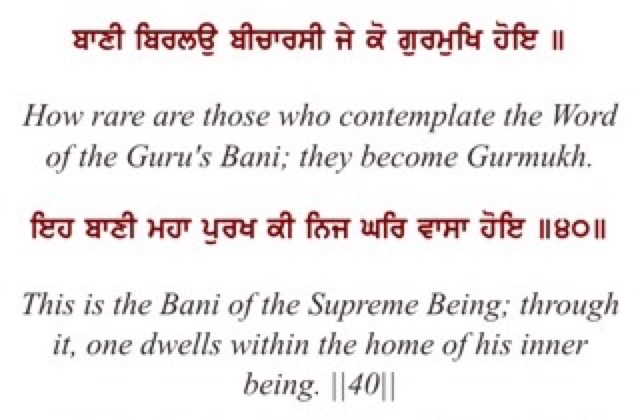
Guru Granth Sahib says, "Eh bani birlo vichaarsi je Ko Gurmukh hovai". 
The one who read, sing, or listen to the guru's words are many. But the ones who truly contemplate are rare. 


When we say a person has changed what do we mean?  Have his hands changed? Feet? Face? No. Nothing in the body has changed. What has changed are his thoughts. His thinking has changed. When thoughts change, the whole world changes. With changing thoughts, a person's character changes. When the mind changes, everything changes. 

When the minds of many people change, we say that the "yug" or age has changed. The change of ages has to do with the changes of minds. If one person's mind changes, his whole world changes. His character changes, the melody of his life changes. Thinking is everything. 

On this planet there is one race that bows down to thoughts. And that is the Sikh race. Guru Granth Sahib is the center of thoughts and Sikhs bow down to the center of thoughts. For that reason, a Sikh should never be without good thoughts. Sikhs aught not to be unwise because wisdom is their Guru. 

Gyan Guru Aatam Updeson
Naam vibhoot lagaon

If wisdom is the Guru how can a Sikh not be wise? How can a Sikh who bows down to supreme wisdom, not attain wisdom. If there is bowing down but there is no wisdom, the bowing down is hypocritical. And it is true, that there is a lot of hypocrisy in those who bow down these days. Guru Nanak says:


What is the point of bowing if you don't understand, if you don't comprehend, if you don't have faith, if you don't have any trust. What is the point of bowing down your head if the heart is impure. 

It is possible that in your charity there is hypocrisy. It is possible that there is no meaning to your bowing down.

As a matter of fact, without changing your thinking, you cannot change the melody of your life. 

What is the biggest gift that you can give to your Guru? Is it money, food, clothes, gold and silver? Not really. When an innocent child starts learning how to write, then he starts with exercises. Money, food, clothes etc are like that. They are exercises. They are useful to get a disciple to the point that he offers his thoughts as the gift to his Guru, to the point that he offers his mind to the Guru. What is the mind but an idol of one's thoughts. Only if one could learn how to give this gift. 


And when that happens, the Guru gives the disciple his own mind. Our thoughts have lobh or greed. The Gurus thoughts have santokh or acceptance. Our thoughts have Kaam or lust. The Guru's thoughts have Raam. Our thoughts have ahankaar or ego. The Guru's thoughts have Nirankaar. Our thoughts have krodh or anger. The Guru's thoughts have daya or compassion. Our thoughts have moh or attachment. The Guru's thoughts have Prem or love. 

Only if you offer your anger, will you get compassion. Only if you offer your Kaam, will you get Raam. Only if you offer your ahankaar will you obtain Nirankaar. Only if you offer your moh, will you get prem. 

What does it mean by giving your mind to the Guru? Giving your mind implies giving your thoughts to the Guru. 

And what do humans generally have in their thoughts? 

The definition of the body is simple. The body is made in four layers. Bone, muscle, connective tissue (minj) and skin. That's it. Bhagat Kabir says:


Are you proud of these bones? Are you proud of your muscles? Are you proud of the connective tissue, or your skin? Is that it? Think about it. The pride of the body is the pride of the skin. Just like we wear different colored clothes, God has not given the same color skin to anyone. Everyone has a different color. 

Karmi Avai kapda nadri mokh duaar


It is our karma that gets us this body, this skin. But everyone has been given a different color. Some are white, black, brown, golden. This is Gods choice. 

Anik rang tere narayana 
Yours are many colors

So many colors! And because all the colors have come from Narayan, every color has Narayan. 

Rang Sabe Narayane

What is body? Body is bones, muscle connective tissue and skin. And then what is mind? Mind is also a collection of four elements: vichaar, Sochni, chhitvani, and aham. They say "Man budh chit aham". The writers of scriptures also call it chatushta-anteh-karan or the four inside doers. 

Humans have many thoughts. When a choice among thoughts is made, "man" becomes "budh". When we are remembering someone, "man" becomes "chit". And "aham" separates thoughts about ourselves from thoughts about others. Aham is related to questions lik, is that me thinking? Or is that me remembering. So the mind comprises of these four: man budh chit aham. 

What is a change in the mind? A change of your mind is a change of your thoughts, discernment, remembrance, and ego. 

What do you mean by a change in ego. How can an ego change. Well, there is something called a "Nirmal" ego ... Or the soft ego. Initially humans have pride of their bodies, their wealth, their youth, their family, their caste, their ancestors ... But when ego changes, he has pride of God, no one else. 


Oh god. Oh true one. You are my pride. You are my energy. All other pride is unclean. Guru Tegh Bahadur says


The bhagats are not necessarily without pride or nimaane. They have a lot of pride. They are proud of God. Guru Arjan Dev says:


Oh God. I don't want to live without pride (nimaana). I don't want to live without power (Nitaana). It's natural that someone without any power is left without any pride. The one that is without any power is actually dead ... A walking and talking dead body. A community without any power is without any pride. Without power a country is also without any pride. There is no place in this world for the one without power. Weaklings have no place in this world. If there is no kind of power ... No Power of wealth, no power of youth, no power of family, no power of caste, then what kind of power can one have? One can have the power of God. 


Oh god, you are my power. So you are my pride!

The pride of God is pure. All other pride is impure. 

When thoughts undergo a change ... What is there in a human's thoughts? We say that changing of your thoughts change the world. By changing your thinking you can change your life. By changing what you remember you can change everything. Then the question arises what is really in this thinking? What is in these thoughts?

Indian philosophers have concluded that within human thinking are the five thieves: kaam, krodh, lobh, moh and ahankaar. Study your own thinking. What are you thinking. Read your thoughts, what is there? Analyze your remembrance; what is there? 

Guru Nanak says, You can read such great books, but you can't read your mind?


You can read deep treatises, big books, but you can't read what is written on your forehead. What is happening in your mind. What is happening in your head. Read!

And the one who can read his own mind, that is a 'sadhak'. And the one who can change his own mind is a 'sadhu'. The one that is in 'Sadhna'. Guru Arjan Dev goes even beyond this and says (it's actually Kabir who says this):


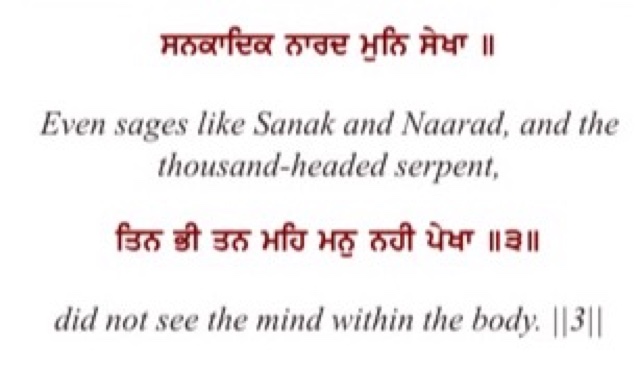
The wise sages like Sanak and Narad also didn't realize the mind within the body. They couldn't understand the depth of the mind. They were duped by the mind. 

Bhai Gurdas writes about Brahma:


Brahma is the one who originated the four vedas. His intellect is unmatchable. But he is attracted by his own daughter Sarawati. Like Brahma, Vishnu, Shiv, Indra and Narad were similarly incapable of winning their minds. 

Winning your own mind is no child's play. People say purify your mind before going to the Gurdwara.  They are absolutely incorrect. One should never say that. What should be said is, "go to the Gurdwara so your mind is purified."  How is it possible to purify your mind before going to the Gurdwara. 

Ones who don't understand the mind they say, "calm your mind to do 'path'".  But they are wrong. How can the mind be calmed without paath. They don't understand the mind. They should instead say, "Do your paath so your mind is calmed."  

It is not someone else that dupes you. It is your mind. The mind duped Indra. Indra committed a folly that normal humans commit. He could not control his urges and has a relationship with Gautam Rishi's wife Ahilya. Guru Granth Sahib puts this history in front of us (it's actually Bhai Gurdas):

What is there in the thoughts of humans? In our thoughts there is 'Kaam' or desire. We have lobh or greed. We have ahankaar or ego. I did not include krodh and moh. (Anger and attachment) Do you know why? 

Religious philosophers say that three -- Kaam, lobh and ahankaar -- have their own origin. Krodh or anger and moh or attachment are just shadows of the other three. Attachment is the shadow of desire, greed and ego. Similarly krodh or anger is the shadow of desire, greed and ego. 

With what our greed is satisfied, we get attached to it. With what our greed is not satisfied, we are angry towards it. 

With what our desire is satisfied, we get attached. And when our desire is not satisfied we are angry. 

Whoever stokes our ego, we get attached to and whoever hurts our ego we get angry with. 

In that way anger and attachment are shadows of greed, desire and ego. 

There are some that say themselves, "if we are not there, how will there be any service."  "If we are not there, the school will close."  My one answer is, try to die and everything will continue happening. 

keti gayi vekh vaaje vajaye
vahi ek raisi jo saacha khudaye
See ... So many have gone 
after playing their instruments
The only one who remains 
Is the true lord 

Tomorrow you may ask if the sun will rise if I am not there. How will the rivers flow if I do not guide. If I am not there how will the wind blow. But who can tell you that everything will continue even if you are not there. It's just your ego. Ego is useless. Worthless. Everything will happen even if you are not there. 

The one who stokes your ego, you tend to like. You get attached to that one. And the one who stops, we are angry at. The one who fulfills greed we are attached to. The one who betrays your greed we are angry with.

Think about this. The one who fulfills your desire that one looks beautiful; we get attached to them. The one who stops desire, is subject to our anger. For that reason, religious philosopher say that attachment and anger don't have their own independent origin. They are shadows.

Listening

Let me say this. We have to look inside. We have to understand our mind. Without looking inside, nothing will be gained. And you can look inside only by listening. Listening is what is hard. It is very hard. Very very hard. 

There are mosques, temples and gurdwaras. The form of prayers are slightly different, but the objective, the end result is the same.  

Our Hindu brothers go to the temple so they can see the idol of a Devta. Darshan or vision is the way of the Hindu.  Whatever will be in front of the eyes, the eyes shall see. The whole meditation is based on vision or darshan. If you see the idol in a temple, and come out and see the idol in everything -- that is the objective of the meditation.  

Our Muslim brothers and sisters go to the Masjid.  They read the "Namaz." Devotion rests upon reading.  Reading the Quran is the most important.  You need more concentration to read, than you need to see.  

Sikhs go to the gurdwara to hear the shabad of the guru. Listening of the word of the guru is most important.  Their whole devotion rests upon listening.  You need more concentration to listen than you need to read.  

Don't be in the false impression, that all of us who are sitting here are listening. Among all the hundreds may be 2 or 4 are listening. Everyone is listening to their own thoughts. Everyone is listening to their own remembrances.  If someone listens, then:

Nanak Bhagtan Sadaa Vigaas
Suniye Dookh Paap Ka Naas

By listening evil is vanquished. By listening our sorrows are destroyed. By listening, Guru's thoughts will enter us.  Guru's thoughts will drive ego out of us.  That will drive out sorrows.  Listening is hard. 

Only that person can listen who is concentrating his whole mind.  The mind is going hither and thither all the time.  If you are seeing here and there, and being distracted by every sight and noise, it is clear that your thoughts are also lost.  

Haven't you seen someone saying something loud, and the listener says, "Can you please repeat it, I didn't hear what you were saying?" Well why didn't you hear? When the speaker was saying it so loud, why didn't you hear? It is clear that the thoughts were somewhere else.  Without the concentration of thought it is hard to listen. 

And without listening, it is hard to get Guru's word inside you.  And without Guru's word going inside you, it is impossible to eject all the sorrows. Sorrows will come out only when the Guru's word will enter. 

Nanak Bhagtan Sadaa Vigaas
Suniye Dookh Paap Ka Naas

It is only after listening with complete concentration that peace can be found.  Listening can make you pure.  Listening is like going on 68 pilgrimates:

Suniye athsath ka isnaan

Food enters the body through the mouth.  When food is digested it becomes part of the body, it becomes energy, it becomes medicine for the body.  The Guru's word enters the body through the ears and becomes eternal peace, ultimate energy, angelic virtue, and the power of the soul.  But the word has to enter the ears.  And it will only enter when someone listens. And only that person will listen who is concentrated on listening. 

Who listens? People get very excited and do akhand paaths of the Guru Granth Sahib at home.  But in the room in which the akhand paath is going on, they forget entering the room, lest they have to listen. Who listens? It is hard. 

A person can listen to his son, to his friend, to his wife, husband etc ... but listening to the Guru is tough.  It is very tough. Why?  Because Guru's words are not set to the rhythm of our thinking. We think about kaam, Guru thinks about raam. We think about krodh. Guru thinks about dayaa. We think of nirankaar. Guru thinks of nirankaar. The rhythm does not match!

If the harmonium goes in one direction and the tabla goes in a wholly different direction, will that create beautiful music? No! The rhythm does not match.  Guru's thinking and our thinking has a huge gap. They say, when there is harmony between instruments, that's when it appears beautiful. Otherwise it does not appear beautiful.

Sometimes, listening to kirtan, if it is appearing beautiful, there must be harmony.  Only a few find kirtan to be beautiful. People are mostly lost in voices, melodies and rhythms, or useless stories.  Stories that don't even have relevance with either history or truth. I have seen the nadir of listening.  How will they listen to the Guru?

Eh Bani Birloh Bichaarsi

How will they meditate upon the Guru? The story of truth. Not depthless tirades. If a story does not align with the Guru Granth Sahib's thinking, how can it be true?

One from many, many from one

Anyways, let me continue.  Guru Granth's thinking has nirankaar, the virtues of the most benevolent. They enter the body only through listening. Shabad enters the body and becomes samadhi. It becomes angelic virtues. And the understanding of the ultimate reality will dawn upon the mind. Which ultimate reality?  The one about which Guru Gobind Singh says:

Anek Hain Phir Ek Hain
The one that is one, and at the same time, the one that is many.

How can this be. Its a riddle. How can he be one and many at the same time? He has a body and he is without a body at the same time. He is Sargun and nirgun -- with virtues and without virtues at the same time.

Nirgun aap sargun bhi ohee
kalaadhar jin sagli mohee

In the robe of sargun he is many. In the robe of nirgun he is one. He is one from many and many from one.

Sometime notice in the world -- everything is many.  There is nothing that is one.  You can bring oneness from the outside. But nature does not have oneness. So many of you are sitting here, everyone is different.

Mere Karte ik khen upaaya
Koye na kis jaisa upaayaa

There is no one like the other. Lakhs of humans are being born into this world everyday.  They come with a new bodies, new voices, new walks, and amazingly new fingerprints.  All of you have different fingerprints. Everyone has a different thumbprint. One thumb is not identical to any other thumb. There are currently 5 billion people on the earth.  They all have different fingerprints. The one's that have gone in the past had different finger prints.  The one's that are yet to come will have different finger prints. Different bodies, voices, walks, color ... there is no one like the other.

Leave apart humans.  There is no mountain like another mountain. There is no river like another river. There is no one tree like another tree.  Forget trees.  There is no leaf like another leaf.  Even when you see leaves from the same tree. There is no flower like another flower. If a tree has a thousand fruits, they are still all different.  Don't have the misconception that there will be two fruits which are exactly alike -- in color, shape, body, weight, smell, taste. There is undersandable difference.

Whether we understand the difference is a wholly different issue.  There is a difference nevertheless.  God does not make one like another. God does not repeat.  There is no repetition from God. He doesn't repeat anything. The day that God starts making something exactly the same, they you can assume that God has died. That is not possible.

There is no sun like another sun.  There is no moon like another moon. And there is not one sun, there are millions of sun. Guru Arjan Dev has said:

Kai Kot Sassiyar Soor Nikhatra

There are many crores of Suns. And today science has agreement on this.  There are 50 billion stars in the universe.  (Now it is said there are over 100 billion stars just in the milky way galaxy - which means all humans could have have their own 10 stars, and there would still be more stars in just our own galaxy).

Everything has an age

Just like we have an age, suns have an age. Some suns are in their childhood, some are in their youth, some are old, and some are nearing their death.  Guru Arjan Dev ji says,

Ghatant deepan, ghatant roopan
Ghatant rav sas nikhatra gaganan

The sun is decreasing, and one day it will end. The moon is diminishing and one day it will expire. The earth is diminishing and one day it will die. Humans are diminishing and one day they will die.
Everything increases, then decreases, then expires. These three rules work on everything. They apply on sun, moon and the stars too. And science opines that our sun has passed its youth and is getting old now. Every second the sun loses 40 lakh tonnes of mass.

Ghatant deepan, ghatant roopan
Ghatant rav sas nikhatra gaganan

They are all decreasing. One day they will all die. "Mahapralay" is the name of this magnificent death. The death of one universe. We are living under an aging sun. Even though its age might be millions or billions of years, there is an age. Everything increases, decreases and finishes. 

There is no one sun like another sun.  There is no moon like another moon. There is no human like another. Or a tree! There is no river like another river. God does not repeat. 

When God starts repeating, that is the end of everything. 

Sahib mera neet navaa
sadaa sadaa daataar 

He is always new.  Whatever comes from him is new. Lets not go into a tangent here, but millions of children are being born in the world. They all have a new body, new mind, new voice, new thinking, new eyes and features, new fingerprints. Every child is different. 

The game of difference

Mere Kartay ik Khen rachaya
Koe na tis hi jeha upaaya

Everything is different.  But in all this manyness there is a oneness. 

Amaan hain Nidhaan hain
Anek hain phir Ek hain

You are one in many and many in one. Why has God done this?  Guru Gobind Singh answers this in the following way:

Ek moorat anek darsan keen roop anek
khel khel akhel khelan ant ko phir ek

Manyness is a play of God.  It is a drama.  It is a game.  

Only two really know how to play a game: kids or God.  
Newer Posts Older Posts Home

SHIVPREET SINGH

Singing oneness!
- Shivpreet Singh

Related Posts

Popular - 30 days

  • Vande Mataram - Lyrics and Translation
    I love the Vande Maataram composition in Raag Des sung by Lata Mangeshkar.  Vande Mataram is the national song of India. In 2003, BBC World ...
  • Kabir's Gao Gao Ri Dulhani - Lyrics and meanings
    One of my favorite Kabir's poem I call "Dulhani." In this beautiful poem, Kabir envisions himself as the bride and the univers...
  • The Many Types of Raag Malhar
    Pour love in your heart, like the rain pours on the land today. As I am working on a Meerabai song I am doing research on the different vari...
  • Ve Mahiya Tere Vekhan Nu - Tufail Niazi and Wadali Brothers
    I have recently heard this Bulleh Shah song and it has really touched my heart. Several people have sung it, but I love the original composi...
  • Akhiyan Udeekdiyan Dil vaajaan Maarda - Nusrat Lyrics and Meanings
    Mahi ve tere bajoN dil deya meharma ve sada jeuuna kere chaj daa ay meri loo loo vich meri nas nas wich teri yaad da tumbaa vajdaa ay Withou...
  • Sanson Ki Mala Pe - Lyrics, Translation and Background
    Sanson ki Maala was made famous by Nusrat Fateh Ali Khan sahib.  Although some have attributed this song to Mirabai and Khusro, this is a gh...
  • Jindari Lutti by Ghulam Farid - Lyrics/Translation and Performance by Bade Ghulam Ali Khan (Also Rohi or Dilri Lutti)
    Bade Ghulam Ali Khan's version of this Multani Kafi This is a beautiful spiritual song of separation written by Ghulam Farid.  I recentl...
  • Gulon Mein Rang Bhare - Lyrics and Translation of Mehdi Hassan Ghazal
    I was listening and meditating upon this beautiful ghazal by Faiz Ahmed Faiz, beautifully composed by Mehdi Hassan. It is one of my favorite...
  • Digging into the 'kaar' of Ek Onkaar
    Exploring the Essence of "Kaar" in Ekonkaar In Sikh philosophy, the term "Ekonkaar" holds profound significance, encapsu...
  • Loving in the night - a poem by Rabi'a
    [O my Lord] by rabi'A Translated by Jane hirshfield O my Lord, the stars glitter and the eyes of men are closed. Kings have locked their...

Blog Archive

  • ▼  2026 (12)
    • ▼  June (1)
      • Translation of Laavan - Shivpreet Singh
    • ►  May (1)
    • ►  April (1)
    • ►  March (6)
    • ►  February (1)
    • ►  January (2)
  • ►  2025 (24)
    • ►  October (5)
    • ►  September (7)
    • ►  August (2)
    • ►  July (2)
    • ►  June (3)
    • ►  March (1)
    • ►  February (2)
    • ►  January (2)
  • ►  2024 (21)
    • ►  December (1)
    • ►  November (2)
    • ►  October (3)
    • ►  September (2)
    • ►  August (4)
    • ►  July (2)
    • ►  June (3)
    • ►  May (1)
    • ►  April (1)
    • ►  February (1)
    • ►  January (1)
  • ►  2023 (41)
    • ►  December (4)
    • ►  November (3)
    • ►  October (4)
    • ►  September (7)
    • ►  August (5)
    • ►  July (7)
    • ►  June (3)
    • ►  May (3)
    • ►  April (1)
    • ►  March (1)
    • ►  February (3)
  • ►  2022 (8)
    • ►  March (2)
    • ►  January (6)
  • ►  2021 (139)
    • ►  December (15)
    • ►  November (2)
    • ►  October (6)
    • ►  September (7)
    • ►  August (2)
    • ►  July (4)
    • ►  May (21)
    • ►  April (21)
    • ►  March (35)
    • ►  February (23)
    • ►  January (3)
  • ►  2020 (150)
    • ►  December (2)
    • ►  November (13)
    • ►  October (32)
    • ►  September (47)
    • ►  August (37)
    • ►  July (5)
    • ►  June (3)
    • ►  May (3)
    • ►  April (3)
    • ►  March (2)
    • ►  February (1)
    • ►  January (2)
  • ►  2019 (43)
    • ►  December (5)
    • ►  November (8)
    • ►  October (13)
    • ►  September (4)
    • ►  July (3)
    • ►  June (1)
    • ►  May (2)
    • ►  March (1)
    • ►  February (1)
    • ►  January (5)
  • ►  2018 (53)
    • ►  December (8)
    • ►  November (5)
    • ►  October (3)
    • ►  September (4)
    • ►  August (6)
    • ►  July (3)
    • ►  June (4)
    • ►  May (6)
    • ►  April (5)
    • ►  March (2)
    • ►  February (4)
    • ►  January (3)
  • ►  2017 (73)
    • ►  December (2)
    • ►  November (12)
    • ►  October (8)
    • ►  September (1)
    • ►  August (7)
    • ►  July (6)
    • ►  June (12)
    • ►  May (5)
    • ►  April (4)
    • ►  March (8)
    • ►  February (3)
    • ►  January (5)
  • ►  2016 (141)
    • ►  December (1)
    • ►  November (9)
    • ►  October (16)
    • ►  September (19)
    • ►  August (2)
    • ►  July (5)
    • ►  June (7)
    • ►  May (3)
    • ►  April (18)
    • ►  March (34)
    • ►  February (16)
    • ►  January (11)
  • ►  2015 (28)
    • ►  December (1)
    • ►  November (1)
    • ►  October (2)
    • ►  September (12)
    • ►  August (1)
    • ►  May (1)
    • ►  April (7)
    • ►  March (1)
    • ►  February (1)
    • ►  January (1)
  • ►  2014 (107)
    • ►  December (1)
    • ►  November (6)
    • ►  October (1)
    • ►  August (2)
    • ►  July (1)
    • ►  June (11)
    • ►  April (10)
    • ►  March (15)
    • ►  February (24)
    • ►  January (36)
  • ►  2013 (242)
    • ►  December (13)
    • ►  October (5)
    • ►  September (3)
    • ►  August (3)
    • ►  June (7)
    • ►  May (62)
    • ►  April (79)
    • ►  March (12)
    • ►  February (23)
    • ►  January (35)
  • ►  2012 (145)
    • ►  December (29)
    • ►  November (31)
    • ►  October (44)
    • ►  September (5)
    • ►  August (9)
    • ►  July (7)
    • ►  June (1)
    • ►  May (3)
    • ►  April (1)
    • ►  March (4)
    • ►  February (9)
    • ►  January (2)
  • ►  2011 (252)
    • ►  December (1)
    • ►  November (1)
    • ►  October (4)
    • ►  September (13)
    • ►  August (28)
    • ►  July (44)
    • ►  June (33)
    • ►  May (15)
    • ►  April (2)
    • ►  March (45)
    • ►  February (43)
    • ►  January (23)
  • ►  2010 (70)
    • ►  December (31)
    • ►  November (20)
    • ►  October (2)
    • ►  September (3)
    • ►  August (1)
    • ►  July (2)
    • ►  May (5)
    • ►  March (4)
    • ►  February (1)
    • ►  January (1)
  • ►  2009 (15)
    • ►  December (1)
    • ►  November (3)
    • ►  October (2)
    • ►  September (2)
    • ►  August (1)
    • ►  June (1)
    • ►  April (1)
    • ►  March (1)
    • ►  February (1)
    • ►  January (2)
  • ►  2008 (15)
    • ►  November (1)
    • ►  July (2)
    • ►  June (5)
    • ►  May (1)
    • ►  April (2)
    • ►  March (1)
    • ►  February (1)
    • ►  January (2)
  • ►  2007 (9)
    • ►  November (4)
    • ►  October (2)
    • ►  September (1)
    • ►  August (2)
  • ►  1999 (1)
    • ►  May (1)

Message

Name

Email *

Message *

Twitter

Tweets by @shivpreetsingh


Copyright © Shivpreet Singh. Designed by OddThemes